Homemade Harissa Paste Recipe and Easy Uses
Homemade harissa is the kind of condiment that can wake up an entire meal with just a spoonful. It’s smoky, garlicky, a little sweet, and bright with lemon, which makes it especially useful when dinner needs extra depth fast.
Once you make a batch, you’ll probably start reaching for it the way you do ketchup or hot sauce. Stir it into soups, spread it on sandwiches, or spoon it over vegetables and grains for an easy flavor upgrade.
What harissa is
Harissa is a North African chili paste traditionally made with dried chilies, spices, garlic, olive oil, and sometimes roasted peppers or tomato. Different regions and home cooks make it differently, so there isn’t one single “correct” version.
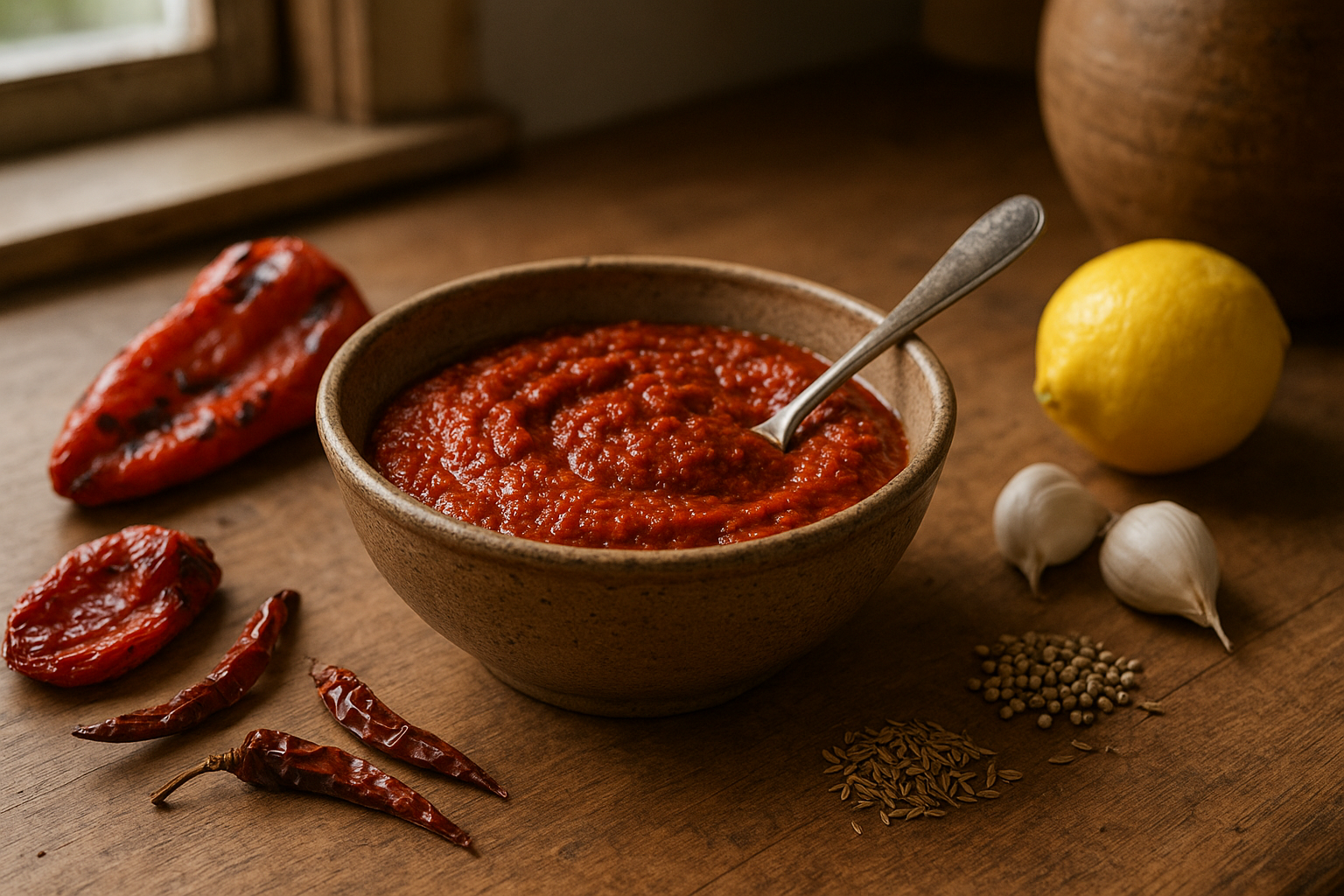
This version leans into ingredients many home kitchens already have: roasted red peppers, dried chilies, warm spices, garlic, olive oil, and lemon juice. The result is a smooth paste with balanced heat rather than a harsh burn.
Ingredients you’ll need
For a versatile batch, gather these ingredients:
- Roasted red peppers for sweetness and body
- Dried chilies for heat and depth
- Garlic for sharp, savory flavor
- Ground cumin and coriander for warmth
- Smoked paprika for a subtle smoky note
- Tomato paste for color and richness
- Lemon juice or vinegar for brightness
- Olive oil to make it spoonable and help preserve the paste
- Salt to tie everything together
If you prefer a fresher, greener harissa, you can add a little cilantro or parsley, but keep in mind that herbs change the flavor and shorten the shelf life.
Choosing the right chilies
The heat level depends mostly on the dried chilies you use. Mild chilies give you a rich chili flavor without much fire, while hotter varieties make the paste more intense.
For a family-friendly batch, start with a mix of mild dried chilies and just one or two hotter ones. If you like more heat, add an extra chile or leave some seeds in. If the chilies are very dry and brittle, soaking them in hot water first helps them blend smoothly.
How to make homemade harissa
- Soften the chilies. Place the dried chilies in a bowl and cover them with hot water. Let them soak until pliable, usually 15 to 20 minutes. Drain well.
- Build the flavor base. Add the soaked chilies, roasted red peppers, garlic, tomato paste, cumin, coriander, smoked paprika, salt, lemon juice, and a few tablespoons of olive oil to a food processor or blender.
- Blend until smooth. Process the mixture, stopping to scrape down the sides as needed. If it seems too thick, add a little more olive oil or a splash of the chile-soaking liquid to loosen it.
- Taste and adjust. Add more salt for savoriness, more lemon for brightness, or more chili for heat. Blend again until the texture is as smooth as you like.
- Store properly. Transfer the harissa to a clean jar and pour a thin layer of olive oil over the top before refrigerating.
Texture and consistency tips
Harissa can be rustic or silky depending on how you plan to use it. For spooning onto bowls and roasted vegetables, a little texture is welcome. For spreading on sandwiches or stirring into yogurt, a smoother paste is usually better.
If your batch is too thick, blend in olive oil a tablespoon at a time. If it’s too loose, add a bit more roasted pepper or tomato paste and pulse again. The goal is a thick, spreadable paste that holds together on a spoon.
Easy ways to use harissa
One of the best things about homemade harissa is how many meals it can improve. Try it in these everyday ways:
- Stir into eggs, shakshuka, or scrambled eggs
- Spread on sandwiches, wraps, and burgers
- Mix into yogurt for a quick dip or sauce
- Brush on roasted vegetables before or after cooking
- Whisk into vinaigrettes for salads and grain bowls
- Stir into soup or stew for gentle heat
- Serve with hummus, falafel, or grilled meats
- Toss with chickpeas before roasting for a crunchy snack
It also makes an easy shortcut for weeknight dinners. Add a spoonful to mayonnaise for a sandwich spread, or mix it with butter and brush over corn, chicken, or flatbread.
How to store harissa
Homemade harissa keeps well in the refrigerator when stored in a clean airtight jar. A thin layer of olive oil on top helps slow oxidation and keeps the surface from drying out.
For the best flavor and safety, use a clean spoon each time you scoop from the jar. Most homemade versions keep for about 1 to 2 weeks in the fridge, though exact timing depends on your ingredients and storage habits.
You can also freeze harissa in small portions, such as in ice cube trays. Once frozen, transfer the cubes to a freezer bag so you can thaw just what you need for a recipe.
Simple flavor variations
Once you have the basic method down, it’s easy to tailor the paste to your taste.
Extra smoky
Add a little more smoked paprika, or roast the red peppers yourself for a deeper charred flavor.
More citrusy
Increase the lemon juice slightly or add a small amount of lemon zest for a brighter finish.
Softer heat
Use milder chilies, remove more seeds, and add extra roasted peppers to mellow the spice.
Herby version
Blend in a small handful of cilantro or parsley for a fresher, greener note.
Common mistakes to avoid
Skipping the soak can make dried chilies tough and harder to blend. Using too much liquid can thin the paste more than you want. And not tasting at the end can leave the harissa flat, since lemon, salt, and olive oil all play important roles in the final flavor.
If your harissa tastes sharp, let it rest for a few hours in the refrigerator. The flavors usually mellow and blend together as it sits.
Why homemade is worth it
Store-bought harissa is convenient, but making it at home lets you control the heat, salt, and texture. You can make it milder for everyday cooking or spicier for when you want real punch.
Best of all, a homemade jar in the refrigerator can make simple food taste much more interesting. That makes harissa one of the most useful condiments you can keep on hand.
If you like bold flavors and low-effort cooking, this is a recipe worth adding to your regular rotation. A few spoonfuls can turn plain ingredients into something that feels special, without adding much work at all.