Easy Chicken Stew with Vegetables and Herbs
When the weather turns chilly or you just want something filling and homey, chicken stew is one of the most dependable dinners you can make. It has all the comfort of soup, but with a thicker, spoon-coating broth and hearty chunks of vegetables that make it feel like a full meal in a bowl.
This version keeps things straightforward: browned chicken thighs, simple pantry vegetables, and a savory herb gravy that develops flavor as it simmers. It’s the kind of recipe that rewards a little patience and gives you leftovers that taste even better the next day.
What Makes Chicken Stew So Satisfying?
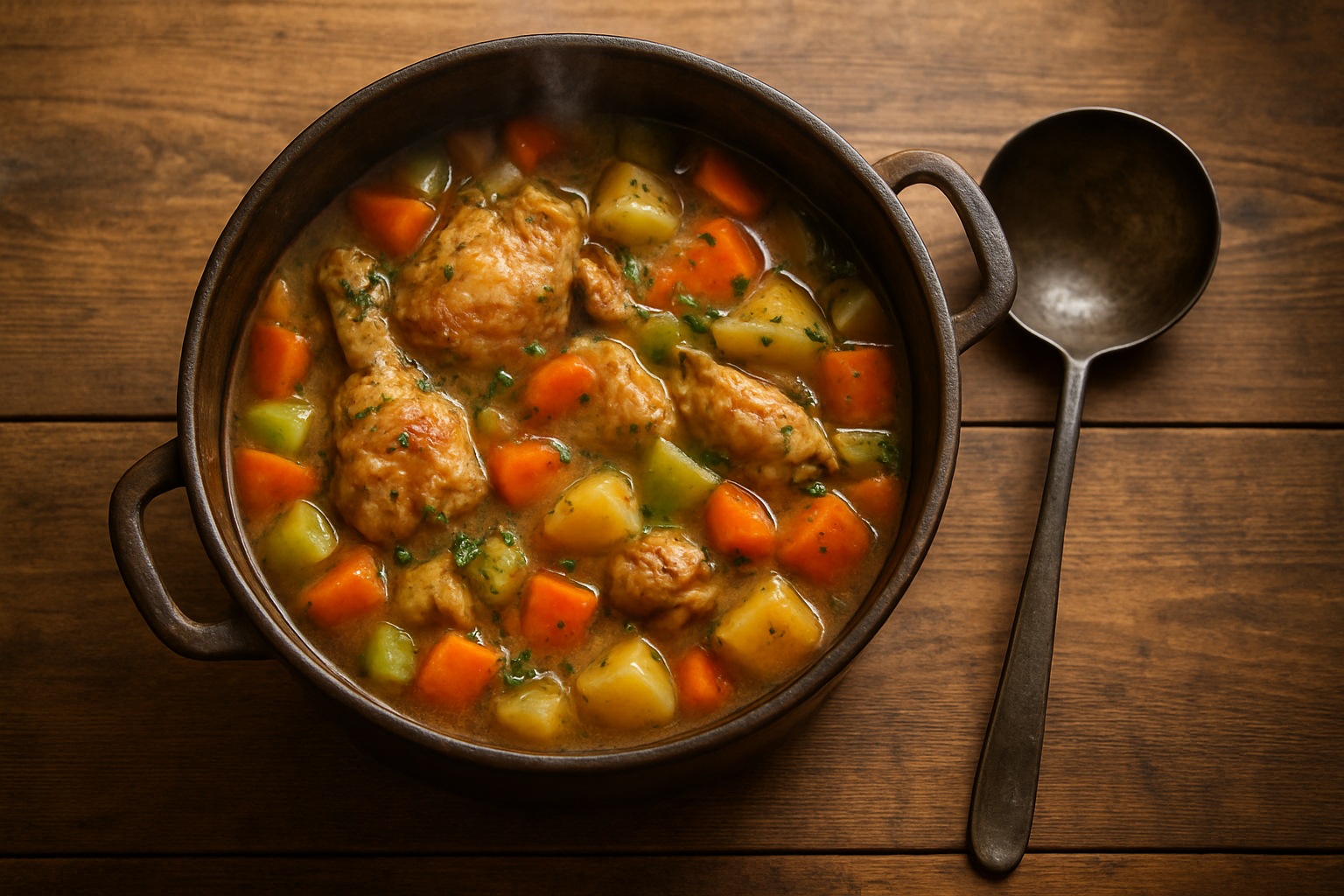
The best chicken stew balances three things: tender meat, soft but not mushy vegetables, and a broth that tastes rich without being heavy. Chicken thighs are ideal because they stay juicy during simmering and bring more flavor than leaner cuts. Potatoes, carrots, celery, and onion add body and sweetness, while thyme, parsley, and bay leaf give the stew that classic cozy aroma.
Another reason this dish works so well is the cooking method. Browning the chicken first leaves behind flavorful caramelized bits in the pot. Those bits dissolve into the broth later, helping create depth without needing a long ingredient list. A small amount of flour thickens the liquid just enough to make a silky gravy.
Ingredients That Work Best
You don’t need anything fancy for a solid chicken stew. In fact, the simplest ingredients often give the most balanced result.
- Chicken thighs: Boneless thighs are easy to cut and serve, but bone-in thighs also work if you don’t mind removing the bones after simmering.
- Onion, carrot, and celery: This classic trio builds the base flavor.
- Potatoes: Yukon Gold or baby potatoes hold their shape well and turn creamy as they cook.
- Garlic: Adds warmth and rounds out the broth.
- Flour: Coats the chicken and lightly thickens the stew.
- Chicken broth: Use a broth you like to sip on its own, since its flavor becomes the backbone of the dish.
- Herbs: Dried thyme, parsley, and a bay leaf are dependable; rosemary or sage can be added for a deeper, more autumn-like flavor.
How to Build Flavor Step by Step
Start by seasoning the chicken and tossing it lightly in flour. The flour does two jobs: it helps the chicken brown nicely and later contributes to the stew’s texture. Heat the pot before adding the chicken so the pieces sear instead of steaming. If needed, brown in batches so the meat has room to develop color.
Once the chicken is out, add the onion, carrot, celery, and a little salt. The vegetables will soften and pick up some of the browned flavor on the bottom of the pot. Stir in the garlic for just a minute so it doesn’t burn, then return the chicken and add the broth, potatoes, and herbs.
Bring everything to a gentle boil, then lower the heat and simmer uncovered. That uncovered simmer matters: it helps the broth reduce slightly and become more stew-like. If you cover the pot the whole time, too much steam stays trapped and the sauce may remain thin.
Practical Tips for Better Results
- Cut the vegetables evenly. Keep the potatoes and carrots in similar-sized pieces so they finish cooking around the same time.
- Don’t crowd the chicken. A crowded pan traps moisture and prevents browning. Work in batches if needed.
- Use medium-low heat for simmering. A hard boil can make the chicken tough and break down the potatoes too quickly.
- Taste near the end. Broths vary a lot in saltiness, so wait until the stew is finished before adjusting the seasoning.
- Let it rest briefly. Ten minutes off the heat gives the stew a chance to thicken slightly and lets the flavors settle.
Easy Variations to Try
Once you’ve made the basic version, it’s easy to adapt it to what you have on hand.
- Add peas: Stir in frozen peas during the last 5 minutes for extra color and sweetness.
- Use mushrooms: Brown sliced mushrooms with the onions for a deeper, earthier flavor.
- Try sweet potatoes: Swap part of the regular potato for sweet potato if you want a slightly sweeter stew.
- Make it dairy-free: This recipe is naturally dairy-free as written, which makes it easy to serve a crowd.
- Boost the herbs: A small pinch of poultry seasoning can stand in for multiple dried herbs if your cabinet is limited.
What to Serve with Chicken Stew
This stew is filling on its own, but a simple side can make dinner feel complete. Crusty bread is the obvious choice for soaking up the gravy, but biscuits, cornbread, or even buttered toast all work well. If you want something lighter, serve it with a simple green salad dressed in vinaigrette to balance the richness of the stew.
For leftovers, keep the stew in the refrigerator in a sealed container for up to 4 days. It reheats beautifully on the stove over low heat or in the microwave in short bursts. If the stew thickens too much after chilling, add a splash of broth or water to loosen it.
Make-Ahead and Freezer Notes
Chicken stew is a great candidate for meal prep. You can chop the vegetables a day ahead and store them in the fridge, or make the entire pot in advance and reheat it later. If freezing, cool the stew completely first, then portion it into airtight containers. Potatoes can soften a bit after freezing, but the flavor stays excellent.
If you know you’ll be freezing a batch, avoid overcooking the vegetables at the end. A stew that’s just tender when finished will hold up better after thawing and reheating.
Why This Dinner Becomes a Favorite
A good chicken stew delivers a lot for very little effort. It’s budget-friendly, flexible, and comforting without feeling overly heavy. Most importantly, it makes your kitchen smell amazing while it cooks. Once you have the basic method down, you can adapt it to the season, your pantry, or whatever vegetables are waiting in the fridge.
That’s the beauty of a dish like this: it’s simple enough for a weeknight, but cozy enough to feel special. Serve it with bread, a spoon, and a little extra time to enjoy it.