Easy Burrata Salad with Tomatoes, Basil & Pesto
When tomatoes are at their best, dinner can be as simple as slicing, arranging, and drizzling. This burrata salad is the kind of recipe that feels special enough for guests but easy enough for a Tuesday night, with creamy cheese, juicy tomatoes, and plenty of fresh basil.
Think of it as a brighter, richer cousin to a classic Caprese. Burrata brings a soft, custardy center that melts into the salad, while pesto adds another layer of basil flavor and balsamic ties everything together.
Why this burrata salad works
The appeal of this dish is all about contrast: cool and creamy cheese, sweet-acidic tomatoes, peppery herbs, and a little richness from olive oil or pesto. Because the ingredients are so simple, the quality of each one matters more than usual.
- Burrata gives the salad a luxurious texture without much effort.
- Fresh tomatoes provide sweetness, juice, and color.
- Pesto boosts the basil flavor and adds body to the plate.
- Balsamic balances the richness and sharpens the overall flavor.
This is also a flexible recipe. You can serve it as a starter, a side dish, or a no-cook lunch with bread. It is especially good when you want something that looks polished but requires almost no time in the kitchen.
Ingredients you’ll need
Use the best produce you can find, especially for the tomatoes. If your tomatoes are a little bland, a pinch of salt and a brief rest will help bring out their juices.
- Burrata: 1 to 2 balls, depending on how many people you’re serving
- Heirloom tomatoes: sliced into wedges or thick rounds
- Cherry or grape tomatoes: halved for sweetness and texture
- Fresh basil: whole leaves or torn pieces
- Pesto: homemade or store-bought
- Balsamic glaze or vinegar: for a tangy finish
- Extra-virgin olive oil: optional, but helpful for sheen and richness
- Flaky salt and black pepper: to finish
If you want to build the salad into a fuller meal, add crusty bread, grilled sourdough, or a bowl of cooked grains on the side.
How to make burrata salad
- Prep the tomatoes. Slice the heirloom tomatoes into generous wedges or rounds. Halve the cherry tomatoes and place them in a bowl with a small pinch of salt, a drizzle of olive oil, and a little balsamic if you like a more marinated flavor.
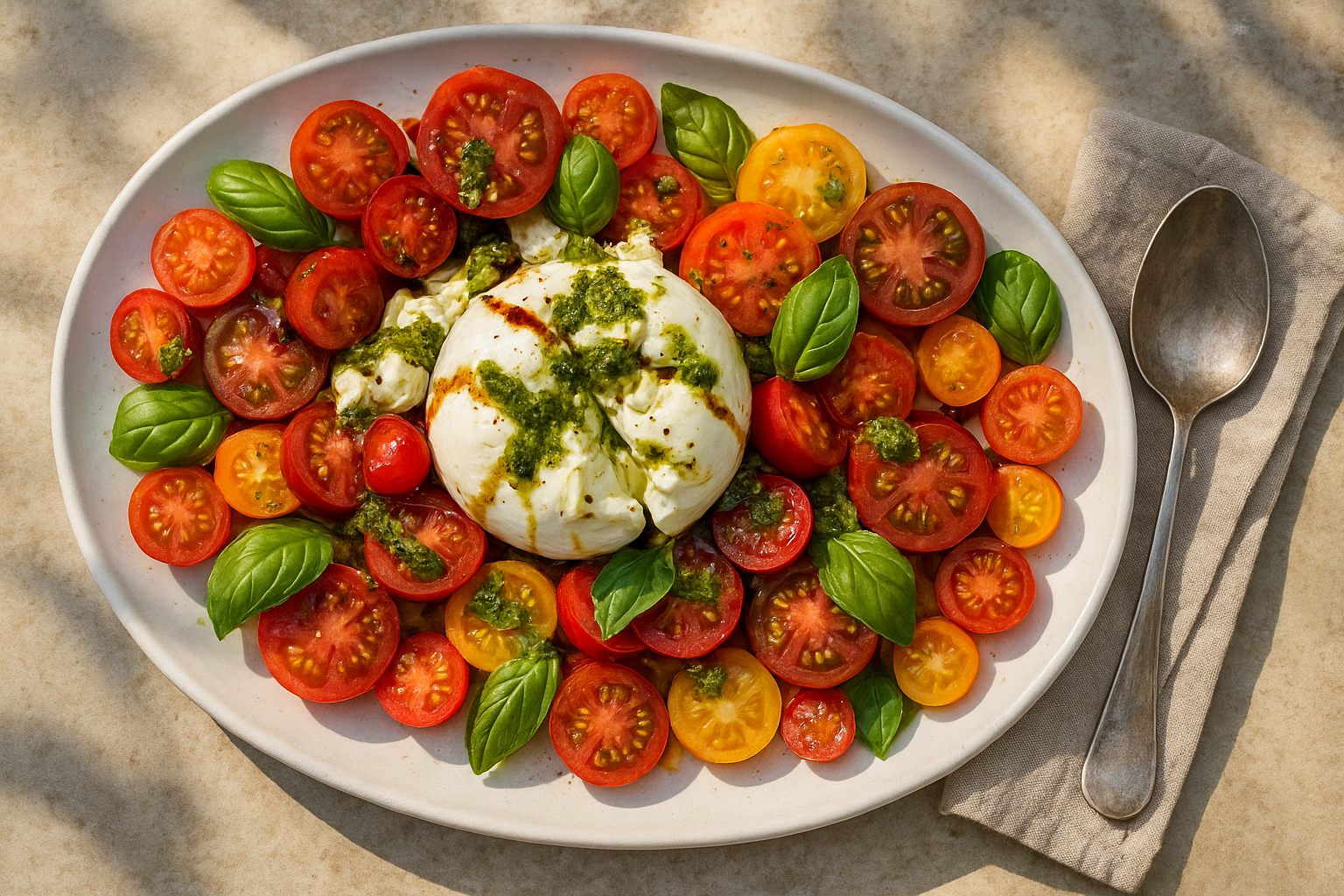
- Arrange the platter. Spread the sliced tomatoes across a shallow serving plate or platter. Tuck the cherry tomatoes among them so the different shapes and colors are visible.
- Add the burrata. Pat the cheese dry, then place it in the center or break it into large torn pieces over the tomatoes.
- Finish with basil and pesto. Scatter basil leaves over the salad and spoon small dollops or ribbons of pesto around the platter.
- Drizzle and season. Add balsamic glaze or a small splash of balsamic vinegar, then finish with salt and black pepper. Serve immediately.
The whole process takes about 15 minutes, but the presentation looks much more involved than it really is.
Best tips for the tastiest salad
Because this recipe is so simple, a few small details can make a big difference.
- Let the tomatoes come to room temperature. Cold tomatoes taste flatter and less sweet.
- Salt the tomatoes lightly before serving. Even 5 minutes can improve their flavor.
- Tear the burrata instead of slicing it cleanly. The creamy center will spread into the salad and make every bite richer.
- Use pesto sparingly at first. A little goes a long way, especially if the pesto is garlicky or very bold.
- Serve right away. Burrata is best when the cheese is cool but not icy, and the tomatoes are fresh.
Easy flavor variations
Once you know the basic formula, it’s easy to adapt it to what’s in your kitchen.
Add fruit for sweetness
Peaches, nectarines, or figs pair beautifully with burrata and tomatoes. They add a softer sweetness that works well with basil and balsamic.
Make it more filling
Serve the salad over toasted bread, alongside cooked farro, or with white beans for extra protein and staying power.
Try different herbs
Basil is the classic choice, but mint or a little tarragon can add a fresh twist. If you use a different herb, keep the pesto in mind so the flavors don’t compete.
Add crunch
Toasted pine nuts, sliced almonds, or crunchy croutons give the salad another texture and make it feel more complete.
What to serve with burrata salad
This salad pairs well with all kinds of simple meals. It can start a dinner party, round out a picnic, or stand in for lunch on a hot day.
- Grilled chicken, fish, or shrimp
- Crusty bread or baguette slices
- A bowl of soup, especially tomato or vegetable soup
- Grilled vegetables like zucchini, eggplant, or corn
- Charcuterie, olives, and marinated vegetables for a grazing board
If you are serving it as part of a larger spread, keep the seasoning simple so the salad stays the star.
How to store leftovers
Burrata salad is best eaten right after it’s assembled, but leftovers can still be useful. If possible, store the components separately: tomatoes in one container and burrata in another.
Once dressed, the salad will release more liquid as it sits. That doesn’t make it unsafe or inedible, but the texture will soften. If you have leftovers, spoon them over toast the next day or mix them into warm pasta.
Store burrata in the refrigerator and use it by the date on the package. Bring it to room temperature before serving for the best texture.
Simple serving ideas for any occasion
Because this burrata salad looks elegant with very little effort, it works in a lot of settings. Serve it on a wide platter for a summer dinner, divide it between smaller plates for a first course, or set it out family-style for a casual gathering.
For a more polished presentation, use a mix of colors and sizes of tomatoes. Layer the slices slightly instead of placing them in a single flat ring, and add the burrata last so its creamy center becomes the visual focal point.
Frequently asked questions
Can I make burrata salad ahead of time?
You can prep the tomatoes and pesto ahead of time, but wait to add the burrata, basil, and final drizzle until just before serving. That keeps everything fresh and prevents the salad from getting watery.
What if I can’t find burrata?
Fresh mozzarella is the closest swap, though it will be firmer and less creamy. Ricotta can also work in a pinch if you want a soft, spreadable texture.
Is balsamic glaze better than balsamic vinegar?
Balsamic glaze is thicker and sweeter, so it stays visible on the platter and gives a finished look. Balsamic vinegar is brighter and sharper. Either one works; use the style you prefer.
Final thought
A good burrata salad proves that you do not need a long ingredient list or a hot oven to make something memorable. With peak-season tomatoes, fresh basil, and creamy cheese, you get a dish that tastes like summer in every bite.