Best Lawn Repair Tools to Buy Before Fall Recovery
By the end of summer, even a once-lush lawn can look tired: bare patches, dry spots, and hard soil are common after heat, heavy use, and too little rain. The good news is that fall is one of the best times to help grass bounce back, and the right lawn repair tools can make the job much easier.
If your yard looks worn out, focus on fixing the root problems first: compacted soil, poor seed-to-soil contact, and thin turf that needs a little encouragement to regrow. A few well-chosen tools can help you aerate, rake, seed, and water more effectively so your lawn has a better chance of recovering before colder weather sets in.
Why lawns struggle after summer
Before you buy anything, it helps to understand what may be hurting the grass. Summer stress usually comes from a combination of factors rather than just one issue.
- Heat and drought: Grass slows down in hot weather and can go dormant if it does not get enough moisture.
- Foot traffic: Kids, pets, grilling, and general yard use can press soil down and damage blades.
- Low mowing: Cutting too short can weaken grass and expose the soil to more heat.
- Compacted soil: When roots cannot get enough air, water, or nutrients, the lawn thins out.
- Pests and disease: Some brown patches are caused by insects or fungal problems, not just weather.
Once you know what kind of damage you are dealing with, you can choose the tools that will help most.
The best lawn repair tools to have on hand
You do not need a shed full of equipment to get started. A few practical tools can handle most fall lawn recovery jobs.
1. Garden fork or digging fork for aerating compacted areas
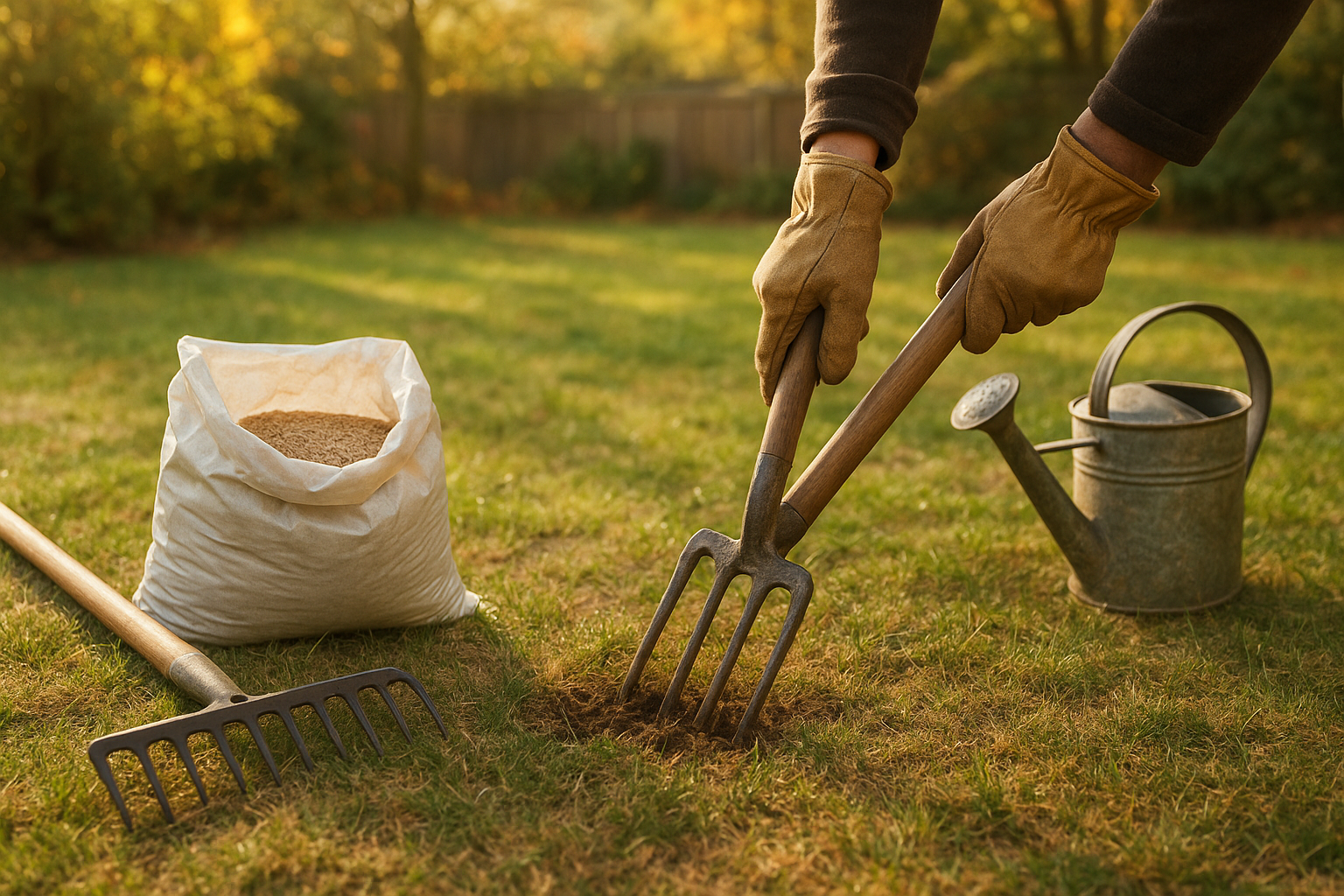
A sturdy garden fork is one of the most useful lawn repair tools you can own. It is ideal for pushing into dense soil and gently loosening the top layer so air and water can reach the roots more easily.
Best for: Small to medium lawns, high-traffic areas, and compacted patches near walkways, patios, or play zones.
What to look for: Strong metal tines, a comfortable handle, and a length that lets you work without straining your back.
How to use it: Push the fork into the ground every few inches, rock it slightly, and pull it back out. You are not trying to dig up the lawn, just open up the soil surface.
2. Core aerator for larger problem areas
If your lawn feels hard underfoot or water puddles instead of soaking in, a core aerator may be a better choice. This tool removes small plugs of soil rather than simply poking holes, which can improve airflow and water movement more effectively in compacted turf.
Best for: Larger lawns with widespread compaction.
What to look for: Hollow tines, a solid frame, and an easy-to-grip design. Manual versions are great for smaller jobs; tow-behind or powered options make sense for bigger yards.
Tip: Aerate when the soil is slightly moist, not rock-hard and not soggy. That makes the job easier and helps the tool work better.
3. Lawn rake or leaf rake for removing thatch and debris
A rake is essential if your lawn has a layer of dead grass, fallen leaves, or dry clippings on top. Clearing that surface debris helps new seed reach the soil and keeps moisture from being trapped in the wrong place.
Best for: Light thatch, leaf cleanup, and preparing thin areas for reseeding.
What to look for: A sturdy fan rake or lawn rake with flexible tines that can lift material without tearing up healthy grass.
Tip: If the thatch layer is thick and spongy, you may need a dethatching tool instead of a standard rake.
4. Overseeding spreader for even seed coverage
If you are filling in patchy spots, a spreader helps distribute grass seed more evenly than hand scattering. That usually means better coverage and fewer clumps of seed in one area and bare ground in another.
Best for: Overseeding the whole lawn or refreshing sparse sections.
What to look for: A handheld spreader for small jobs, or a push spreader for larger spaces. Adjustable settings are helpful so you do not waste seed.
Tip: After spreading seed, lightly rake the area so the seed settles into the top layer of soil.
5. Topdressing materials to improve soil structure
Sometimes the lawn does not just need seed; it needs better soil around the roots. A thin layer of compost, lawn topdressing mix, or screened soil can help improve texture and create a better bed for new growth.
Best for: Bare spots, low areas, and lawns with poor, sandy, or tired soil.
What to look for: A clean, fine-textured material that can be spread thinly without smothering the grass.
Tip: Keep the layer light. You should still be able to see the grass blades through most of the topdressing.
6. Hose, sprinkler, or watering wand
New seed and recovering grass need steady moisture. A hose alone can work, but a sprinkler or watering wand makes it easier to give the lawn a gentle, even soak without blasting the seed away.
Best for: Keeping seeded areas consistently moist during germination.
What to look for: A sprinkler with even coverage, or a wand with a shower setting for delicate spots.
Tip: Water lightly and more often at first. The goal is to keep the top layer damp, not muddy.
How to tackle lawn repair in the right order
Using the right tools matters, but using them in the right order matters just as much. A simple repair sequence can save time and improve results.
- Clear the area: Remove leaves, twigs, and dead grass with a rake.
- Loosen compacted soil: Use a fork or aerator on the hard spots.
- Add a thin topdressing: Work in compost or a suitable lawn mix where needed.
- Spread seed: Use a spreader for even coverage.
- Lightly rake again: Help seed settle into the surface.
- Water gently: Keep the area moist until seedlings are established.
What to buy if you only want the basics
If you are trying to keep things simple, start with these essentials:
- A garden fork: For breaking up compacted patches
- A lawn rake: For cleanup and seed prep
- A spreader: For even overseeding
- A hose with a gentle sprinkler attachment: For careful watering
That small toolkit can handle a surprising amount of fall lawn maintenance, especially if your lawn damage is moderate rather than severe.
How to choose the right lawn repair tools
When shopping, think about the size of your yard and the type of work you will actually do. A small patchy lawn may only need hand tools, while a larger property with dense soil may justify a more specialized aerator.
- For small yards: Choose compact, manual tools that are easy to store.
- For larger yards: Look for tools that save time, such as a push spreader or core aerator.
- For repeated use: Prioritize durability, comfortable handles, and easy cleaning.
- For mixed conditions: Pick versatile tools that can do more than one job, like a fork that also helps break up soil.
Helpful timing tips for fall recovery
Fall is a strong season for lawn repair because cooler temperatures reduce stress on grass and moisture levels are often more favorable. Aim to work when daytime heat is easing but the soil is still workable.
If your lawn is badly damaged, you may need to reseed after aerating and topdressing. If the damage is lighter, simple loosening, overseeding, and consistent watering may be enough to bring it back.
Most importantly, do not wait until the first cold snap. The earlier you start, the more time grass has to root and fill in before winter arrives.
Final thought
Restoring a tired lawn does not have to be complicated. With a few smart lawn repair tools and a basic plan, you can improve soil health, encourage new growth, and help patchy grass recover well before the season changes.