How to Clean a Dishwasher Filter the Right Way
If your dishwasher smells sour, leaves grit on glasses, or suddenly seems less powerful, the problem may be hiding under the bottom rack. Learning how to clean a dishwasher filter is one of the quickest kitchen maintenance jobs you can do, and it often takes less than 15 minutes.
Most newer dishwashers have a removable filter that catches food bits before they reach the pump or recirculate onto your dishes. Whirlpool notes that regular filter cleaning helps keep water flowing strongly and helps prevent food particles from recirculating during the wash cycle. ([producthelp.whirlpool.com](https://producthelp.whirlpool.com/Dishwashers/Dishwasher/Other/Cleaning_and_Odor/Cleaning_and_Maintenance/Cleaning_the_Filter/Cleaning_the_Filter_-_Dishwasher?utm_source=openai))
First, Find Out What Kind of Filter You Have
Before you start twisting parts loose, check your owner’s manual or look up your model number online. Many modern dishwashers have a manual-clean filter, usually located at the bottom of the tub beneath the lower spray arm. Some older dishwashers use a self-cleaning filter or hard-food disposer system, which may not have the same removable cup-style filter.
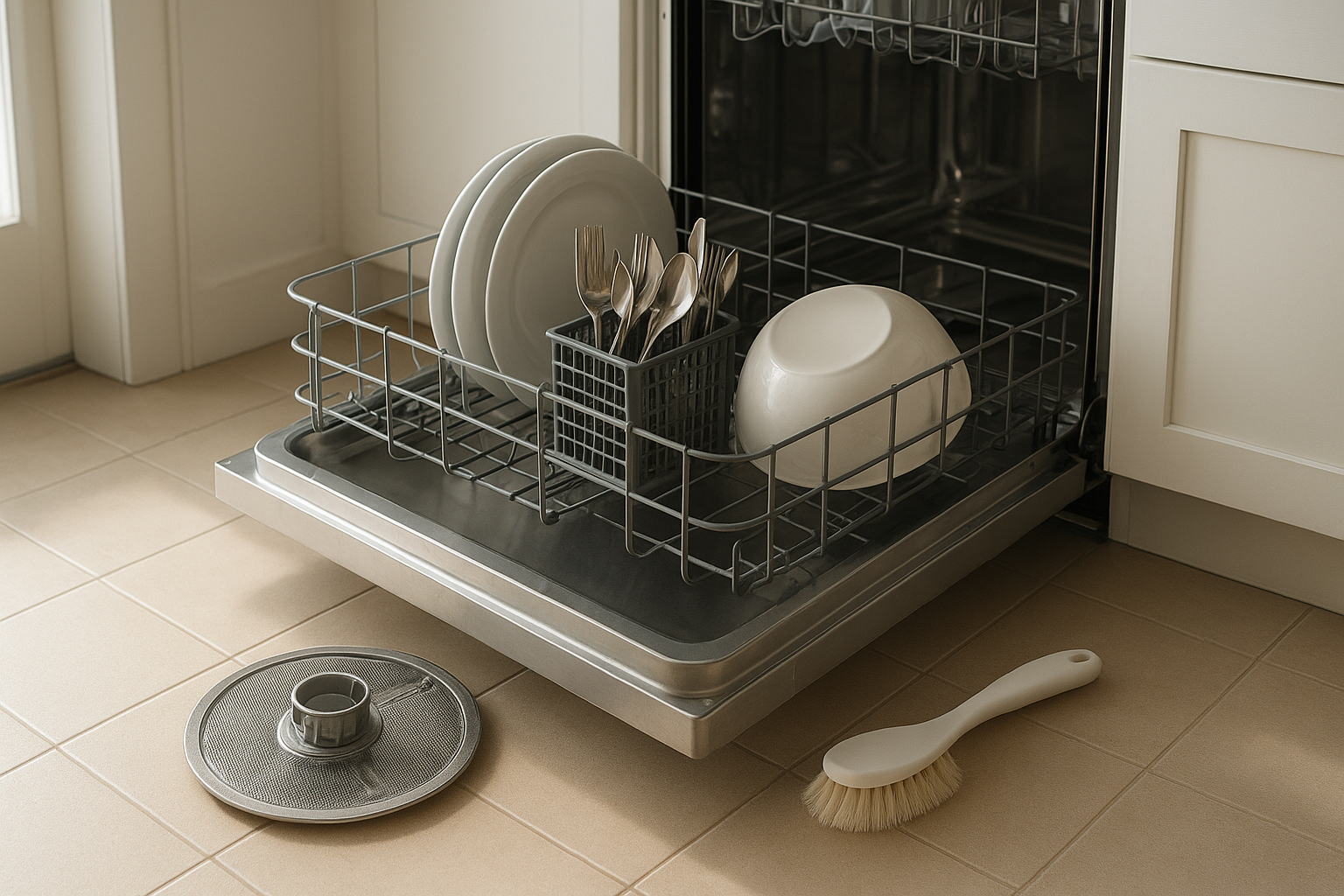
If you see a round or cylindrical piece in the floor of the dishwasher, often with arrows or lock/unlock markings, you probably have a removable filter assembly. It may include an upper cylindrical filter and a flat lower filter screen.
How Often Should You Clean a Dishwasher Filter?
A good practical rule is to check the filter once a month until you know how quickly it gets dirty in your house. Homes that run the dishwasher daily, scrape instead of rinse, or cook greasy foods often may need more frequent cleaning.
Whirlpool’s filter-cleaning schedules vary by how many loads you run and whether you scrape, rinse, or wash dishes before loading. Some manuals recommend cleaning as often as weekly for very heavy use with no scraping, while lighter use may only need it a few times a year. ([whirlpool.com](https://www.whirlpool.com/content/dam/global/documents/201605/owners-manual-W10579121-RevC.pdf?utm_source=openai))
For everyday households, start with monthly. If the filter is nearly clean after two or three checks, stretch it to every two or three months. If it is slimy, smelly, or packed with food, shorten the schedule.
What You’ll Need
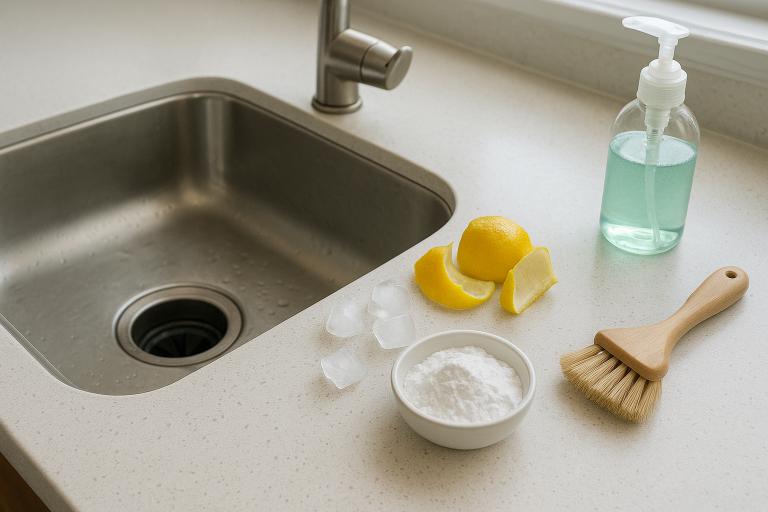
- Dish soap
- Warm running water
- Soft brush, old toothbrush, or small nylon dish brush
- Microfiber cloth or sponge
- Small bowl or towel for catching drips
- Flashlight, optional but helpful
Avoid: wire brushes, scouring pads, sharp tools, bleach mixed with other cleaners, and forcing any part that does not turn easily. Dishwasher filters are usually plastic mesh and can crack or warp if handled roughly.
How to Clean a Dishwasher Filter Step by Step
1. Empty the dishwasher and pull out the lower rack
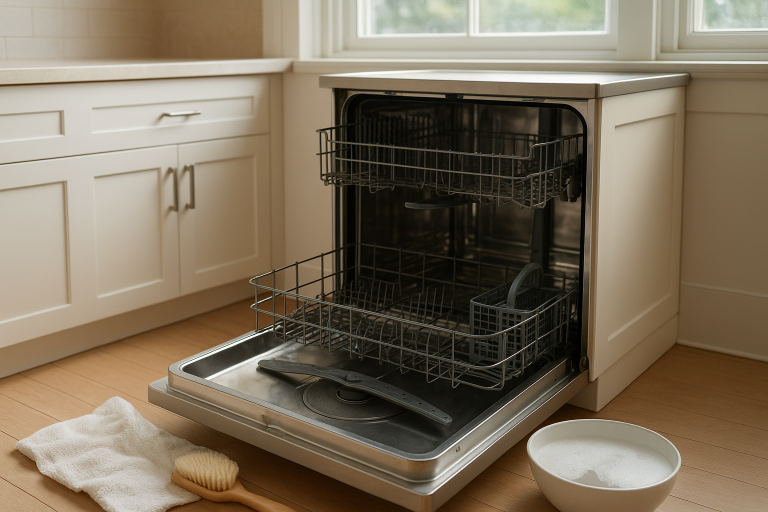
Start with a cool, empty dishwasher. Slide out the bottom rack and set it aside. If there is standing water in the bottom, blot up what you can with a towel so you can see the filter area clearly.
2. Remove the filter gently
Look for arrows or words like “lock” and “unlock.” On many models, you turn the upper filter assembly counterclockwise, then lift it out. The lower flat filter may lift out after that. Whirlpool’s filter instructions describe rinsing the filter under running water and using a soft brush for stubborn soil or calcium deposits. ([producthelp.whirlpool.com](https://producthelp.whirlpool.com/Dishwashers/Product_Info/Dishwasher_Cleaning_and_Care/How_to_Clean_the_Dishwasher_Filters?utm_source=openai))
If the filter will not budge, stop and check the manual. Do not pry it with a screwdriver. A broken filter can let debris reach places you do not want it to go.
3. Rinse away loose food
Hold the filter under warm running water. Rinse from different angles to push food particles out of the mesh instead of deeper into it. Tap it gently against your palm, not the sink, to loosen trapped bits.
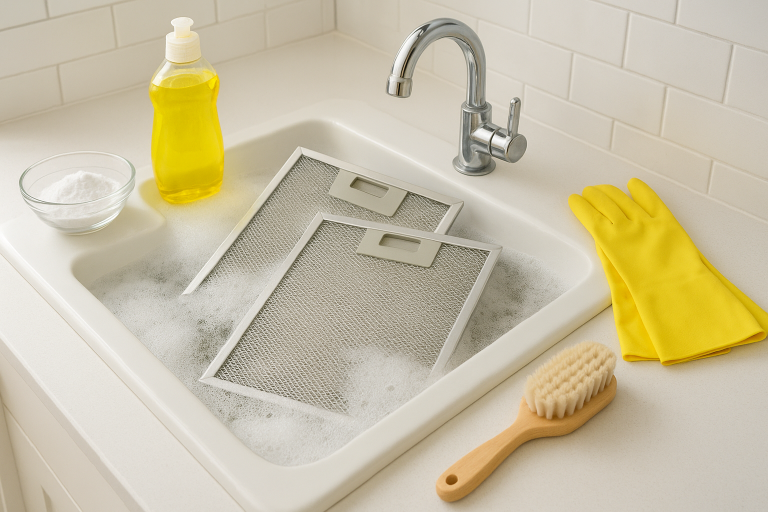
4. Wash with dish soap and a soft brush
Add a drop of dish soap to a soft brush and scrub the mesh, rim, and seams. Pay attention to the underside, where greasy film likes to collect. If you see cloudy mineral buildup from hard water, keep brushing gently under warm water rather than scraping.
5. Wipe the filter well in the dishwasher tub
Before reinstalling the filter, inspect the opening where it sits. Remove labels, lemon seeds, broken glass, twist ties, bones, or any other debris you can safely reach. Use a damp cloth to wipe the surrounding floor of the tub.
If you suspect broken glass, wear thick gloves and use a flashlight. Do not reach blindly into the sump area.
6. Reinstall and lock it in place
Put the lower filter back first if your model has one, then insert the upper filter assembly. Turn it until it locks. This matters: a loose or misaligned filter can affect cleaning performance and may allow food particles to move around the dishwasher.
Once it is locked, spin the lower spray arm by hand to make sure nothing blocks it. Slide the lower rack back in.
Should You Run a Cleaning Cycle Too?
Cleaning the filter removes trapped food, but it does not always clear grease, detergent residue, or mineral film from the tub and spray system. If the dishwasher still smells after the filter is clean, run a dishwasher cleaner cycle according to your appliance manual.
GE Appliances recommends regular dishwasher cleaning and notes that a clean filter is important for efficient operation. Whirlpool also recommends cleaning the interior and, where applicable, removing and cleaning the filter as part of dishwasher care. ([geappliances.com](https://www.geappliances.com/ge/lifestyles/how-to-deep-clean-your-dishwasher.htm?utm_source=openai))
If you prefer a simple routine, clean the filter first, wipe the door gasket, check the spray arm holes for debris, and then run an empty hot cycle with a dishwasher cleaner made for that purpose.
Signs Your Dishwasher Filter Is Clogged
- Grit or food specks on clean dishes
- Glasses look cloudy or feel sandy
- A sour or rotten smell when you open the door
- Water drains slowly or sits in the bottom
- The dishwasher sounds different than usual
- Food collects around the filter area after each cycle
A dirty filter is not the only possible cause of these problems, but it is the easiest place to start. Whirlpool notes that when a clogged filter is the culprit, cleaning it can often restore normal drainage quickly. ([producthelp.whirlpool.com](https://producthelp.whirlpool.com/Dishwashers/Product_Info/Dishwasher_Product_Assistance/Dishwasher_Not_Draining?utm_source=openai))
What Not to Do
- Do not rinse the filter with boiling water. Very hot water can distort some plastic parts.
- Do not use a knife or pick to clear the mesh. You can tear the screen.
- Do not run the dishwasher without the filter locked in place. The filter protects the pump and helps keep food from recirculating.
- Do not assume every dishwasher comes apart the same way. Filter designs vary by brand and model.
- Do not ignore recurring standing water. If cleaning the filter does not help, the drain hose, air gap, garbage disposal connection, or pump may need attention.
A Simple Monthly Dishwasher Filter Routine
- Pull the lower rack and remove the filter.
- Rinse and brush the filter with warm water and dish soap.
- Wipe the filter well and remove visible debris.
- Reinstall the filter securely.
- Wipe the door edges and gasket.
- Run a cleaning cycle if the tub smells or has buildup.
This small habit can make a dishwasher feel almost new again. You do not need fancy tools or a whole afternoon—just a few minutes, a soft brush, and the reminder that the filter is doing a dirty job every time you run a load.
If you have never cleaned yours before, check it today. You may be surprised by what is hiding under the bottom rack—and by how much cleaner your next load looks afterward.