Why Pepper Plants Drop Leaves in August and What to Do
If your pepper plants suddenly look stripped down in August, it can feel like the whole crop is falling apart. In many cases, though, the plant is reacting to stress rather than dying outright. The key is to figure out whether the problem is heat, water, nutrients, or disease before you start cutting or fertilizing.
Peppers often shed leaves late in the season when conditions get tough. Some leaf loss is normal, but heavy defoliation usually leaves clues. Look closely at where the leaves are falling from, what the leaves looked like first, and whether the weather or watering changed recently.
Start with the most common cause: heat stress
August heat can be brutal on peppers. When daytime temperatures climb high and nights stay warm, plants struggle to move water fast enough to keep up. That stress often shows up first as blossom drop, then as yellowing or dropping leaves, especially on the lower part of the plant.
Heat stress is more likely if the plants are in full afternoon sun, planted near a heat-reflecting wall or driveway, or exposed to drying wind. Container peppers usually show symptoms sooner than in-ground plants because their roots heat up and dry out faster.
What to look for:
- Flowers or tiny fruits dropping before leaves fall
- Leaves curling during the hottest part of the day
- Scorched fruit where leaves have thinned out
- Rapid stress after several very hot days in a row
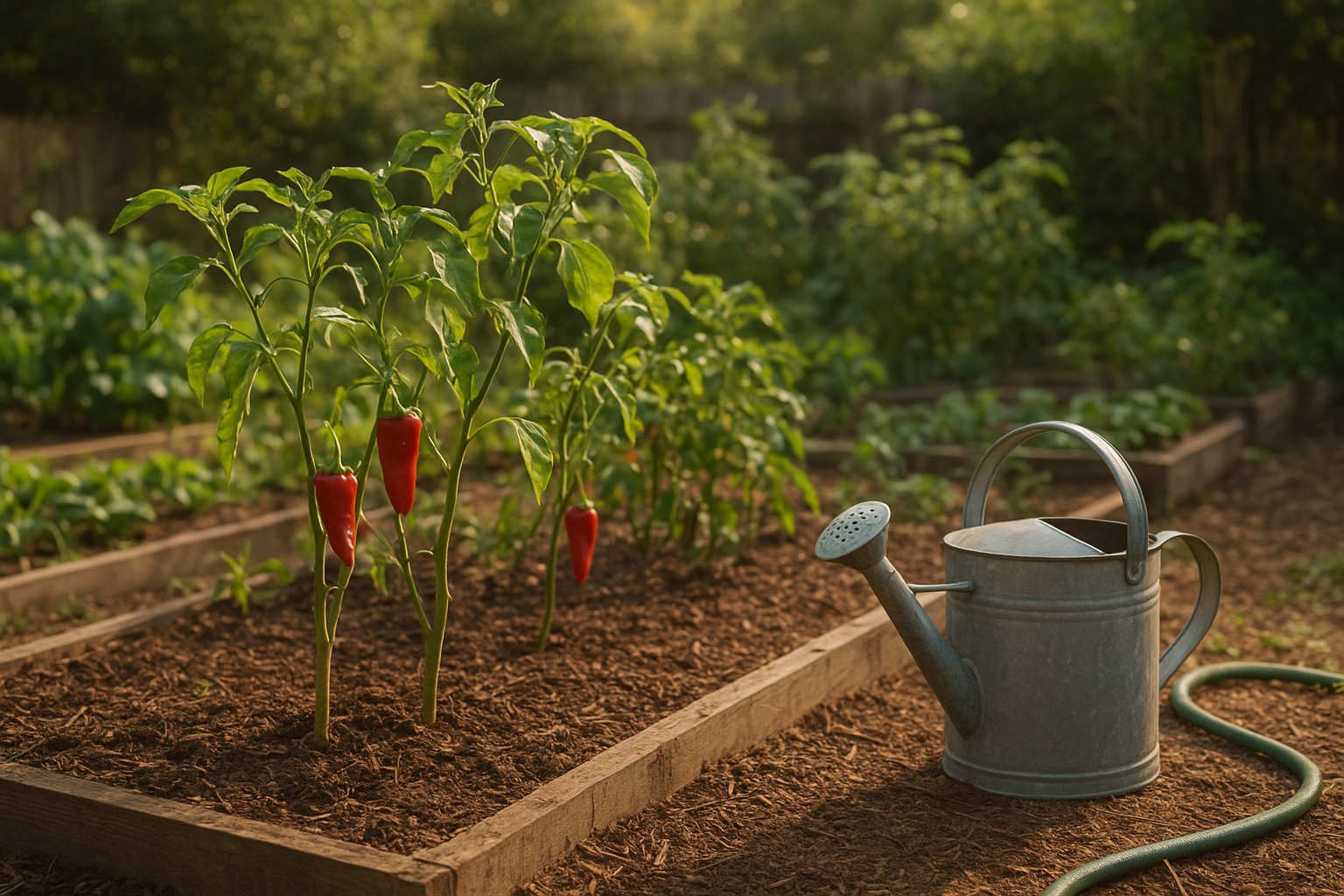
What helps: A layer of mulch, consistent watering, and temporary afternoon shade can make a big difference. If you use shade cloth, aim for light filtering rather than heavy darkness. The goal is to reduce stress without shutting down growth.
Check for watering swings
Inconsistent watering is one of the fastest ways to trigger pepper leaf drop. Plants that alternate between too dry and too wet lose fine feeder roots, which makes it harder to absorb water and nutrients. The result can be yellowing leaves, drooping, and gradual leaf loss from the bottom upward.
This is especially common in containers, where a hot sunny day can dry the pot out in hours. In raised beds and garden beds, the problem is often less about total water and more about irregular watering patterns.
Signs your watering is the issue:
- Leaves drop after a period of drought followed by heavy watering
- Soil feels dry several inches down
- Leaves yellow before they fall
- Plants perk up briefly after watering, then decline again
Instead of watering a little every day, give peppers a deep soak and let the soil dry only slightly before watering again. The exact timing depends on heat, soil type, and pot size, so check the root zone rather than guessing from the surface. A mulch layer helps keep moisture steadier and protects roots from temperature swings.
If you suspect overwatering, don’t assume the plant needs even more water. Saturated soil can cut off oxygen to the roots and create symptoms that look a lot like drought. If the soil stays wet for days, improve drainage or reduce how often you water.
Don’t overlook nutrient problems
By late summer, peppers may be running low on available nutrients, especially if they’ve already produced a heavy crop. Nitrogen shortage can cause older leaves to yellow and drop, while the plant keeps pushing energy into fruit. That can make the plant look sparse even when it is still producing peppers.
Too much fertilizer can also cause trouble. Excess nitrogen encourages leafy growth early in the season, but if feeding is too strong or too frequent, it can stress the plant and reduce fruit quality. In general, peppers do better with steady, moderate feeding than with big fertilizer swings.
Clues that point to nutrients:
- Older leaves yellow first, especially at the bottom of the plant
- Fruit remains on the plant, but new growth is weak
- The plant looks pale overall instead of spotted or sunburned
- Soil has not been amended or fed in a long time
If your soil is poor or your plants are in pots, a balanced vegetable fertilizer can help. Follow the label closely, and avoid overdoing it late in the season. A soil test is even better if the problem keeps coming back year after year.
Look closely for disease and pests
Not all leaf drop is caused by weather or care. Fungal and bacterial diseases can strip leaves from pepper plants, especially when humidity is high and airflow is poor. Several pests can also weaken plants enough that they shed foliage.
Watch for these warning signs:
- Spots with dark centers, rings, or yellow halos
- Leaves that look mottled, distorted, or shriveled
- Sticky residue or tiny insects on the undersides of leaves
- Leaves dropping from one side of the plant first
- Stems that look darkened or water-soaked
If you see spots, remove badly affected leaves and avoid overhead watering. Water at soil level instead. Also make sure plants are not crowded, because dense growth traps moisture and encourages disease. If a disease has already spread widely, removing infected plants may be the best way to protect the rest of the garden.
Use the pattern to narrow it down
The order of symptoms tells you a lot. If blossoms are failing first and the plant drops leaves during a heat wave, temperature stress is likely. If lower leaves yellow after repeated drying out, watering is probably the main issue. If the plant looks weak, pale, or spotty, think nutrients or disease.
Here is a simple way to diagnose what you are seeing:
- Check the weather. Have temperatures been extreme for several days?
- Check the soil. Is it dry several inches down, or wet and compacted?
- Inspect the leaves. Are they yellow, spotted, curled, or cleanly dropped?
- Look at the plant shape. Is leaf loss starting low, high, or all over?
- Check for pests. Examine the undersides of leaves and stems closely.
That quick walk-through usually points you toward the real problem faster than guessing.
What to do right away
Once you identify the likely cause, keep the plant stable. Peppers recover best when conditions stay steady rather than when they are repeatedly “fixed” in big doses.
- Water deeply and consistently instead of giving shallow daily splashes.
- Add mulch to protect roots and reduce evaporation.
- Provide afternoon shade during intense heat.
- Skip hard pruning unless diseased growth must be removed.
- Feed lightly only if the plant truly seems nutrient-starved.
- Remove infected leaves if disease is spreading.
Try not to overreact by stripping the plant or yanking it out too quickly. Even a pepper with a thin canopy can still finish ripening fruit if the stem and roots are healthy. The remaining leaves help protect peppers from sunscald, so leave enough foliage in place whenever possible.
How to prevent August leaf drop next season
Once you have a better read on the cause, you can make next year easier on your plants. Peppers like warmth, but they dislike extremes. A little planning goes a long way.
- Choose varieties suited to your climate and summer heat.
- Plant where they get morning sun and some protection from the hottest afternoon rays if your summers are intense.
- Use compost and mulch to help the soil hold moisture evenly.
- Water on a steady schedule, especially in containers.
- Give plants enough room for airflow.
- Rotate pepper beds to reduce disease buildup in the soil.
Late-summer leaf drop is a warning sign, but it is not always a death sentence. In many gardens, the plant is simply telling you that its environment has become harder to manage. Once you correct the stress, peppers often keep going long enough to ripen a final round of fruit.