Best Lavender Varieties for Every USDA Growing Zone
Lavender is one of those garden plants that looks effortless when it’s happy and disappointing when it’s not. The secret is simple: choose a variety that suits your climate, not just the prettiest label at the nursery. When you match the plant to your zone, soil, and summer heat, lavender rewards you with fragrant flowers, silvery foliage, and months of pollinator activity.
Below, you’ll find the best lavender options for different USDA growing zones, along with practical tips for planting and care. Whether you garden in a cold northern climate or a hot, humid region, there’s a lavender that can earn its keep.
How to Choose Lavender for Your Climate
Lavender generally prefers full sun, sharp drainage, and lean soil. The biggest mistake gardeners make is treating it like a lush bedding plant. Too much water, rich fertilizer, or heavy clay soil can shorten its life quickly. The right variety matters just as much as the right location.
As a rule, English lavender types are the most cold-hardy, while Spanish and French lavender often suit warmer zones better. Some types also tolerate humidity more reliably than others, which is important if your summer weather feels sticky instead of dry.
Quick Lavender Growing Rules
- Give lavender at least 6 to 8 hours of direct sun.
- Plant in fast-draining soil or raised beds if your ground stays wet.
- Avoid heavy compost or high-nitrogen fertilizer.
- Water young plants regularly, then reduce watering once established.
- Prune lightly every year to keep plants compact and woody growth under control.
Best Lavender Varieties by USDA Zone
Zones 1-4: ‘Munstead’ English Lavender
If you garden in a cold climate, your best bet is a hardy English lavender like Lavandula angustifolia ‘Munstead’. It’s compact, fragrant, and more cold-tolerant than many showier lavender types. In short growing seasons, its relatively early bloom time gives you a better chance of enjoying flowers before autumn arrives.
This variety works well in containers too, which is useful if winter wetness is a bigger threat than winter cold. In very harsh climates, gardeners often grow lavender in pots and move them to a protected space for winter.
Best use: container planting, edging, dried bouquets, small spaces.
Zones 5-6: ‘Hidcote’ English Lavender
For many gardeners in zones 5 and 6, Lavandula angustifolia ‘Hidcote’ is a favorite. It forms neat mounds, has deep purple flowers, and offers a strong fragrance that makes it especially useful for sachets, cut flowers, and culinary use. It’s also reliable in cooler summers and usually handles winter better than more tender types.
If you want a low hedge or a row along a path, this is one of the most dependable choices. Just remember that lavender hates soggy roots, so drainage is still the deciding factor even in the right zone.
Best use: hedges, cottage gardens, cutting gardens, herb beds.
Zones 7-8: ‘Grosso’ Lavandin
When you want big fragrance and lots of flowers, Lavandula x intermedia ‘Grosso’ is hard to beat. This lavandin is a cross between English and Portuguese lavender and tends to make larger plants with long stems and impressive bloom spikes. It’s a favorite for drying because the stems are sturdy and the flower count is high.
‘Grosso’ thrives in sunnier, warmer gardens with well-drained soil. It can be a smart choice if you want a dramatic planting that still looks tidy with minimal fuss. Keep in mind that lavandins are usually less cold-hardy than true English lavender.
Best use: drying, large borders, pollinator plantings, fragrant mass planting.
Zones 8-9: Spanish Lavender Types
In warmer regions, Spanish lavender (Lavandula stoechas) often performs better than English types. It has distinctive flower heads topped with colorful “rabbit ear” bracts and gives the garden a more ornamental, almost whimsical look. It can flower for a long season in mild climates and is a good option where winters are not severe.
Spanish lavender likes excellent drainage and does not appreciate being overwatered. Once established, it can handle heat well, but it may decline if summers are humid and soil stays wet for long stretches.
Best use: warm-climate borders, ornamental containers, patio pots.
Zones 9-11: French Lavender for Mild Winters
In frost-free or nearly frost-free areas, French lavender can be a beautiful choice. It often flowers repeatedly and can look especially handsome in decorative containers. Its foliage and blooms bring a softer, more delicate appearance than some of the bolder English varieties.
Because heat and humidity can cause trouble, plant French lavender in a bright, breezy location with fast drainage. If your summers are wet, containers may give you better control than garden soil.
Best use: patios, Mediterranean-style gardens, sheltered warm-climate beds.
Should You Grow Lavender in Pots?
Container growing is a great solution if your climate is too cold, too wet, or too humid for reliable in-ground success. Pots drain faster than many garden beds, and they let you move plants to a protected spot when needed.
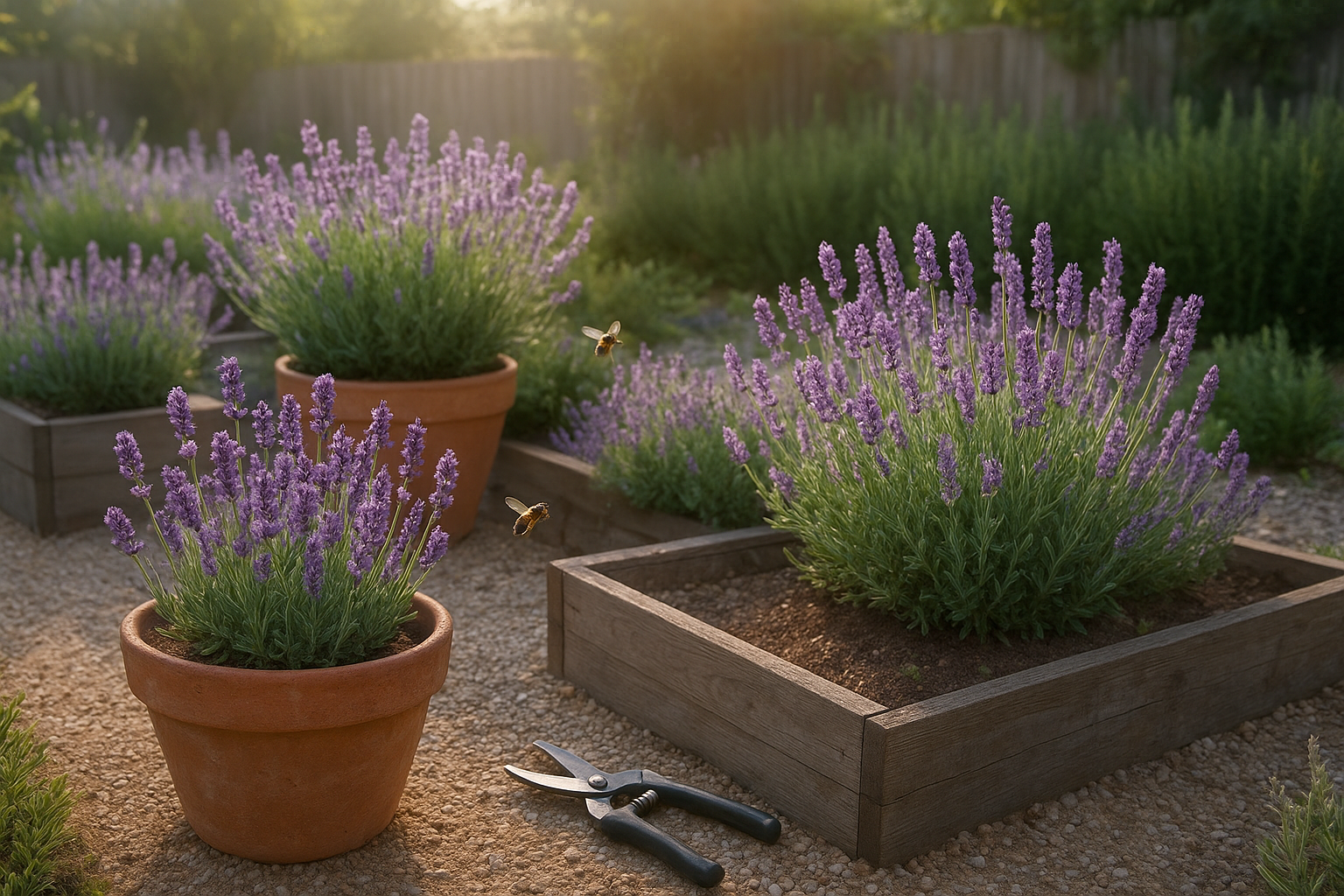
Choose a container with drainage holes, and use a gritty potting mix rather than heavy all-purpose soil. A terracotta pot can help soil dry more evenly. For colder zones, bring pots into an unheated garage, shed, or porch where the plant stays cool but does not freeze solid.
- Pick a pot at least 12 to 16 inches wide for most dwarf varieties.
- Use a fast-draining mix with sand, grit, or small gravel if needed.
- Water deeply, then allow the top inch or two of soil to dry before watering again.
- Turn the pot occasionally so growth stays even.
Planting Lavender the Right Way
Lavender is much easier to grow when it starts off in the right place. Full sun and excellent drainage matter more than rich soil. If your yard has clay or holds water after rain, consider a raised bed, slope, or berm.
- Choose a sunny spot with air movement.
- Dig a hole only as deep as the root ball and slightly wider.
- Set the plant so the crown sits just above soil level.
- Backfill with native soil amended lightly only if necessary.
- Water to settle the roots, then mulch sparingly with gravel or small stones instead of heavy organic mulch.
Gravel mulch can be especially helpful because it reflects heat, discourages excess moisture around the crown, and suits lavender’s Mediterranean look.
Pruning and Maintenance for Longer-Lived Plants
Lavender benefits from regular pruning, but not hard cutting into old woody stems. The goal is to keep the plant rounded and productive, not flattened. After flowering, trim back spent stems and lightly shape the plant. In spring, remove any winter damage and nudge the plant into a neat mound.
Do not cut into bare woody stems that have no green growth. Lavender may not resprout well from old wood, and aggressive pruning can weaken or kill the plant.
Good Lavender Care Habits
- Deadhead lightly if you want to encourage a cleaner appearance.
- Water young plants until established, then only during dry spells.
- Avoid crowding plants so airflow stays strong.
- Refresh container soil every couple of years.
- Replace tired plants when bloom production drops sharply.
Varieties Worth Trying Beyond the Classics
If you want something a little different, look for white- or pink-flowering cultivars, as well as compact forms for edging and pots. These can be lovely in mixed borders and often bring out the silver tones in the foliage.
For example, white lavender can brighten a moon garden, while pink varieties soften paths and cottage-style plantings. The flowers may be less common, but the growing needs are usually similar: sun, drainage, and restraint with watering.
The Bottom Line
The best lavender varieties for every USDA growing zone are the ones that fit your weather as well as your style. Cold climates usually do best with hardy English lavenders, warm regions can lean into Spanish or French types, and gardeners with tricky soil can often succeed with containers or raised beds. Match the plant to the place, and lavender becomes one of the most rewarding low-maintenance plants in the garden.
If you want reliable fragrance, strong stems, and flowers that keep pollinators coming back, start with the right variety first. The rest is mostly sunshine, drainage, and a light hand.