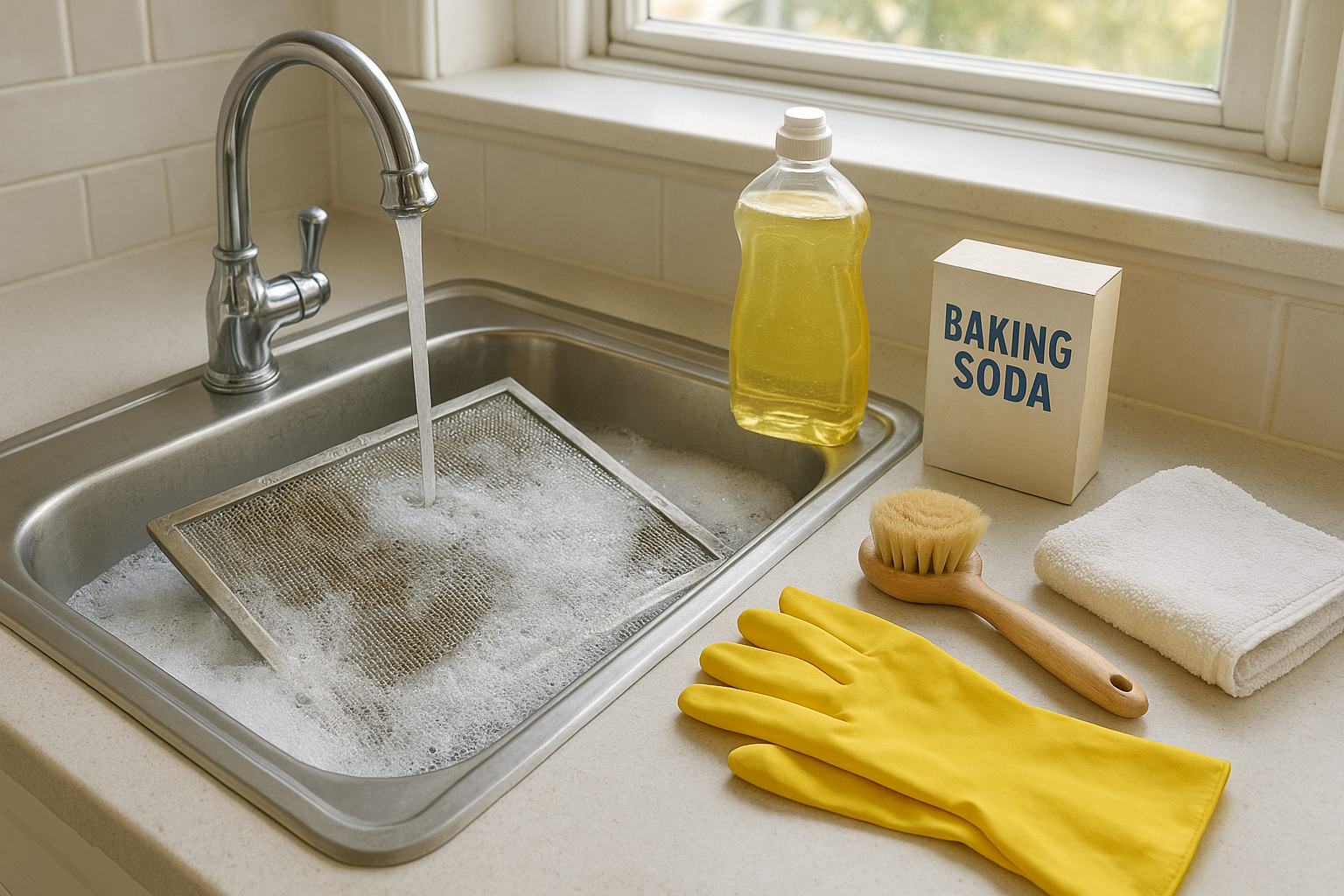
How to Clean a Range Hood Filter Without the Mess
If the fan over your stove sounds loud, smells stale, or does not seem to pull steam like it used to, the range hood filter may be overdue for a cleaning. The good news: most metal grease filters can be cleaned with hot water, dish soap, and a little patience—no harsh fumes required.
This guide walks you through how to clean a range hood filter without splattering greasy water all over the kitchen. You will also learn when to use the dishwasher, when not to soak, and how to tell if your filter needs replacing instead of cleaning.
Why Cleaning the Range Hood Filter Matters
A range hood filter catches grease before it reaches the fan, ductwork, cabinets, and surrounding walls. When that filter gets clogged, your hood has to work harder and may do a worse job removing smoke, steam, odors, and cooking particles.
There is also a safety reason to keep up with it. The U.S. EPA recommends using a range hood while cooking and routinely cleaning the hood’s grease filter as part of improving indoor air quality during cooking. ([epa.gov](https://www.epa.gov/indoor-air-quality-iaq/strategies-improving-indoor-air-quality-while-cooking-infographic?utm_source=openai)) Major range hood brands also advise regular cleaning of metal grease filters; Broan-NuTone, for example, says aluminum and baffle filters should generally be cleaned monthly, depending on use. ([broan-nutone.com](https://broan-nutone.com/en-us/home/learn/when-is-the-right-time-to-change-your-range-h?utm_source=openai))
First, Know Which Filter You Have
Before you fill the sink, take a quick look underneath your hood. Most home range hoods use one of these filter types:
- Aluminum mesh filter: Lightweight, layered, and often silver. These are common in standard under-cabinet hoods.
- Stainless steel baffle filter: Heavier, with angled channels or ridges. These are often found in more powerful or professional-style hoods.
- Charcoal or carbon filter: Usually black or fabric-like, often used in ductless range hoods that recirculate air back into the kitchen.
Metal mesh and baffle filters are washable. Charcoal filters are not washable in the usual sense; many manufacturers say they must be replaced because they trap odors and particles inside the material. Broan-NuTone notes that non-ducted carbon filters cannot be cleaned or washed and must be replaced. ([help.broan-nutone.com](https://help.broan-nutone.com/en/range-hoods/How-often-should-I-clean-my-filters-79f5?utm_source=openai))
Supplies You’ll Need
- Rubber gloves
- Old towel or baking sheet to protect the stovetop
- Sink, dishpan, or large rimmed baking sheet
- Very hot tap water
- Grease-cutting dish soap
- Baking soda
- Soft scrub brush or non-scratch sponge
- Microfiber cloth or dish towel
- Optional: dishwasher detergent, if your manual allows dishwasher cleaning
Step-by-Step: How to Clean a Range Hood Filter
1. Turn Off the Fan and Let the Stove Cool
Make sure the burners are off and the cooktop is completely cool. If you recently cooked with oil, give the area time to settle. Lay an old towel over the stovetop to catch drips when you remove the filter.
2. Remove the Filter Carefully
Most filters slide, pop, or unlatch from the underside of the hood. Hold the filter with both hands so it does not drop onto the cooktop. If you are not sure how it comes out, check your range hood manual first. Several manufacturers recommend following model-specific instructions before removing or washing filters. ([samsung.com](https://www.samsung.com/us/support/answer/ANS10006808/?utm_source=openai))
3. Knock Off Loose Grease and Dust
Hold the filter over the trash and gently tap it to remove loose crumbs or debris. Do not bang aluminum mesh filters hard; they can bend. If the filter is extremely greasy, wipe the outside with a paper towel before soaking so you do not turn the sink water into an oil slick right away.
4. Make a Hot Soapy Soak
Plug the sink or fill a dishpan with enough very hot water to cover the filter. Add a generous squirt of grease-cutting dish soap and about 1/4 cup baking soda. Swish the water carefully with a gloved hand until the baking soda mostly dissolves.
Baking soda helps loosen greasy buildup and gives you mild scrubbing power without scratching most metal filters. Avoid mixing in vinegar here. Vinegar and baking soda mostly neutralize each other when combined, and vinegar can be rough on some metal finishes if left to sit too long.
5. Soak for 10 to 20 Minutes
Place the filter in the water and let it soak. If it is too large to lie flat, soak one end first, then flip it. For a lightly dirty filter, 10 minutes may be enough. For a sticky, yellowed filter, give it closer to 20 minutes and refresh the water if it becomes cold and greasy.
6. Scrub Gently
Use a soft brush or non-scratch sponge to scrub with the direction of the mesh or baffles. Pay attention to the corners, pull tab, and frame, where grease often collects. Do not use steel wool on aluminum mesh filters; it can damage the surface and leave behind dark residue.
7. Rinse Well
Rinse the filter under hot running water until the water runs clear and no soap bubbles remain. If the filter still feels tacky, repeat the soak with fresh hot water, dish soap, and baking soda. A second short soak is usually better than aggressive scrubbing.
8. Dry Completely Before Reinstalling
Shake off extra water, then set the filter on a towel to air-dry completely. Do not reinstall it while dripping wet, especially near electrical parts. Once dry, slide or snap it back into place and run the fan briefly to make sure everything is seated correctly.
Can You Put a Range Hood Filter in the Dishwasher?
Sometimes, yes—but check the manual first. Some brands allow dishwasher cleaning for certain metal baffle filters and grease filters. Samsung, for instance, says its baffle filter and drip tray can be cleaned in the dishwasher for applicable models. ([samsung.com](https://www.samsung.com/us/support/answer/ANS10006808/?utm_source=openai)) Broan-NuTone also says aluminum mesh grease filters may be washed in the dishwasher about monthly, depending on use, while warning that discoloration may happen and does not necessarily affect performance. ([help.broan-nutone.com](https://help.broan-nutone.com/en/range-hoods/How-often-should-I-clean-my-filters-79f5?utm_source=openai))
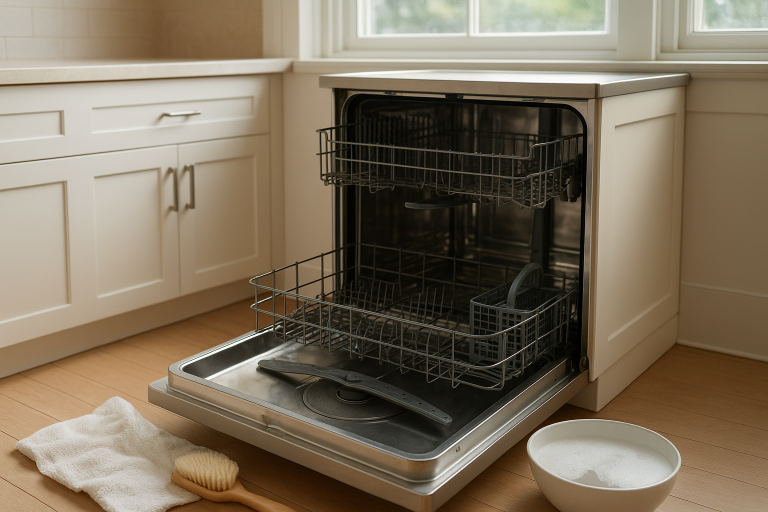
If you do use the dishwasher, skip the heated dry cycle if your manual recommends it, and do not wash the filter with dishes. Grease from the filter can redeposit on glassware, plates, and the inside of the dishwasher.
How Often Should You Clean It?
For most everyday kitchens, plan to clean a metal range hood filter about once a month. If you fry often, cook with a wok, sear meat, or use the stove daily, you may need to clean it every two to three weeks. If you rarely cook on the stovetop, every two to three months may be enough.
A simple rule: if the filter feels sticky, looks yellow or brown, smells greasy, or the fan seems weaker than usual, clean it now rather than waiting for a schedule.
When to Replace Instead of Clean
Cleaning helps, but filters do not last forever. Replace the filter if:
- The mesh is torn, crushed, or separating from the frame.
- The filter stays sticky after two thorough cleanings.
- It has heavy corrosion or sharp broken edges.
- It no longer fits securely in the hood.
- It is a charcoal filter and has reached the replacement interval in your manual.
For charcoal filters, many manufacturers recommend replacement every few months depending on cooking habits and hood use. Since models vary, your manual is the best guide for the correct part number and schedule.
A Quick Way to Keep It Cleaner Longer
Turn the hood fan on before the pan gets smoky, not after. Let it run for a few minutes after cooking, especially after frying or searing. Wipe the outside of the hood weekly with warm soapy water so grease does not harden on the surface.
Once you get into the habit, cleaning a range hood filter is a 20-minute maintenance task, not a dreaded kitchen rescue mission. A clean filter helps your hood pull better, keeps greasy odors down, and makes the whole cooking area feel fresher.