How to Plant a Fall Cover Crop in Raised Beds
If your raised beds are starting to empty out after summer crops, don’t leave that soil bare until spring. Planting a fall cover crop in raised beds is one of the easiest ways to protect the soil, crowd out weeds, and add organic matter with very little work.
The simplest beginner-friendly choice is a winter-kill mix, such as oats and field peas. It grows quickly in cool weather, then dies back in freezing temperatures in many climates, leaving a soft mulch that is much easier to manage than a hardy crop like winter rye.
Why Plant a Fall Cover Crop in Raised Beds?
Raised beds are productive because the soil is loose, well-drained, and easy to work. But after a busy summer of tomatoes, peppers, cucumbers, beans, and flowers, that soil can be tired and exposed. A cover crop helps bridge the gap between seasons.
A good fall cover crop can:
- Protect bare soil from pounding rain, wind, and erosion.
- Suppress cool-season weeds by shading the soil.
- Add organic matter when the plants are cut down and left to decompose.
- Feed soil life with living roots while the crop is growing.
- Capture leftover nutrients so they are less likely to wash away.
For home gardeners, the goal is not to grow a perfect field of cover crop. The goal is simply to keep the bed covered and alive for as long as the season allows.
The Best Easy Cover Crop for Beginners
If this is your first time, start with oats and field peas. This mix is forgiving, fast, and useful in small raised beds.
Oats sprout quickly, make a nice grassy stand, hold soil in place, and produce plenty of leafy growth. Field peas are legumes, which means they can work with soil bacteria to fix nitrogen when conditions are right. Together, they make a thick, soft cover that is usually easier to clean up than overwintering grains.
In cold-winter areas, oats and peas are often winter-killed, meaning hard freezes knock them down naturally. By spring, you may find a flattened mat of dead stems that can be raked aside or planted through. In warmer climates, they may keep growing longer and need to be cut down before spring planting.
Other Good Options
- Buckwheat: Best for a quick summer or very early fall planting when you have 4 to 6 warm weeks before frost. It flowers fast, so cut it before it drops seed.
- Annual ryegrass: Good for cover, but can be harder to terminate than oats.
- Winter rye: Very hardy and excellent at covering soil, but it can become a spring chore in small beds because it survives winter and grows vigorously.
- Crimson clover: Useful in mild climates, but slower to establish than oats and peas.
For a small home garden, avoid complicated mixes your first year. A simple oats-and-peas blend teaches you the rhythm without creating a spring mess.
When to Plant a Fall Cover Crop
The best time to sow a fall cover crop is as soon as a bed opens up. Don’t wait until the whole garden is finished. If the cucumber bed is done in August but the peppers are still producing, plant the empty cucumber bed now.
As a general guide, many gardeners sow fall cover crops from late summer through early fall. Oats are commonly planted from late August into September in many northern and temperate areas, while hardier grains like winter rye can be planted later. Your local frost date matters, so aim to give oats and peas at least several weeks of growth before hard freezes arrive.
If you are unsure, plant anyway. A short stand of cover crop is still better than bare soil. Even 3 to 4 inches of growth helps shade the bed and hold the surface in place.
How Much Seed Do You Need?
For raised beds, it is easier to think in handfuls than farm rates. For an oats-and-peas mix, a practical home-garden rate is about 1/2 to 3/4 cup of seed for a 4-by-8-foot raised bed. Use the lighter amount if you are planting early with plenty of time for growth. Use the heavier amount if you are planting late and want quick coverage.
If you buy a packaged cover crop mix, follow the label rate when available. Seed size varies, and some mixes include small seeds that go much farther than oats or peas.
How to Plant a Fall Cover Crop in Raised Beds
You do not need special tools. A rake, a watering can or hose, and your seed are enough.
- Clear the bed. Remove finished vegetable plants, large weeds, stakes, cages, and old fruit. Compost healthy plant debris, but throw away diseased foliage if needed.
- Leave the roots when practical. If plants were healthy, cut them at soil level instead of yanking everything out. Old roots break down and help feed soil organisms.
- Loosen only the top inch. Use a hand rake or garden fork to scratch the surface. You do not need to deeply turn the bed.
- Add compost if the bed is low. A thin layer of finished compost is fine, especially if the soil level has dropped. Rake it smooth.
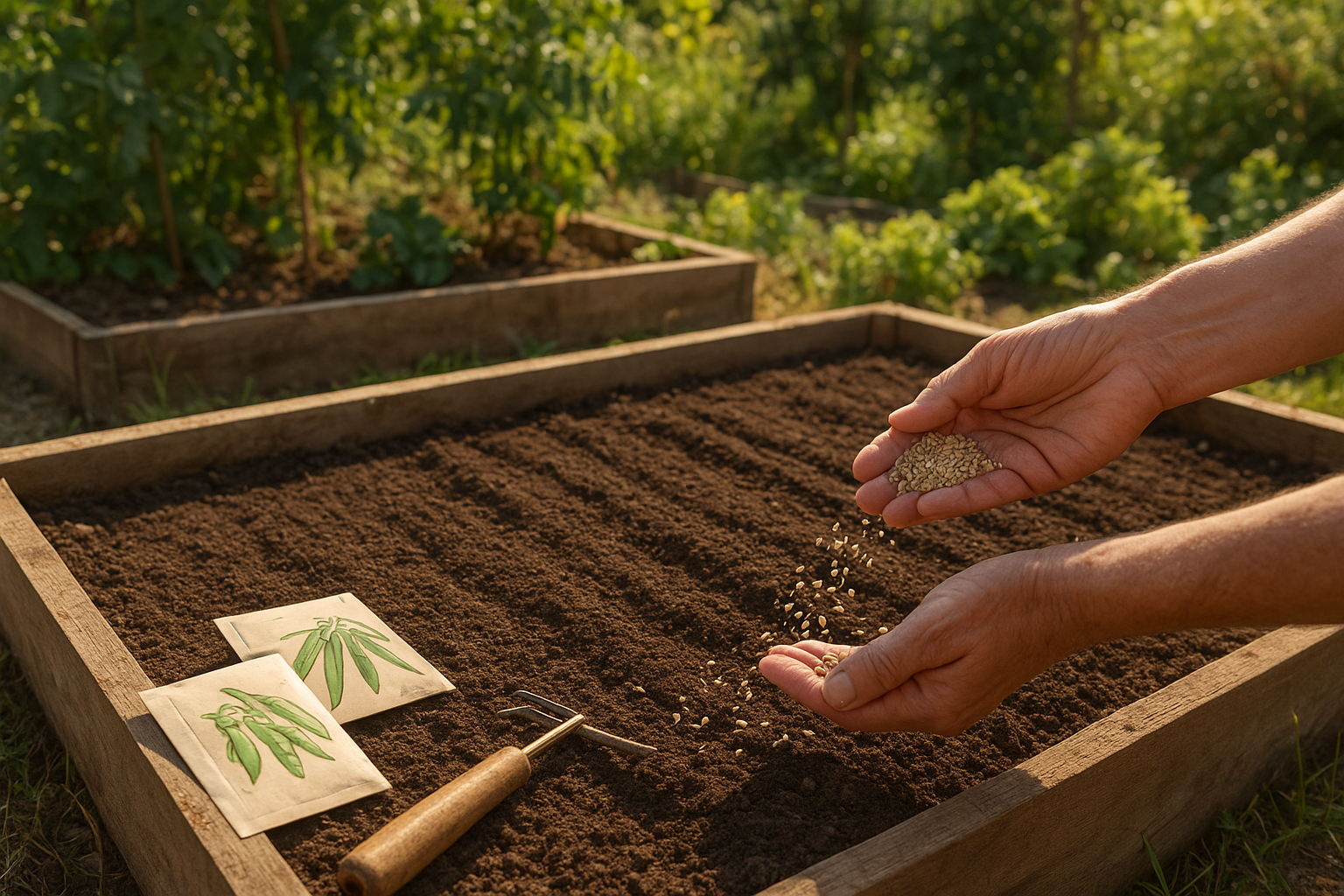
- Broadcast the seed. Scatter seed evenly over the bed, first in one direction and then across the bed the other way. This helps avoid bare patches.
- Rake it in. Cover most seeds with about 1/2 inch of soil. Peas can sit a little deeper; tiny seeds should be closer to the surface.
- Press the soil. Pat the bed with the back of a rake or your hands. Good seed-to-soil contact matters.
- Water gently. Keep the surface damp until the seed sprouts. After that, water only if the weather is dry.
You should see oat shoots fairly quickly in mild weather. Peas may take a little longer, but once they get going, they add nice leafy growth between the oats.
Should You Fertilize a Cover Crop?
Usually, no. A cover crop is meant to scavenge what is already in the soil and protect the bed between food crops. If your raised bed is extremely depleted, a light layer of compost before seeding is enough.
Avoid high-nitrogen fertilizer in fall unless a soil test specifically recommends it. Too much quick nitrogen can push tender growth that may not be useful before winter, and it defeats part of the purpose of using cover crops to hold nutrients in place.
What to Do When Frost Arrives
In many colder regions, oats and peas will turn brown and collapse after repeated hard freezes. That is not failure. That is exactly what makes them easy for raised beds.
Leave the dead plants in place over winter as a protective mulch. They help shield the bed from rain and snow, and the roots stay in the soil to break down naturally. If the bed looks messy, you can trim tall growth with shears before winter, but don’t strip the soil bare.
In mild climates where oats and peas keep growing through winter, cut them down before they flower heavily or set seed. Use garden shears, a string trimmer, or a sharp hoe. Leave the clippings on the bed as mulch or compost them if you need a clean planting surface.
How to Prepare the Bed in Spring
About 2 to 3 weeks before planting spring crops, check the bed. If the cover crop winter-killed, rake aside any thick mat where you want to seed carrots, lettuce, or other small-seeded crops. For transplants like tomatoes, peppers, cabbage, or flowers, you can often part the residue and plant right through it.
If the cover crop is still alive, cut it down at soil level. Let the tops wilt and decompose for a couple of weeks before planting. This short waiting period makes the bed easier to work and helps avoid tangling tender seedlings in fresh green growth.
Do not bury huge amounts of fresh cover crop right before planting. In a raised bed, it is usually better to chop, drop, and let the soil surface do the work. Add compost on top if needed, then plant.
Common Mistakes to Avoid
- Planting too late: Late is better than never, but earlier planting gives you more growth and more benefit.
- Choosing winter rye by accident: Winter rye is useful, but it can be too vigorous for beginners in small raised beds.
- Letting buckwheat go to seed: Buckwheat is wonderful, but cut it when it starts flowering if you do not want volunteers.
- Leaving the bed dry after sowing: Seeds need steady moisture to germinate.
- Digging too deeply: Keep soil disturbance light. The cover crop roots are part of the benefit.
The Simple Plan
If you want the easiest version, do this: as soon as a raised bed is finished in late summer or early fall, clear it, rake the surface, scatter an oats-and-peas cover crop mix, rake it in, and water. Let frost do the cleanup if you live where winters are cold.
That one small job can leave you with fewer weeds, better-covered soil, and a raised bed that is easier to wake up in spring. It is not fancy, but it is one of the most practical habits a vegetable gardener can build.