Cottage Cheese Scrambled Eggs: Creamy 4-Ingredient Breakfast
When you want breakfast to feel a little more special without adding much time, cottage cheese scrambled eggs are an easy win. A few spoonfuls of cottage cheese melt into the eggs as they cook, making them soft, rich, and surprisingly filling.
This is the kind of recipe that works on busy weekdays, lazy weekends, and even those mornings when you are trying to use what is already in the fridge. With just a handful of ingredients and one skillet, you can have a warm, protein-forward breakfast on the table in about 15 minutes.
Why cottage cheese belongs in scrambled eggs
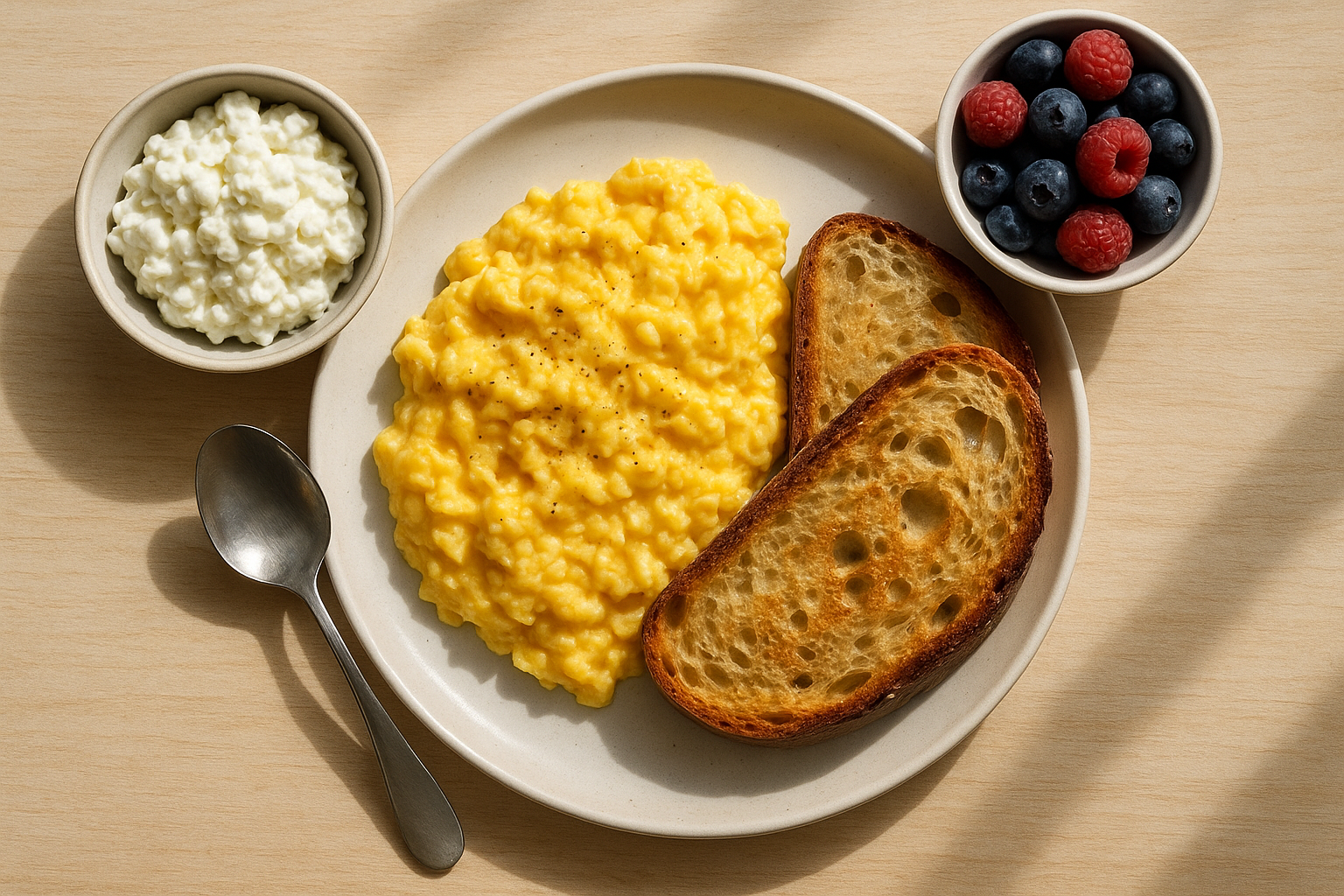
Cottage cheese does more than add protein. It also brings moisture and a creamy texture that helps scrambled eggs stay tender instead of dry. As the eggs cook, some of the curds remain visible, which gives the finished dish a soft, rustic look and a pleasant little bite.
If you have ever been disappointed by eggs that turned rubbery or bland, this method is worth trying. The cottage cheese adds just enough richness to make plain scrambled eggs taste fuller, especially when served with toast, fruit, or roasted vegetables.
Ingredients you need
You only need a few basics for this recipe, and that is part of the appeal.
- Eggs: Three large eggs make one hearty serving or two smaller servings.
- Cottage cheese: Use full-fat, low-fat, or whatever you already keep on hand.
- Salt: Essential for bringing out the flavor of the eggs.
- Butter or oil: Just enough to keep the eggs from sticking and to add a little richness.
Optional add-ins like black pepper, chopped chives, shredded cheddar, or red pepper flakes can make the dish feel more finished, but they are not required.
How to make cottage cheese scrambled eggs
- Crack and whisk the eggs well. Add the eggs to a bowl with the salt and whisk until the mixture looks smooth and evenly yellow. A well-mixed base helps the eggs cook into soft curds.
- Stir in the cottage cheese. Add the cottage cheese and gently mix it through. You can blend it if you want a smoother texture, but leaving some curds intact gives the eggs a creamy finish.
- Warm the pan over medium or medium-low heat. Add butter or oil to a nonstick skillet or a well-seasoned pan. The pan should be hot enough to cook the eggs steadily, but not so hot that they brown too quickly.
- Cook slowly and gently. Pour in the egg mixture. Use a spatula to push the eggs from the edges toward the center, letting uncooked egg flow into the empty spaces.
- Stop when they are still slightly glossy. Remove the pan from the heat when the eggs look mostly set but still a little soft. They will continue cooking from residual heat.
Practical tips for better texture
Eggs are simple, but a few small habits can make a big difference in the final result.
- Whisk thoroughly: Fully blended eggs cook more evenly and have a lighter texture.
- Use moderate heat: Too much heat can make the eggs tough before the cottage cheese has time to soften.
- Do not over-stir: Let the eggs sit briefly between gentle folds so curds can form.
- Remove them early: Eggs firm up fast. Taking them off the heat while they are still soft prevents overcooking.
If your cottage cheese is very wet, you can drain off a little liquid before mixing it with the eggs. That is especially helpful if you prefer firmer curds.
Ways to serve them
These eggs are versatile enough to pair with almost anything. For a quick breakfast, serve them with toast, English muffins, or warm tortillas. If you want something a little heartier, add hash browns, breakfast potatoes, or avocado on the side.
They also work well in a breakfast sandwich. Just tuck the eggs into an English muffin with a slice of cheese and a little hot sauce. For a lighter meal, serve them with sliced tomatoes, cucumbers, or fresh fruit.
Easy variations
Once you know the basic method, it is simple to change the flavor to match your mood or whatever is already in the fridge.
- Herb version: Add chopped chives, parsley, or dill after cooking.
- Cheesy version: Stir in a small handful of shredded cheddar, mozzarella, or feta.
- Veggie version: Fold in sautéed spinach, mushrooms, onions, or bell peppers.
- Spicy version: Add a pinch of cayenne, red pepper flakes, or a spoonful of salsa on top.
- Breakfast bowl: Serve the eggs over roasted potatoes or grains with avocado and greens.
Can you make them ahead?
Scrambled eggs are best fresh from the pan, but you can still make this recipe work for meal prep. If you are cooking for a crowd or planning a busy morning, you can whisk the eggs and cottage cheese together the night before and store the mixture covered in the fridge. In the morning, all you have to do is heat the skillet and cook.
If you do have leftovers, refrigerate them in a sealed container and reheat gently in a skillet over low heat or in short bursts in the microwave. Just know that eggs can dry out a bit when reheated, so keep the timing short.
What makes this breakfast budget-friendly
One reason this recipe is so useful is that it turns inexpensive ingredients into something that feels more substantial. Eggs are already a cost-conscious protein choice, and cottage cheese stretches the meal without needing extra meat or fancy add-ins. That makes it a smart option for anyone trying to keep breakfast simple, affordable, and satisfying.
It is also a great way to avoid waste. If you have a half-used container of cottage cheese in the fridge, this recipe gives it a very good purpose.
Final thoughts
Cottage cheese scrambled eggs are the kind of breakfast that quietly earns a spot in your regular rotation. They are quick, comforting, flexible, and easy to make with everyday ingredients. Once you try them, you may find yourself reaching for cottage cheese every time you scramble eggs.
Keep the heat gentle, the stirring light, and the seasoning simple, and you will end up with a breakfast that is creamy, satisfying, and ready before the coffee is even finished brewing.