How to Clean a Dryer Vent Safely at Home
If your dryer is taking longer than usual or the laundry room feels oddly hot, the vent may be packed with lint. Learning how to clean a dryer vent is one of those simple home jobs that can help clothes dry faster, reduce strain on the appliance, and lower a real fire risk.
The U.S. Fire Administration warns that dryer fires are more likely when lint filters and dryer vents are not cleaned, and ENERGY STAR recommends cleaning the lint filter after every load to improve airflow and efficiency. ([usfa.fema.gov](https://www.usfa.fema.gov/downloads/pdf/publications/clothes_dryer_fire_safety_flyer.pdf?utm_source=openai))
How Often Should You Clean a Dryer Vent?
For most households, plan on a full dryer vent cleaning about once a year. Clean it sooner if you dry several loads a day, have pets, wash lots of towels or blankets, or your dryer vent run is long with bends.
You should also clean the lint screen before or after every load. That quick habit matters. A clogged lint screen restricts airflow, makes the dryer work harder, and can leave lint moving deeper into the vent system.
Signs Your Dryer Vent Is Clogged
Don’t wait for the dryer to completely stop doing its job. Watch for these warning signs:
- Clothes take longer to dry than they used to, especially towels and jeans.
- Loads feel unusually hot when the cycle ends.
- The dryer top or side feels hot to the touch.
- There is a burning or dusty smell while the dryer runs.
- The outside vent flap barely opens when the dryer is on.
- Lint collects around the outside vent cover or behind the dryer.
- The laundry room feels humid after a drying cycle.
Whirlpool lists longer dry times, a hot dryer, and a burning smell as signs that a dryer vent may be clogged and needs attention. ([whirlpool.com](https://www.whirlpool.com/blog/washers-and-dryers/how-to-clean-a-dryer-vent.html?utm_source=openai))
Tools You’ll Need
You do not need fancy equipment for a basic cleaning, but the right tools make the job much easier.
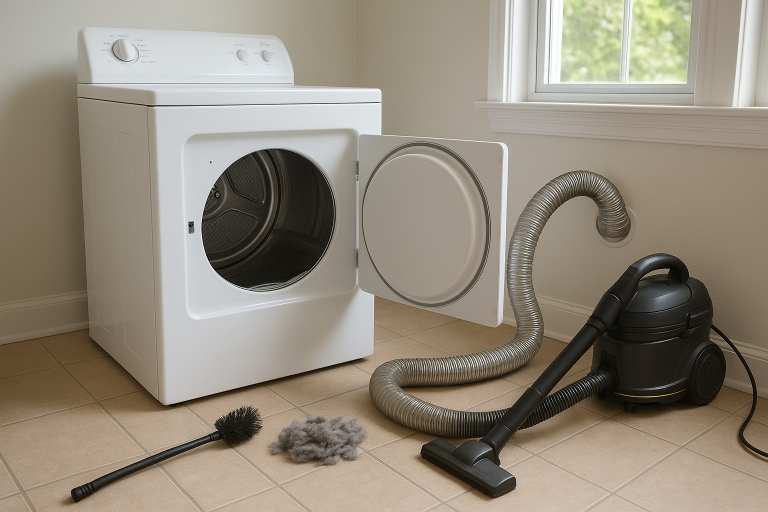
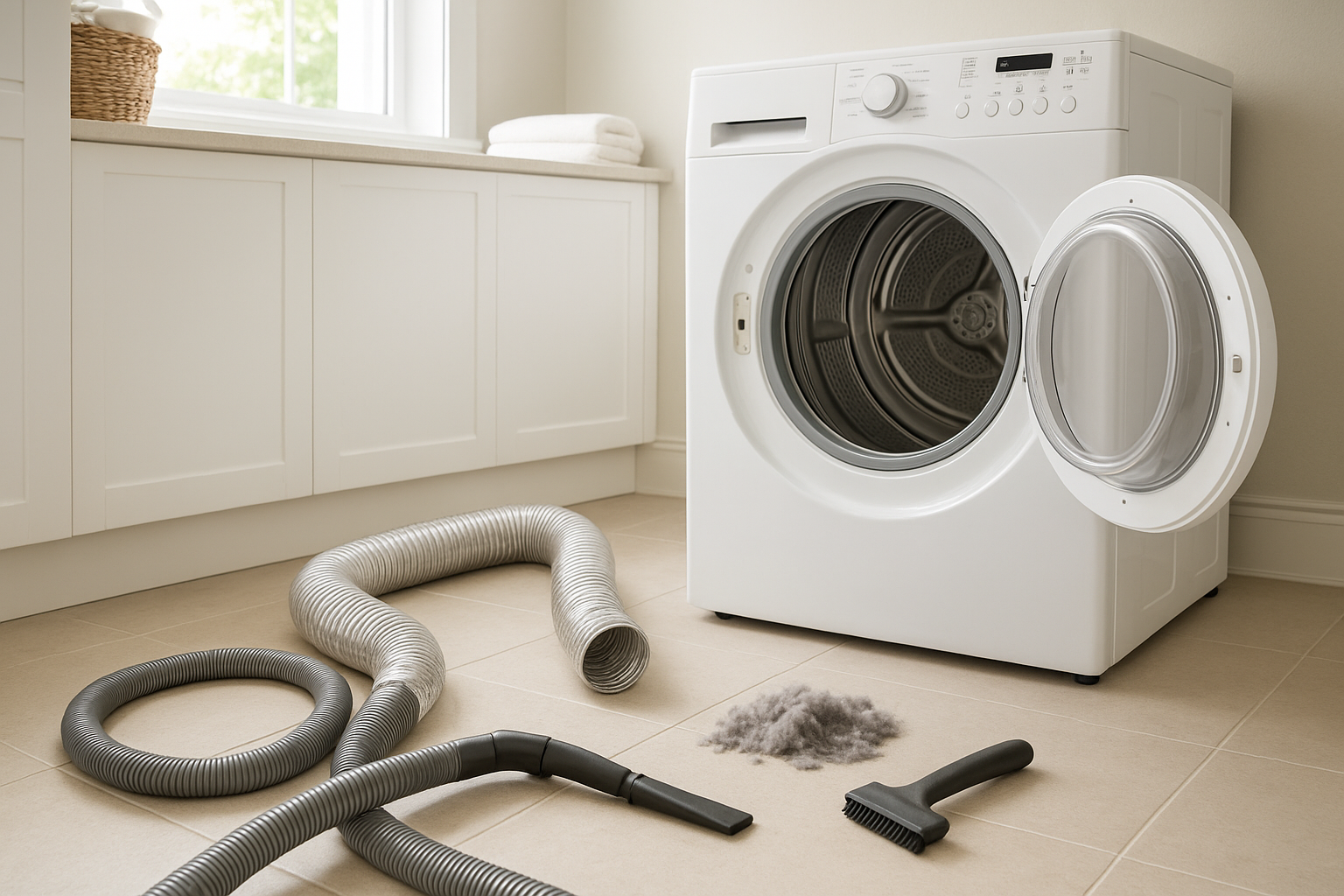
- Vacuum with a hose and crevice attachment
- Dryer vent cleaning brush or flexible dryer vent cleaning kit
- Screwdriver or nut driver, depending on your vent clamp
- Work gloves
- Flashlight
- Trash bag
- Microfiber cloth
- Optional: drill-powered dryer vent brush kit for longer ducts
If your dryer vent is very long, runs through an attic or crawl space, exits on the roof, or has not been cleaned in years, a professional cleaning may be the safer choice.
Before You Start: Safety First
Always turn the dryer off and unplug it before cleaning. If you have a gas dryer, be careful not to kink, loosen, or strain the gas line when moving the appliance. If you smell gas or are unsure how to move the dryer safely, stop and call a qualified technician.
Pull the dryer away from the wall slowly. Give yourself enough room to reach the vent connection without yanking the duct. If the vent hose is crushed, torn, or held together with tape, plan to replace it rather than reinstall it.
Step-by-Step: How to Clean a Dryer Vent
1. Clean the lint screen
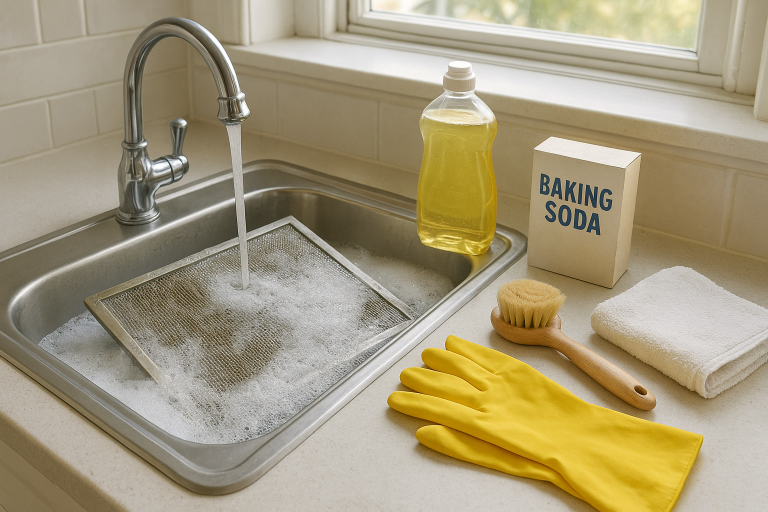
Remove the lint screen and peel off the lint by hand. If the screen looks waxy or water beads on it, wash it with warm water, a little dish soap, and a soft brush. Let it dry fully before putting it back.
2. Vacuum the lint trap housing
Use your vacuum crevice tool to reach down into the slot where the lint screen sits. Move slowly and vacuum as much loose lint as possible. A narrow dryer lint brush can help loosen lint that the vacuum cannot reach.
3. Disconnect the vent hose
Behind the dryer, loosen the clamp that holds the vent hose to the dryer outlet. Slide the hose off gently. If there is a second clamp at the wall connection and you can reach it, disconnect that end too.
4. Vacuum both openings
Vacuum the dryer outlet, the wall duct opening, and both ends of the vent hose. Consumer Reports recommends separating the vent from the dryer and vacuuming both ends with a crevice attachment as part of the cleaning process. ([consumerreports.org](https://www.consumerreports.org/clothes-dryers/how-to-clean-your-dryer-vent/?utm_source=openai))
5. Brush out the duct
Feed a flexible dryer vent brush into the duct from the laundry room side. Turn it gently as you push it forward, then pull it back and remove the lint. Repeat until the brush comes back mostly clean.
If using a drill-powered kit, keep the drill on a low speed and follow the kit directions. Do not force the brush around tight turns. Forcing it can disconnect duct joints inside the wall.
6. Clean from the outside vent
Go outside and find the dryer vent hood. Remove lint from the cover and flap. If the cover has a bird guard or screen, clear it carefully. The vent flap should open freely when the dryer runs and close when it stops.
Insert the brush from the outside opening and loosen any lint near the exit. Vacuum what you can reach. This outside step is especially helpful because lint often catches right at the vent cover.
7. Reconnect the duct
Reattach the vent hose to the dryer and wall duct. Tighten the clamps snugly, but do not crush the hose. Push the dryer back carefully, leaving enough space so the duct is not smashed flat behind it.
8. Test airflow
Plug the dryer back in. Run it on an air-only or low-heat setting for a few minutes, then check the outside vent. You should feel steady airflow, and the flap should open easily. If airflow is still weak, there may be a deeper clog.
What Not to Do
- Do not ignore a burning smell. Stop the dryer and investigate before using it again.
- Do not use flimsy plastic vent duct. Replace damaged or unsafe ducting with appropriate dryer vent material.
- Do not push the dryer tight against the wall. A crushed duct restricts airflow.
- Do not vent a standard dryer indoors. Moist air and lint should exhaust outside unless your appliance is specifically designed as ventless.
- Do not rely only on the lint screen. Lint still escapes into the duct over time.
When to Call a Professional
Call a dryer vent cleaning pro if your vent exits through the roof, the duct run is long or hidden, you cannot access the outside vent safely, or the dryer still performs poorly after cleaning. You should also get help if the duct has come apart inside a wall or ceiling.
Professional help is also smart for gas dryers if moving the appliance makes you nervous. The cleaning itself is simple, but gas connections deserve caution.
Simple Habits That Keep the Vent Cleaner
- Clean the lint screen every load.
- Shake pet beds, rugs, and lint-heavy items outside before washing.
- Dry heavy towels separately from lightweight clothes.
- Check the outside vent every month for lint, leaves, or nests.
- Pull the dryer out a few times a year and vacuum behind it.
- Replace crushed, kinked, or damaged vent hose promptly.
A clean dryer vent is not glamorous, but it is one of the most practical laundry room chores you can do. Give it an annual spot on your home maintenance calendar, and pay attention to slow drying times in between. Your dryer will breathe better, your clothes will dry more evenly, and your laundry room will be safer for it.