How to Plant Carrots in Late Summer for a Fall Harvest
Planting carrots in late summer can feel a little backward, but it is one of the best ways to grow sweet, crisp roots for fall. The trick is getting tiny carrot seeds through hot, dry weather so the plants can mature as temperatures cool.
If spring carrots have disappointed you with slow germination, forked roots, or a tough texture, a fall crop is worth trying. Here is how to plant carrots in late summer, keep the seedbed moist, and harvest better roots when the weather finally turns gentle.
Why Late Summer Is a Good Time to Plant Carrots
Carrots are a cool-season crop, but they take time. Most garden varieties need about 65 to 75 days from seed to harvest, so you usually need to sow them well before sweater weather arrives. University of Maryland Extension lists carrots at 65 to 75 days to maturity, while North Carolina Cooperative Extension recommends sowing fall carrots about 10 to 12 weeks before the first fall frost in its region. ([extension.umd.edu](https://extension.umd.edu/resource/growing-carrots-home-garden?utm_source=openai))
The reward is flavor. Carrots that size up during cooler fall weather often taste sweeter than carrots that mature in summer heat. Heat can make mature carrots coarse, fibrous, or strong-tasting, so the goal is to start them while it is still warm and let them finish in cool weather. ([hgic.clemson.edu](https://hgic.clemson.edu/factsheet/carrot-beet-radish-parsnip/?utm_source=openai))
When to Plant Late-Summer Carrots
A simple timing rule is to count back 10 to 12 weeks from your average first fall frost date. If your seed packet says 70 days to maturity, add a little cushion because late-season growth can slow as daylight shortens.
For many northern and middle U.S. gardens, that means sowing sometime from late July through August. In warmer climates, the best window may be later. North Carolina Extension lists August to mid-September as a fall carrot planting window for that state, while Illinois Extension suggests late July into early August for fall carrots in its region. ([plants.ces.ncsu.edu](https://plants.ces.ncsu.edu/plants/daucus-carota-subsp-sativus/common-name/carrot/?utm_source=openai))
If you are not sure, look up your local average first frost date and work backward. Choose a faster-maturing carrot if you are close to the end of your window.
Choose the Right Carrot Variety
For late-summer planting, favor carrots that mature quickly and match your soil. Long, slender carrots need deep, loose soil. If your garden has clay, rocks, or shallow beds, choose shorter types such as Nantes, Chantenay, Parisian, or other short-rooted varieties.
- For raised beds with loose soil: Nantes types are dependable and have good flavor.
- For heavier soil: Chantenay types are shorter and broader, so they are less likely to fork badly.
- For containers: Round or short carrots are easier to grow than long storage carrots.
- For a tight fall window: Look for varieties listed around 55 to 65 days to maturity.
Prepare the Bed Before You Sow
Carrots do not like to push through compacted soil. Before planting, loosen the bed 8 to 10 inches deep if possible. Remove rocks, roots, hard clods, and old woody stems. The smoother the soil, the straighter the carrots.
Work in finished compost if your soil needs better texture, but avoid fresh manure or heavy nitrogen fertilizer right before planting. Too much nitrogen can encourage leafy tops instead of good roots, and rough organic chunks can cause carrots to fork.
Rake the surface level and break up crusty spots. Carrot seeds are tiny and need shallow planting, so a fine, even seedbed makes a real difference.
How to Sow Carrot Seeds in Late Summer
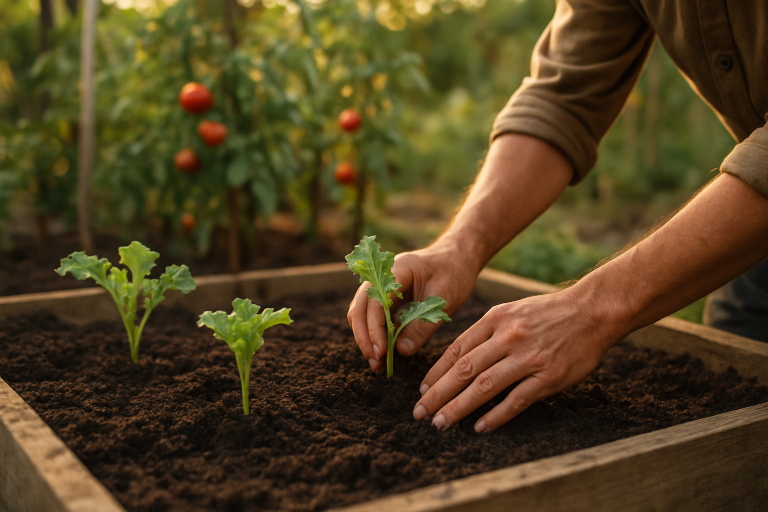
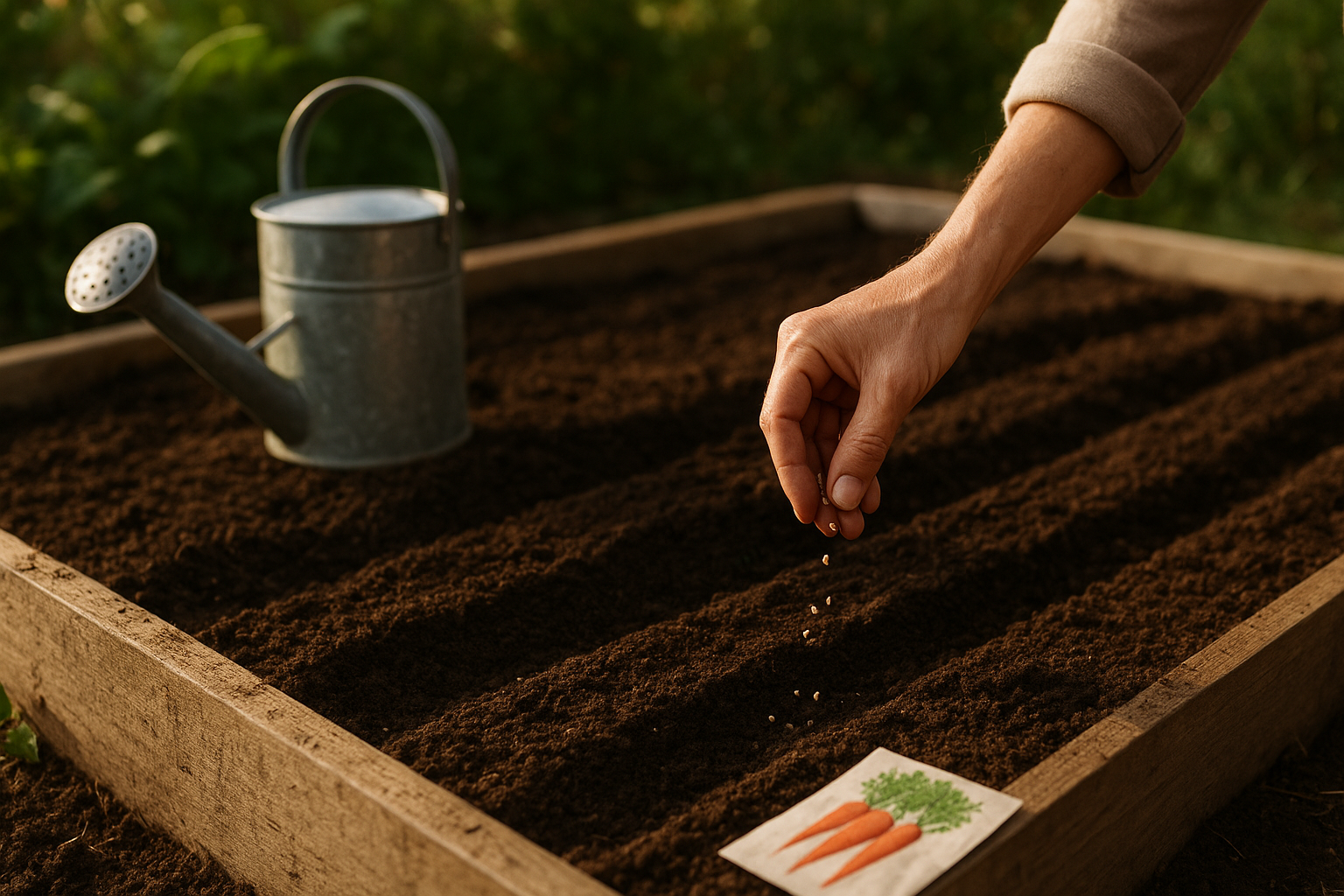
Carrots should be direct-seeded where they will grow. Their taproots do not transplant well, so skip indoor starts.
- Water the bed first. Start with evenly moist soil, not dusty soil.
- Make shallow rows. Aim for about 1/4 inch deep. North Carolina Cooperative Extension recommends direct seeding carrots at 1/4 inch depth. ([carteret.ces.ncsu.edu](https://carteret.ces.ncsu.edu/news/planting-fall-carrots/?utm_source=openai))
- Sow lightly. Sprinkle seeds thinly along the row. If you have trouble with spacing, use pelleted seed or seed tape.
- Cover gently. Use fine soil, compost, or sand so the seedlings can push through.
- Firm the row. Press lightly with your hand or the back of a rake for good seed-to-soil contact.
- Water with a gentle spray. Do not blast the row or the seeds may wash away.
Rows can be close together in a raised bed. For a small home garden, leave about 6 to 12 inches between rows, depending on how you like to weed and harvest.
The Most Important Step: Keep Seeds Moist
Carrot germination is where many late-summer plantings fail. The seeds are shallow, the soil surface dries fast, and hot weather can reduce germination. Utah State University Extension notes that temperatures above 80°F reduce carrot seed germination, while UC IPM lists ideal soil temperature around 72°F with germination in 6 to 14 days. ([extension.usu.edu](https://extension.usu.edu/yardandgarden/research/carrots-in-the-garden.pdf?utm_source=openai))
Your job is to keep the top layer of soil consistently damp until seedlings appear. In hot weather, that may mean watering lightly once or twice a day. The soil should be moist, not puddled.
Easy Ways to Improve Germination
- Plant after a rain if the timing works. Iowa State Extension notes that late-summer germination is often poor in hot, dry soil and recommends planting when soil is moist after rain. ([yardandgarden.extension.iastate.edu](https://yardandgarden.extension.iastate.edu/faq/which-vegetables-can-be-planted-late-summer?utm_source=openai))
- Shade the row with shade cloth, burlap, or a lightweight board for a few days. Check daily and remove covers as soon as seedlings begin to emerge.
- Mulch very lightly with straw or fine grass clippings after seedlings are up, keeping mulch thin so it does not smother them.
- Mark the rows with radish seeds if you like. Radishes sprout quickly and show where the slow carrots are planted.
Thin Carrots for Full-Size Roots
Thinning feels fussy, but crowded carrots stay skinny and twist around each other. Once seedlings are a couple of inches tall, thin them so the strongest plants stand about 1 to 2 inches apart. When tops are around 4 inches high, Texas A&M AgriLife Extension recommends thinning carrots to 2 inches apart. ([agrilifeextension.tamu.edu](https://agrilifeextension.tamu.edu/library/gardening/carrots/?utm_source=openai))
For larger fall carrots, you can thin to about 2 to 3 inches apart. Instead of yanking seedlings and disturbing nearby roots, snip extras at soil level with small scissors.
Watering and Care as Carrots Grow
Carrots grow best with steady moisture. Dry spells followed by heavy watering can contribute to splitting, while drought can leave roots small and tough. Aim for even watering, especially during the first few weeks and while roots are sizing up.
Keep weeds under control because carrot seedlings are slow and delicate. Hand-pull small weeds when the soil is moist, or use a narrow hoe between rows. Be gentle near the carrot shoulders so you do not nick the roots.
If carrot tops start to show above the soil, pull a little soil or mulch around the shoulders. This helps prevent green tops, which can taste bitter.
When and How to Harvest Fall Carrots
Start checking carrots around the days-to-maturity date on the seed packet. Brush soil away from the crown and look at the shoulder size. You can harvest small carrots early, or leave the rest to size up.
Fall carrots can handle cool weather, and many gardeners prefer to harvest after a light frost for better sweetness. In colder areas, mulch fall-planted carrots with straw or shredded leaves before the ground freezes if you want to keep harvesting into winter. University of Maryland Extension notes that fall-planted carrots can be harvested through winter months if mulched before the ground freezes. ([extension.umd.edu](https://extension.umd.edu/resource/growing-carrots-home-garden?utm_source=openai))
To harvest, loosen the soil with a garden fork before pulling. Grabbing the tops alone can snap the greens off and leave the carrot behind, especially in firm soil.
Common Late-Summer Carrot Problems
Poor Germination
The seedbed probably dried out, the soil was too hot, or the seed was old. Carrot seed does not stay vigorous forever, so use fresh seed when possible and keep the row moist until seedlings are up.
Forked or Twisted Roots
This usually points to rocky, compacted, or cloddy soil. It can also happen when carrots are crowded. Prepare the bed deeply and thin seedlings on time.
Hairy Roots
Uneven water, overly rich soil, or stressed plants can lead to lots of small side roots. Keep moisture steady and avoid fresh manure before planting.
A Simple Late-Summer Carrot Plan
If you want the short version, here it is: sow fresh carrot seed 10 to 12 weeks before your first fall frost, plant shallowly in loose soil, keep the seedbed damp every day, thin seedlings to 2 inches apart, and let the roots mature in cool weather.
Late-summer carrots ask for patience at the beginning, but they do not need much once they are growing. Give them a smooth bed and steady moisture, and you can pull sweet, crisp carrots long after the summer garden starts to fade.