How to Stop Window Condensation in Winter
Foggy windows on a cold morning may seem harmless, but regular dripping on the glass, sill, or trim can lead to peeling paint, swollen wood, and mold. The good news is that most winter window condensation can be reduced with a few practical changes to humidity, airflow, and air sealing.
This guide explains how to stop window condensation in winter without jumping straight to expensive window replacement. Start with the easy checks, then move down the list until the glass stays drier.
Why Window Condensation Happens in Winter
Condensation forms when warm, moisture-filled indoor air touches a cold surface, such as window glass. The air cools at the glass, can no longer hold as much moisture, and leaves water behind. The U.S. EPA notes that cold-weather moisture can condense on cold surfaces like windows, and it recommends controlling moisture to help prevent mold growth. ([epa.gov](https://www.epa.gov/mold/mold-and-your-home?utm_source=openai))
In plain terms, you usually have one or more of these problems:
- Too much indoor humidity from showers, cooking, laundry, plants, humidifiers, or people breathing in a tightly closed home.
- Glass that is too cold because of old single-pane windows, poor storms, worn weatherstripping, or cold drafts.
- Poor air circulation caused by closed blinds, heavy curtains, furniture blocking vents, or unused rooms.
Step 1: Measure the Humidity First
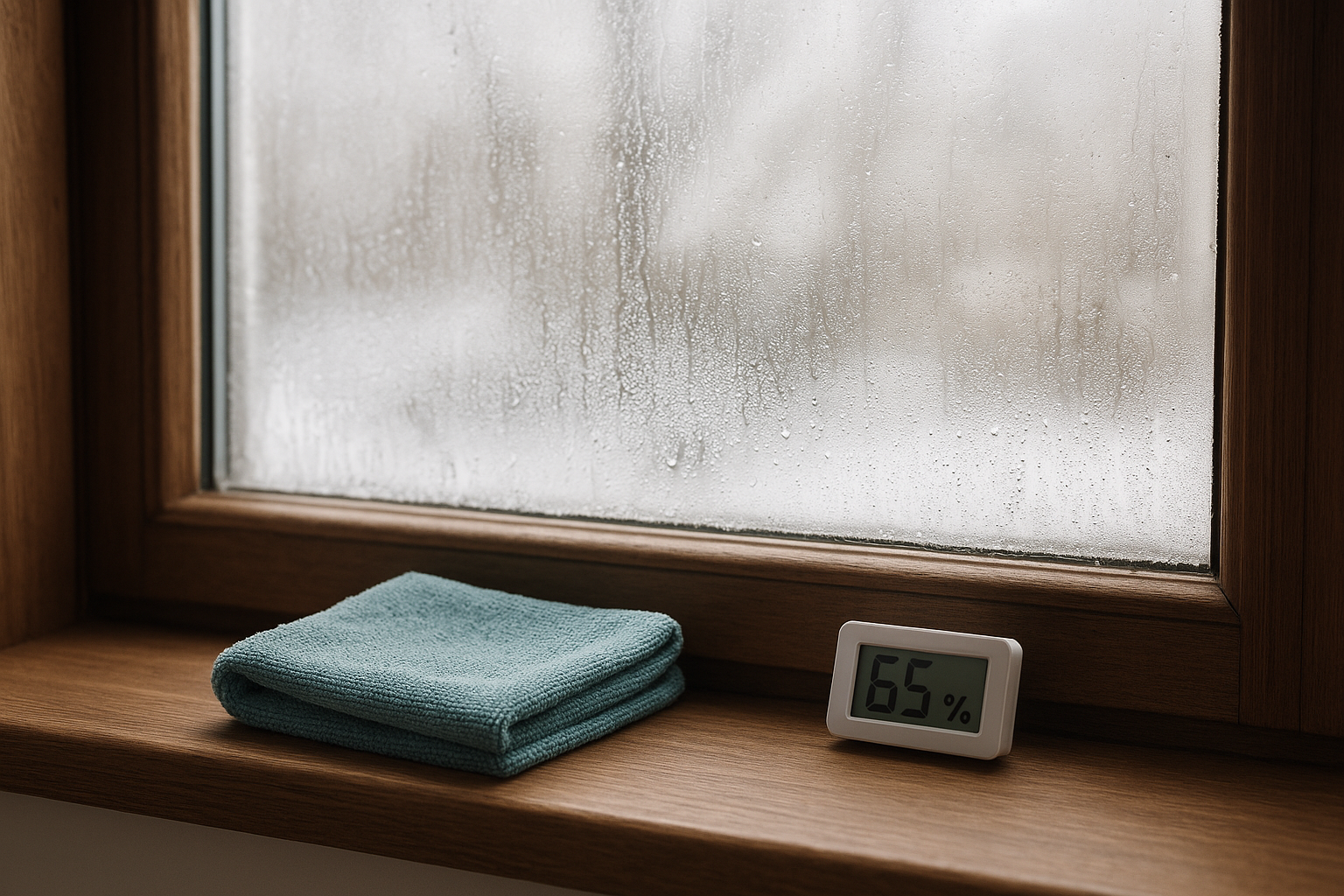
Before guessing, buy an inexpensive digital hygrometer and place it near the problem windows for a day or two. The EPA’s general indoor air guidance recommends keeping indoor relative humidity between 30% and 50%, while also watching for condensation as a sign of poor ventilation or too much moisture. ([epa.gov](https://www.epa.gov/indoor-air-quality-iaq/care-your-air-guide-indoor-air-quality?trk=article-ssr-frontend-pulse_little-text-block&utm_source=openai))
In winter, the right number may need to be on the lower end of that range during very cold weather. If it is 10°F outside and your windows are wet every morning, 50% indoor humidity may simply be too high for your windows. Try lowering humidity gradually and watching the glass. For many homes, the sweet spot in a cold snap is closer to 30% to 40%.
Step 2: Turn Down or Pause the Humidifier
If you run a portable humidifier or whole-house humidifier, this is the first thing to adjust. A humidifier can make dry winter air more comfortable, but it can also overload the house with moisture when outdoor temperatures drop.
- Check your hygrometer in the morning before opening windows or cooking.
- If humidity is above 40% and the windows are wet, turn the humidifier down.
- If condensation continues, shut the humidifier off for 24 to 48 hours and compare the results.
- Empty and clean portable units regularly so you are not adding stale water or mineral buildup to the room.
If you have a whole-house humidifier connected to the furnace, look for a dial or digital setting near the furnace or thermostat. Many systems need seasonal adjustment; they should not stay at the same setting through mild weather and deep freezes.
Step 3: Use Exhaust Fans at the Moisture Source
The cheapest moisture fix is removing damp air before it spreads through the house. Run the bathroom fan during showers and for at least 20 minutes afterward. Use the range hood when boiling pasta, simmering soups, or running multiple burners. If your range hood only recirculates air through a filter instead of venting outdoors, crack a nearby window briefly when weather allows.
Other small habits help, too:
- Cover pots when simmering food.
- Avoid drying laundry indoors unless you also run a dehumidifier.
- Make sure the clothes dryer vents outdoors and the duct is connected tightly.
- Move large groups of houseplants away from the coldest windows if that area is always damp.
- Do not store firewood indoors for long periods; bring in only what you need soon.
Step 4: Improve Airflow Around the Glass
Sometimes the room humidity is acceptable, but the window area is trapped behind heavy fabric or closed blinds. That pocket of still air cools quickly and condensation forms.
Try these simple airflow fixes:
- Open blinds or curtains during the day, especially on problem windows.
- Leave a small gap between the sill and the bottom of curtains.
- Move furniture a few inches away from exterior walls and windows.
- Keep supply and return vents open and unblocked.
- Use a ceiling fan on low, clockwise in winter, to gently mix warm air without creating a draft.
For bedrooms, open the door in the morning and let the room air mix with the rest of the house. Bedrooms often collect moisture overnight because people exhale water vapor for hours in a closed room.
Step 5: Seal Drafts Without Trapping Water
Cold drafts make glass and trim colder, which can worsen condensation and comfort. ENERGY STAR recommends sealing gaps where air leaks in and out, including around windows and doors, and notes that caulking and weatherstripping are common simple fixes. ([energystar.gov](https://www.energystar.gov/products/res_windows_doors_skylights?utm_source=openai))
For windows, use the right fix in the right place:
- Removable rope caulk: Good for old windows you do not plan to open until spring.
- Adhesive foam weatherstripping: Useful where a sash or stop has a small, even gap.
- Exterior-grade caulk: Best for cracks around exterior trim, siding joints, and nonmoving gaps.
- Interior paintable caulk: Good for small gaps between interior trim and wall, but not for moving window parts.
- Low-expansion window and door foam: Useful behind removed trim, but only if you are comfortable taking trim off and using foam sparingly.
Do not caulk weep holes on storm windows or vinyl windows. Those small openings are designed to let water drain. Blocking them can trap water where you do not want it.
Step 6: Add a Temporary Window Insulation Kit
If you have single-pane windows, loose sashes, or an older rental, a clear interior window film kit can make a noticeable difference for winter. The film attaches to the interior trim with double-sided tape, then tightens with warm air from a hair dryer. It creates a still air pocket between the room and the cold glass.
This is not a cure for high humidity, but it can keep the room-side surface warmer and reduce drafts. It is especially useful for windows you do not need to open until spring. Clean the trim first, follow the kit directions, and test tape in a hidden spot if the paint is old or delicate.
Step 7: Wipe Water Before It Soaks In
While you are solving the cause, protect the window. Keep a microfiber cloth or small squeegee nearby and wipe wet glass and sills in the morning. Pay special attention to the bottom corners, where water often sits against paint and caulk.
If you see black specks on caulk, soft wood, bubbling paint, or a musty smell, treat it as a moisture warning. The EPA advises controlling moisture as the key to mold control, because mold needs moisture to grow. ([epa.gov](https://www.epa.gov/mold/mold-and-your-home?utm_source=openai))
When Condensation Means Something Else
Condensation between panes
If moisture is inside a double-pane or triple-pane glass unit, not on the room-side surface, the insulated glass seal has likely failed. Humidity changes and wiping will not fix that. You may be able to replace only the glass unit rather than the whole window, depending on the window style.
Ice on the inside of the window
Interior ice usually means the glass or frame is extremely cold, indoor humidity is too high for the outdoor temperature, or both. Lower humidity immediately, open coverings for airflow, and check for drafts. If ice forms repeatedly, inspect for damaged weatherstripping, missing storms, or larger air leaks around the frame.
Water stains below the window
Stains on the wall below a window may be condensation running down, but they can also mean an exterior leak. Check outside for cracked caulk, missing flashing, clogged weep holes, or water overflowing from gutters above the window.
A Simple Winter Window Routine
For most homes, this routine solves or greatly reduces the problem:
- Put a hygrometer in the room and aim for roughly 30% to 40% humidity during cold spells.
- Run bath and kitchen fans when making moisture.
- Open blinds or curtains each morning to warm the glass.
- Seal obvious drafts with weatherstripping, removable caulk, or proper trim caulk.
- Use window film on the coldest or draftiest windows.
- Wipe standing water until the condensation stops.
If you have tried all of these steps and still get heavy daily condensation, consider a home energy audit or a window professional’s opinion. You may be dealing with leaky windows, missing insulation around frames, inadequate ventilation, or glass that is simply too inefficient for your climate. Start with humidity and airflow, though—those fixes are inexpensive, fast, and often enough to keep winter windows dry.