How to Store Apples So They Stay Crisp Longer
A good bag of apples should not turn mealy before you have a chance to bake, snack, or pack lunches with it. The trick is giving apples the cold, humid storage they like while keeping damaged fruit and strong odors away.
Here is how to store apples at home so they stay crisp longer, whether you bought a grocery bag, picked a peck at the orchard, or need to save a few sliced apples for tomorrow.
The Best Place to Store Apples
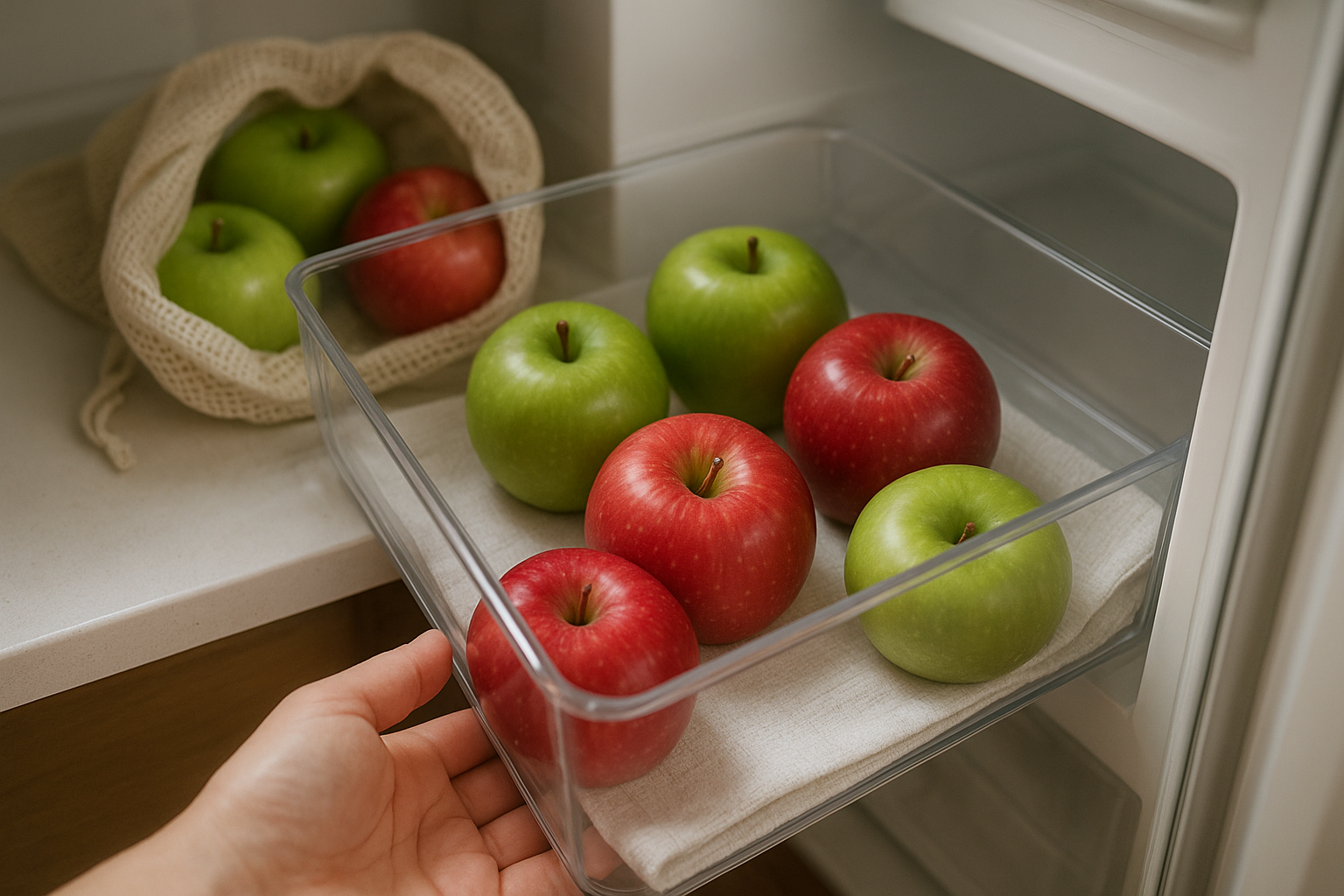
The best place to store apples is the refrigerator, ideally in the crisper drawer. Apples keep their quality best with cold temperatures and relatively high humidity; extension guidance notes that apples have two main storage needs: temperature and humidity, and that later-season apples generally store better than early-season varieties. ([apples.extension.org](https://apples.extension.org/apple-harvest-and-storage/?utm_source=openai))
For food safety and overall refrigerator performance, keep your fridge at 40°F or below, which is also the temperature recommended by USDA food-safety guidance for refrigerated foods. ([fsis.usda.gov](https://www.fsis.usda.gov/food-safety/safe-food-handling-and-preparation/food-safety-basics/refrigeration?utm_source=openai)) If your fridge has a thermometer, check it. If it does not, an inexpensive appliance thermometer is worth keeping on the middle shelf.
Quick Answer: The Simple Apple Storage Method
- Do not wash apples before storing. Extra moisture on the skin can encourage spoilage.
- Sort the apples. Set aside any bruised, punctured, soft, or cracked apples to use first.
- Place good apples in a perforated plastic bag or reusable produce bag that holds humidity but allows a little airflow.
- Store them in the refrigerator crisper drawer. If your drawer has a humidity slider, use the higher-humidity setting unless your fridge manual says otherwise.
- Keep apples away from strong-smelling foods such as onions, garlic, and uncovered leftovers.
- Check weekly. Remove any apple that starts to soften or rot so it does not affect the rest.
University of Minnesota consumer food guidance says apples may be stored in the refrigerator in a plastic bag for up to three weeks and should be kept away from odorous foods. ([reallifegoodfood.umn.edu](https://reallifegoodfood.umn.edu/fruits/apples?utm_source=openai)) In practice, very fresh, firm, late-season apples often keep longer than that at home, but three weeks is a sensible planning window for grocery-store apples.
Why the Fridge Works Better Than the Counter
Apples continue to ripen after harvest. Cold storage slows that process, helping the flesh stay firm and juicy instead of soft and grainy. A fruit bowl is fine for a few apples you plan to eat within several days, but it is not the best place for a full bag.
Room-temperature storage is especially hard on thin-skinned or already-ripe apples. If you like the look of apples on the counter, keep out only two or three at a time and refill the bowl from the refrigerator as needed.
Use Humidity Without Trapping Wetness
Apples lose moisture over time, which leads to shriveling and a tired texture. That is why the crisper drawer helps: it slows moisture loss compared with an open refrigerator shelf.
Still, apples should not be sealed in a totally airtight container with condensation collecting inside. A perforated produce bag, a loosely closed plastic bag with a few small holes, or a breathable reusable produce bag gives a good balance: humid enough to reduce shriveling, not so wet that rot gets a head start.
Should You Wrap Apples One by One?
If you are storing a small grocery bag for everyday eating, you do not need to wrap each apple. For a large orchard haul, wrapping can help slow the spread of spoilage because apples are not touching each other. Use plain paper, not newspaper with heavy ink, and still check the box or drawer regularly.
Keep Apples Away From Ethylene-Sensitive Produce
Apples naturally give off ethylene, a plant hormone involved in ripening. Extension sources warn that ethylene in the storage environment can speed ripening and reduce apple storage quality, and it can also affect nearby produce. ([extension.umd.edu](https://www.extension.umd.edu/resource/controlled-atmosphere-storage-apples?utm_source=openai))
That does not mean apples are dangerous to store with other produce, but it does mean they are better in their own drawer or bag. Avoid storing apples right next to leafy greens, broccoli, cucumbers, or other produce that tends to decline quickly. It is also smart to keep apples away from potatoes in long storage, since ethylene and spoilage from aging fruit can shorten storage life for nearby foods. ([ask.extension.org](https://ask.extension.org/kb/faq.php?id=775640&utm_source=openai))
Which Apples Store the Longest?
As a general rule, firm, tart, later-season apples store better than soft, sweet, early-season apples. Good keepers often include Granny Smith, Fuji, Pink Lady, Braeburn, Rome, and some late-season local varieties. More tender apples, such as McIntosh or early harvest apples, are usually better for eating sooner or turning into sauce.
No variety stores well if it is bruised, overripe, or warm for too long before it reaches your kitchen. When buying apples for storage, choose fruit that feels heavy and firm with tight skin. Avoid apples with soft spots, broken skin, deep bruises, or a fermented smell.
What to Do With Bruised or Soft Apples
Do not put damaged apples into long storage with your best fruit. A bruised apple is not automatically wasted, but it should move to the front of the line.
- Small bruise: Cut it away and eat the apple the same day.
- Slightly soft apples: Use in applesauce, baked oatmeal, muffins, pancakes, or skillet apples.
- Wrinkled but not spoiled: Peel and cook them; the texture will not matter as much.
- Moldy, leaking, or rotten apples: Compost or discard them. Do not try to save the good-looking half.
Can You Freeze Apples?
Yes, but freezing changes the texture. Frozen apples are best for cooked uses, not crisp snacking. Peel if desired, core, slice, and toss with a little lemon juice to reduce browning. Freeze slices in a single layer on a parchment-lined baking sheet, then transfer them to a freezer bag.
Label the bag with the date and intended use. Frozen apples work well in crisps, pies, smoothies, quick breads, and applesauce. For the best flavor, use them within a few months.
How to Store Cut Apples
Cut apples brown quickly because the flesh is exposed to air. To store slices, toss them with a little lemon juice, orange juice, or a mild salt-water rinse, then drain and refrigerate in a covered container. Use them within a day or two for the best texture.
For lunch boxes, pack slices snugly in a small container so there is less air around them. A thin rubber band around a reassembled sliced apple also works in a pinch, though a chilled container keeps the texture better.
Common Apple Storage Mistakes
- Leaving the whole bag on the counter: Fine for a day or two, but not for long storage.
- Washing before storing: Wash right before eating instead.
- Ignoring one bad apple: A soft or moldy apple can spoil nearby fruit faster.
- Storing near onions or garlic: Apples can pick up odors, especially in enclosed spaces.
- Sealing apples airtight: They need humidity, but trapped condensation can encourage rot.
A Simple Weekly Apple Routine
When you bring apples home, sort them right away. Put the firm, unblemished apples into a perforated bag in the crisper drawer. Keep two or three on the counter only if you will eat them soon.
Once a week, open the bag and check for soft spots, moisture buildup, or any off smell. Move imperfect apples into your “use first” plan: oatmeal on Monday, sliced snacks on Tuesday, applesauce or a small crisp by the weekend.
The Bottom Line
If you want apples to stay crisp, think cold, humid, separate, and sorted. The refrigerator crisper drawer is the best everyday spot, a perforated bag helps prevent shriveling, and regular checks keep one damaged apple from ruining the bunch.
With that simple setup, you can buy apples in season, enjoy them for snacks and baking, and waste far less fruit before the bag is gone.