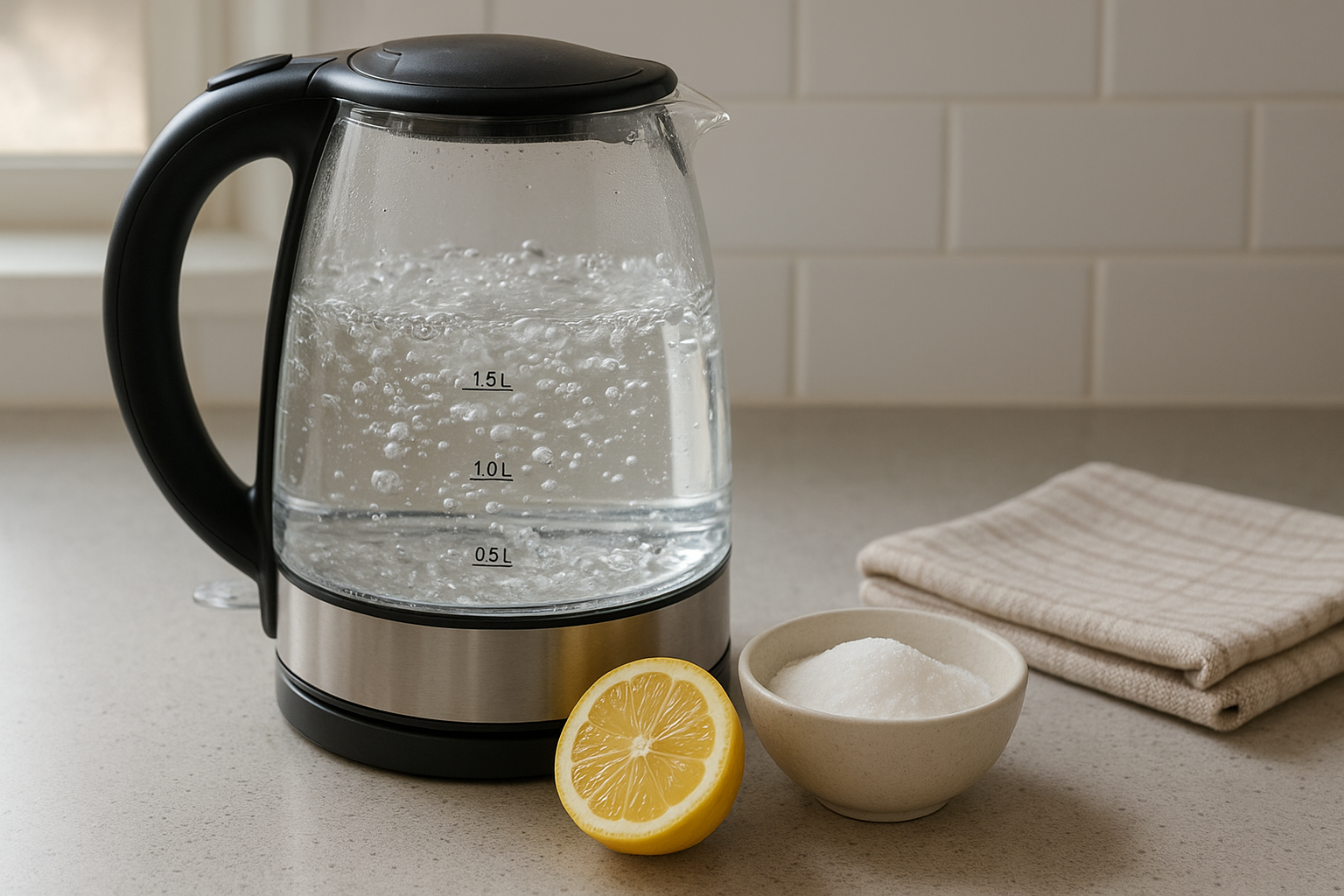
How to Descale an Electric Kettle with Citric Acid
If your electric kettle has white flakes floating in the water or a chalky ring around the bottom, it is probably limescale—not dirt. The good news is that you can descale an electric kettle with a simple food-safe acid, a little waiting time, and almost no scrubbing.
This guide focuses on citric acid because it works well and does not leave the strong smell vinegar can. Vinegar and lemon juice are included too, because they are handy backups if that is what you already have.
What Is the White Buildup in a Kettle?
The crusty white or gray coating inside a kettle is usually limescale, a mineral deposit left behind when water is heated. KitchenAid describes it as buildup from calcium, magnesium, and other minerals in water, and recommends descaling to remove those deposits. ([kitchenaid.com](https://www.kitchenaid.com/countertop-appliances/pinch-of-help/how-to-clean-an-electric-kettle?utm_source=openai))
Limescale is most common in homes with hard water, but any kettle can get it over time. You may notice:
- White flakes in poured water
- A chalky film on the heating plate or bottom of the kettle
- Cloudy water after boiling
- A longer boil time than usual
- A kettle that clicks off early or sounds louder than normal
A little limescale is not the same as a dirty kettle, but heavy buildup can affect performance and make your tea or coffee less pleasant. Descaling dissolves the minerals so they rinse away.
Before You Start: Read This Safety Note
Always check your kettle manual first, especially if your kettle has a special coating, exposed heating element, water filter, or temperature-control base. Several manufacturers recommend vinegar, citric acid, or a kettle-safe descaler, but they also warn not to immerse the kettle, cord, plug, or electrical base in water. ([help.fellowproducts.com](https://help.fellowproducts.com/hc/en-us/articles/115001707911-How-do-I-clean-maintain-and-descale-my-Fellow-electric-kettle?utm_source=openai))
Also avoid abrasive pads, steel wool, bleach, and strong chemical cleaners inside the kettle. You are cleaning something that boils drinking water, so simple and well-rinsed is best.
The Best Method: Citric Acid Descale
Citric acid is inexpensive, easy to store, and especially useful if you dislike the smell of hot vinegar. Philips lists citric acid as an option for descaling kettles when you do not want to use vinegar, and KitchenAid also mentions citric acid powder or lemon juice for kettle cleaning. ([philips.co.in](https://www.philips.co.in/c-t/XC000003399/it-takes-a-long-time-for-my-philips-kettle-to-boil-water?utm_source=openai))
You’ll Need
- 1 tablespoon citric acid powder
- Water
- A soft sponge or bottle brush
- A clean dish towel
Step-by-Step
- Unplug and empty the kettle. Let it cool if it was recently used.
- Add water. Fill the kettle about halfway, or to the minimum-safe boil line if your kettle requires more water.
- Add citric acid. Stir in 1 tablespoon of citric acid powder. For a very large kettle or heavy scale, use up to 2 tablespoons.
- Boil the solution. Turn the kettle on and let it come to a boil.
- Let it sit. Leave the hot solution in the kettle for 15 to 20 minutes. If the scale is thick, give it up to 30 minutes.
- Pour it out. Dump the solution down the sink. Do not reuse it for food or drinks.
- Wipe gently. Use a soft sponge or bottle brush to loosen any remaining patches. Do not scrape with metal.
- Rinse well. Rinse the inside several times with fresh water.
- Boil plain water once or twice. Pour it out each time. This clears any lingering taste.
If the kettle still has a rough white patch after the first round, repeat the same process. Heavy limescale often comes off in layers, and a second gentle descale is safer than aggressive scrubbing.
Vinegar Method If You Don’t Have Citric Acid
White vinegar is another common kettle descaler because its mild acidity helps break down mineral buildup. Distilled white vinegar sold for food use is commonly labeled 5% acidity, which is the type most home instructions mean when they call for white vinegar. ([extension.psu.edu](https://extension.psu.edu/advice-about-vinegar?utm_source=openai))
- Fill the kettle halfway with equal parts water and white vinegar.
- Boil the mixture.
- Let it sit for 15 to 30 minutes.
- Pour it out and rinse thoroughly.
- Boil fresh water once or twice, discarding it each time, until the vinegar smell is gone.
Vinegar works well, but the smell can linger. If you are sensitive to it, citric acid is usually the better choice.
Can You Use Lemon Juice?
Yes, lemon juice can help with light limescale because it contains citric acid. It is not as concentrated or predictable as citric acid powder, but it is fine for a quick freshen-up.
To use it, add the juice of one lemon to the kettle, then add enough water to cover the scaled area or reach the minimum boil line. Boil, let it sit for 15 to 20 minutes, rinse, and boil fresh water once before using the kettle for drinks.
How Often Should You Descale an Electric Kettle?
A practical rule is to descale about once a month if you use your kettle daily or live with hard water. Lowe’s gives the same monthly guidance for daily use, while some manufacturers recommend adjusting the timing based on visible mineral buildup. ([lowes.com](https://www.lowes.com/n/how-to/clean-electric-kettle-and-remove-hard-water-buildup?utm_source=openai))
If you use the kettle only a few times a week, every two to three months may be enough. Let the kettle tell you: flakes, cloudy water, a chalky base, slower boiling, or a rough-feeling interior all mean it is time.
How to Slow Limescale Buildup
You cannot completely stop minerals if your water is hard, but you can make the kettle easier to maintain.
- Empty leftover water after use. Minerals concentrate as water sits and evaporates.
- Leave the lid open while it dries. This helps moisture escape and reduces stale smells.
- Use filtered water if it helps in your area. A pitcher filter may reduce some taste and visible particles, though it will not remove all hardness minerals.
- Wipe the outside separately. Clean the exterior with a damp cloth, never by rinsing the whole appliance under the tap.
- Clean the spout filter. If your kettle has a removable mesh filter, rinse it often and soak it in the same descaling solution when needed.
What Not to Do
- Do not immerse the kettle or base. Electric parts and water do not mix.
- Do not use bleach inside the kettle. It is unnecessary and can leave unsafe residue if not handled correctly.
- Do not chip scale off with a knife. You can damage the interior or heating plate.
- Do not overfill. Follow the max fill line, especially when boiling acidic solutions that may foam slightly.
- Do not skip the rinse boils. Plain-water boils remove lingering acid taste and smell.
Quick Troubleshooting
The kettle still smells like vinegar
Boil and discard fresh water again. If needed, add a teaspoon of baking soda to cool water, swish it around briefly, rinse very well, then boil plain water once more. Do not boil a strong baking soda mixture in a closed kettle, as foaming can be messy.
There are still white flakes after descaling
Loose flakes may keep breaking free after the first descale. Rinse, wipe with a soft sponge, and repeat the citric acid method. If flakes continue after several rounds, check whether your kettle has a removable spout filter that needs cleaning.
The bottom looks stained but feels smooth
Some discoloration can remain even after the minerals are gone. If the surface feels smooth and no flakes appear in the water, the kettle is likely clean enough to use.
The Bottom Line
The easiest way to descale an electric kettle is to boil water with citric acid, let it sit, rinse well, and finish with one or two plain-water boils. Do it monthly for a daily-use kettle, or whenever you see chalky buildup. A few minutes of maintenance keeps your kettle cleaner, quieter, and ready for better-tasting tea, coffee, oatmeal, and everything else you make with hot water.