How to Overseed a Patchy Lawn in Fall
If your lawn came through summer looking thin, bare, or tired, fall is often the best time to help it fill back in. Cooler air, warm soil, and less weed pressure give new grass a better chance than a rushed spring repair.
This guide explains how to overseed a patchy lawn in fall without turning it into a full renovation project. The goal is simple: improve seed-to-soil contact, keep the seed evenly moist, and protect the new grass long enough for it to take hold.
First, Make Sure Fall Overseeding Fits Your Lawn
Fall overseeding is mainly for cool-season lawns, such as tall fescue, Kentucky bluegrass, perennial ryegrass, and fine fescues. University extension guidance consistently points to late summer through early fall as the prime window for seeding cool-season turf because seedlings have time to establish before winter and face less competition from summer weeds. ([ag.purdue.edu](https://ag.purdue.edu/department/hla/extension/extension-publications-library/ext-pubs/ay-3-w.html?utm_source=openai))
If you have a warm-season lawn, such as bermudagrass, zoysia, centipedegrass, or St. Augustine, fall is usually not the main repair season. Those grasses are better established or repaired during warmer late spring and summer conditions. ([ask.extension.org](https://ask.extension.org/kb/faq.php?id=918122&utm_source=openai))
Not sure what you have? A simple clue is where you live. Northern and many transition-zone lawns are often cool-season. Much of the Deep South uses warm-season turf. If your lawn stays greener in spring and fall but struggles in July heat, there is a good chance it is cool-season.
When to Overseed in Fall
The best timing depends on your region, but many cool-season lawns are seeded from late August into September, with some areas stretching into early October if fall stays mild. Missouri Extension, for example, lists Aug. 25 through Oct. 10 as a seeding period for cool-season grasses, while other northern extension recommendations close earlier around mid-September. ([extension.missouri.edu](https://extension.missouri.edu/publications/g6700?utm_source=openai))
For a practical homeowner rule: seed at least 4 to 6 weeks before your usual first hard frost. That gives seedlings time to germinate, root, and survive their first cold snaps. If you are already past that window, you may be better off waiting for dormant seeding later, or planning a proper spring or next-fall repair.
What You’ll Need
- Grass seed suited to your region and sun conditions
- Lawn mower
- Metal rake or thatch rake
- Leaf rake or blower
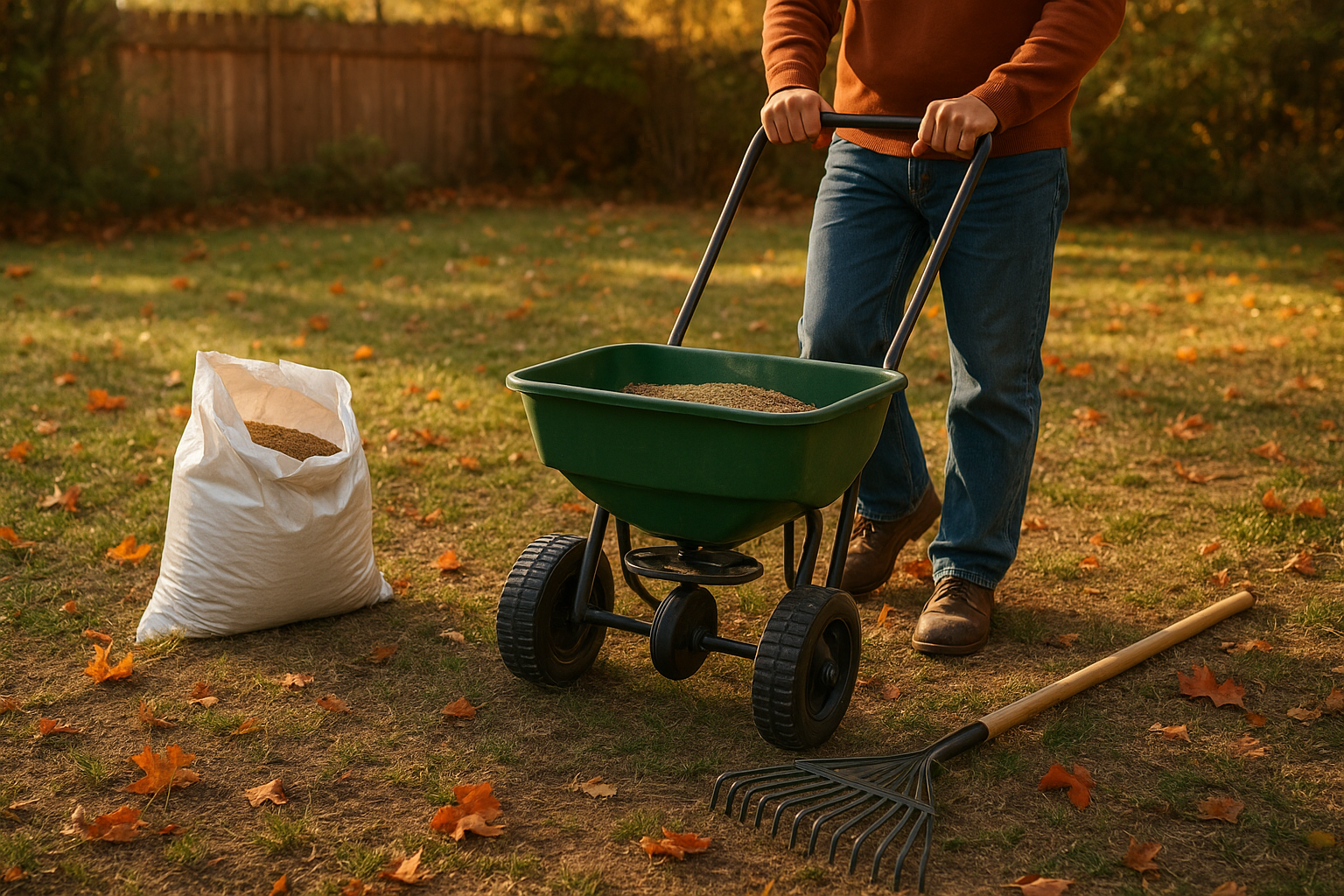
- Broadcast or drop spreader
- Compost or screened topsoil for bare spots
- Starter fertilizer, if recommended for your soil
- Sprinkler or hose with gentle spray setting
Step 1: Fix the Reason the Lawn Got Patchy
Before you spread seed, take five minutes to ask why the grass thinned out. Seed will not solve a drainage problem, heavy shade, dog urine damage, compacted soil, grub damage, or a path where everyone cuts across the yard.
If water puddles for days, improve drainage first. If the area gets less than 4 hours of direct sun, choose a shade-tolerant mix and lower your expectations. If the soil is hard as a brick, core aeration may help before seeding. If the patch is from heavy foot traffic, consider stepping stones instead of repeatedly reseeding the same worn strip.
Step 2: Mow Low and Remove Debris
Mow the existing grass shorter than usual before overseeding. You do not need to scalp it to dirt, but cutting it down to about 1½ to 2 inches helps sunlight reach the soil and makes it easier for seed to settle where it needs to be. Some extension guidance recommends mowing even shorter before overseeding and removing clippings so seed can reach the soil surface. ([postrock.k-state.edu](https://www.postrock.k-state.edu/lawn-garden/newspaperarticle/fall-lawn-care.pdf?utm_source=openai))
After mowing, rake up leaves, heavy clippings, sticks, and loose dead grass. Seed sitting on top of matted debris is much less likely to germinate.
Step 3: Rake Bare Spots Roughly
For small bare patches, use a metal rake to scratch the top quarter inch of soil. You are not tilling the yard; you are just loosening the surface so seed can tuck in instead of washing away or feeding birds.
If the bare spot is sunken, add a thin layer of compost or screened topsoil and level it with the back of the rake. Do not bury seed under a thick blanket of soil later. Most grass seed only needs light covering and firm contact.
Step 4: Choose the Right Grass Seed
Match the seed to your lawn’s conditions. For sunny, high-traffic cool-season lawns, turf-type tall fescue is a durable choice in many regions. Kentucky bluegrass can spread and fill in, but it often takes longer to germinate. Fine fescues are useful in lower-input or somewhat shady areas. Perennial ryegrass germinates quickly, but it may not be as heat- or drought-tolerant as tall fescue in some climates.
Read the seed label before buying. Look for low weed seed, a recent test date, and varieties suited to your state or region. Avoid bargain bags with vague names, lots of filler, or seed types that do not match your lawn.
Step 5: Spread Seed Evenly
Use the overseeding rate listed on the seed bag or your local extension recommendation. As a reference point, North Carolina Extension notes a tall fescue lawn seeding rate of about 5 pounds per 1,000 square feet for establishment; overseeding rates can vary based on how thin the lawn is and the seed blend being used. ([gaston.ces.ncsu.edu](https://gaston.ces.ncsu.edu/wp-content/uploads/2022/09/Fall-is-the-time-to-sow-tall-fescue-lawns-Article.pdf?fwd=no&utm_source=openai))
For even coverage, spread half the seed walking north to south, then spread the other half walking east to west. On tiny patches, hand-seeding is fine. After spreading, lightly rake bare areas again so seed nestles into the surface.
Step 6: Press Seed Into the Soil
Good seed-to-soil contact is one of the biggest differences between a successful overseeding job and wasted seed. Extension resources emphasize that contact with soil is vital for germination and establishment. ([postrock.k-state.edu](https://www.postrock.k-state.edu/lawn-garden/newspaperarticle/fall-lawn-care.pdf?utm_source=openai))
For small spots, press the area gently with your shoes or the back of a rake. For a larger lawn, a water-filled lawn roller can help, but do not compact wet soil. You want firm contact, not a packed surface.
Step 7: Water Lightly and Often
New grass seed must stay consistently moist while it germinates. For the first week or two, water lightly once or twice a day if the weather is dry. The surface should be damp, not puddled. Heavy watering can move seed into low spots and create clumps.
As seedlings appear, gradually switch from frequent light watering to deeper, less frequent watering. This encourages roots to grow down instead of hovering at the surface. If rain handles the job, do not add extra water just because it is on your schedule.
Step 8: Wait Before Mowing
Keep off the seeded area as much as possible until the new grass is rooted. Mow when the new seedlings are tall enough to cut without pulling out of the soil, often around 3 to 4 inches tall depending on the grass type. Use a sharp mower blade, mow when the lawn is dry, and remove no more than one-third of the grass blade at a time.
Bagging the first mowing can help prevent clumps from smothering tender seedlings. After that, you can usually return to mulching if the grass is dry and not overgrown.
Common Fall Overseeding Mistakes
- Seeding too late: Seedlings need time before freezing weather. If frost is close, wait or use a dormant seeding plan.
- Skipping soil contact: Seed scattered over tall grass, leaves, or thatch often fails.
- Letting seed dry out: One hot, dry afternoon can hurt germination once seed has started swelling.
- Using weed preventer at the wrong time: Many pre-emergent herbicides can stop grass seed from sprouting. Read labels carefully.
- Buying the wrong seed: Sun seed will struggle in shade, and cool-season seed is not the answer for most warm-season lawns.
A Simple Fall Overseeding Schedule
- Day 1: Mow low, rake debris, loosen bare spots, spread seed, press it in, and water.
- Days 2 to 14: Keep the surface evenly moist with light watering as needed.
- Weeks 3 to 4: Reduce watering frequency, but water more deeply when you do.
- First mowing: Mow once new grass reaches mowing height and feels rooted.
- Late fall: Keep leaves off the new lawn so seedlings are not smothered.
The Bottom Line
Overseeding a patchy lawn in fall is not complicated, but it does reward careful prep. Mow low, expose the soil, choose the right seed, water consistently, and give the new grass a quiet few weeks to grow. Do those basics well, and your lawn should head into winter thicker and wake up stronger in spring.