September Orchid Care: 6 Steps for Winter Blooms
September is one of the most important months on the orchid calendar. As days shorten and nights cool, many popular houseplant orchids begin sensing the change that tells them it is time to prepare for blooming. If you want flowers later in fall or winter, this is the month to adjust your routine before the plant settles into its next stage.
The good news is that orchid care in early autumn is usually less about doing more and more about doing a few things better. The goal is to create steady conditions, avoid late-season mistakes, and give the plant the signals it needs to start forming flower spikes.
1. Let cooler nights do their job
For many moth orchids, also called Phalaenopsis, the difference between day and night temperature is one of the biggest bloom triggers. Warm days are fine, but the plant also needs a stretch of noticeably cooler nights to start producing flowers.
Aim for nights around 55 to 60°F if your home can support it, while keeping daytime temperatures comfortably warmer. You do not need a greenhouse setup. In many homes, the simplest trick is moving the plant near an east-facing window, where the glass naturally cools overnight.
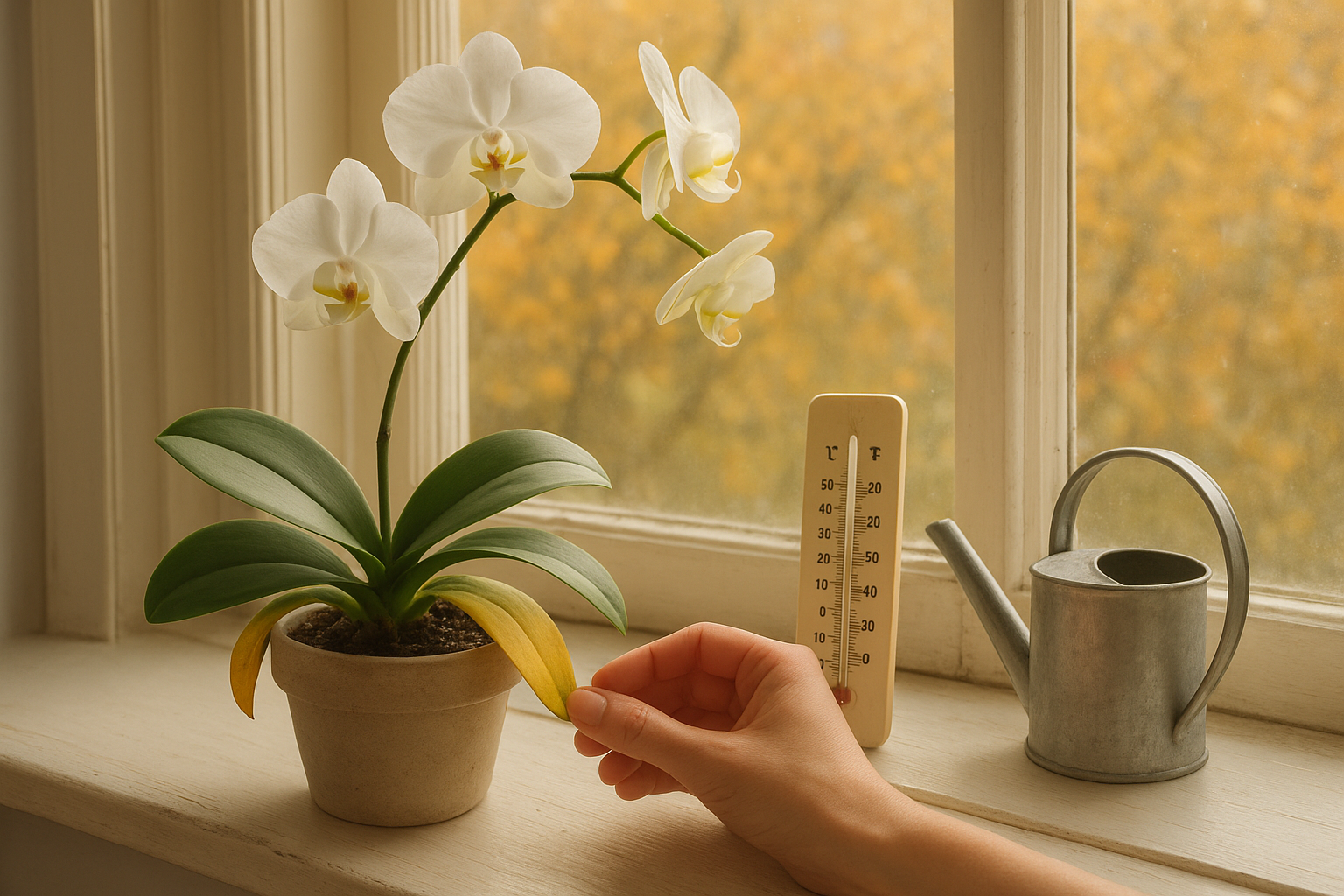
If your house stays the same temperature day and night, the plant may stay healthy but remain stubbornly non-blooming. A small thermometer near the orchid can help you see whether you are actually giving it that cool-night signal.
Quick temperature tips
- Keep orchids away from heating vents and radiators.
- Do not let leaves touch cold window glass on chilly nights.
- Open a window nearby only if temperatures stay above the safe range for the plant.
- Move plants back from hot afternoon sun if the room still warms up strongly during the day.
2. Cut back on watering as growth slows
Many orchids use less water in autumn than they do in summer. Shorter days and lower light mean growth slows down, and roots dry more slowly. If you keep watering on a summer schedule, the potting mix can stay soggy too long, which increases the risk of root rot.
Instead of watering by the calendar, check the plant first. Lift the pot if you are used to its weight, or look at the roots if the orchid is in a clear container. Silver or pale roots often mean it is time to water; green roots usually mean there is still moisture present.
When you do water, soak thoroughly and let excess drain away completely. Orchids should never sit in water inside a decorative cachepot or saucer.
Signs you may be overwatering
- Leaves feel soft or limp, even though the mix is wet
- Roots turn brown, mushy, or hollow
- The pot stays heavy for many days after watering
- Mold, algae, or sour smells appear in the potting mix
3. Feed lightly, not heavily
September is not the time for a big fertilizer push. If the plant is preparing to flower, it only needs modest support. Too much fertilizer can build up in the pot and stress the roots, especially when watering frequency is dropping.
Use a balanced orchid fertilizer at a diluted rate, or follow the label for a gentler feeding schedule. If you have been fertilizing every week through summer, consider reducing the frequency now. A monthly feeding routine is enough for many indoor orchids in autumn.
It also helps to flush the pot once in a while with plain water to wash away accumulated salts. This is especially useful if you notice white crust on the potting media or container edges.
4. Give the plant brighter light without scorching it
Light is another major bloom factor. Orchids need plenty of brightness in fall, but the sun is weaker than in midsummer, so windows that were previously too bright may now be ideal.
A good place for many orchids is near an east window, or a south window with filtered light. Leaves should look medium green, not dark green. Very dark leaves often suggest the plant is not getting enough light to flower well.
If the leaves begin to look yellow or develop sun-scorch spots, the plant is getting too much direct exposure. Use a sheer curtain if needed.
What healthy light looks like
- Bright but indirect for most of the day
- No harsh midday burn on the leaves
- Enough light to read by near the plant
- Uniform growth rather than stretching toward the window
5. Inspect roots, leaves, and hidden pests
Autumn is a smart time for a careful health check. Orchids that spent summer outdoors or near open windows may bring in pests such as mealybugs, scale, or spider mites. Even indoor-only plants can develop problems when air becomes drier and rooms are closed up.
Look closely where leaves meet the stem, under the leaves, and around the base of the plant. Healthy roots should feel firm, not mushy. Leaves should be free of sticky residue, black spots, or unusual webbing.
If you find pests early, remove them before they spread. A cotton swab dipped in rubbing alcohol can help with small mealybug outbreaks. For larger infestations, isolate the orchid immediately and use an appropriate houseplant treatment before the problem moves to nearby plants.
Take action fast if you see
- Cottony clusters in leaf joints
- Brown bumps stuck to stems or leaves
- Fine webbing on leaves or buds
- Sticky surfaces or shiny residue
6. Repot only if the plant truly needs it
September can be a reasonable time to repot an orchid, but only if the plant is in trouble or the potting mix has clearly broken down. If the orchid is healthy and getting ready to bloom, repotting may interrupt the flowering cycle.
Repot when you see compacted mix, sour smells, dead roots, or a plant that has outgrown its container. Use a fresh orchid mix with good airflow, and choose a pot with plenty of drainage holes. Never use regular potting soil for a standard epiphytic orchid such as Phalaenopsis.
If the plant is already forming a spike or has several buds, wait until after flowering unless there is a serious root issue that cannot wait.
A simple September orchid checklist
- Move the plant where nights are cooler.
- Reduce watering as the mix dries more slowly.
- Feed lightly, not aggressively.
- Keep light bright and balanced.
- Check for pests and unhealthy roots.
- Repot only if the orchid is clearly root-bound or declining.
Why September matters so much
Orchids do not bloom on a winter timetable by accident. Their flowers are the result of signals they received weeks or even months earlier. If you keep summer habits going too long, the plant may stay alive and green but never switch into bloom mode.
By making a few seasonal adjustments now, you give your orchid the conditions it needs to set buds and hold them. That means less frustration for you and a much better chance of enjoying flowers when the weather turns cold.
If you only remember one thing, make it this: steady care in September often decides winter bloom success. A little attention now can mean a far more rewarding display later.