Why Planting a Tree Today Pays Off for Decades
There are few garden projects with more lasting impact than planting a tree. One afternoon of work can shape shade, wildlife habitat, curb appeal, and even your home’s comfort for decades to come. The catch is that trees reward patience, so the best time to start is usually sooner than you think.
If you’ve ever wished you’d planted something bigger years ago, you already understand the appeal. A well-chosen tree becomes part of the home, growing with the people who live there and quietly improving the yard season after season.
Why planting a tree is such a smart garden move
Trees are more than decoration. They help cool outdoor spaces, soften wind, attract birds and pollinators, and make a yard feel established. In the right spot, a tree can also reduce glare, create privacy, and frame the view from your windows.
Unlike annual flowers or even many shrubs, trees are a long game. That can sound intimidating, but it’s actually what makes them so valuable. You are not just filling an empty corner; you are investing in a future version of your yard.
Think in decades, not weekends
Many gardeners choose plants for instant impact, which makes sense. But when you’re planting a tree, it helps to imagine what the space should look like in 5, 10, or 20 years. A sapling that seems tiny today may eventually cast meaningful shade or create a focal point that anchors the whole landscape.
That future perspective also helps you avoid common mistakes, like planting too close to a house, driveway, fence, or utility line.
How to choose the right tree for your space
The best tree is not always the prettiest one at the nursery. It’s the one that matches your climate, soil, and available space. A little planning now prevents a lot of pruning and stress later.
- Check your hardiness zone so the tree can handle your winters and summers.
- Measure the mature height and spread, not just the size of the plant in the pot.
- Match the site conditions to the tree’s needs: sun, shade, drainage, and soil type.
- Choose for the purpose: shade, privacy, flowers, fruit, wildlife, or all-season interest.
- Favor native or well-adapted species when possible for easier care and better ecological value.
Good questions to ask before buying
Before you bring home a tree, ask yourself:
- Will this tree have enough room when it reaches full size?
- Is the planting spot too close to overhead wires?
- Do I want low-maintenance growth or a showy seasonal feature?
- Can I provide regular water for the first year or two?
If the answer to any of those is uncertain, choose a smaller or slower-growing tree with a mature size that truly fits.
How to plant a tree the right way
Proper planting matters more than fancy fertilizer. A tree planted too deeply or buried in the wrong soil can struggle for years. The good news is that correct planting is straightforward.
- Dig a wide, shallow hole. Make it about two to three times as wide as the root ball, but no deeper than the root ball itself.
- Find the root flare. The base of the trunk should widen slightly where the roots begin. This flare should sit at or just above the soil surface.
- Remove circling roots or wrapping material. Gently tease apart roots if needed.
- Backfill with native soil. In most cases, you do not need to amend the hole heavily. Your tree needs to learn to grow into the surrounding soil.
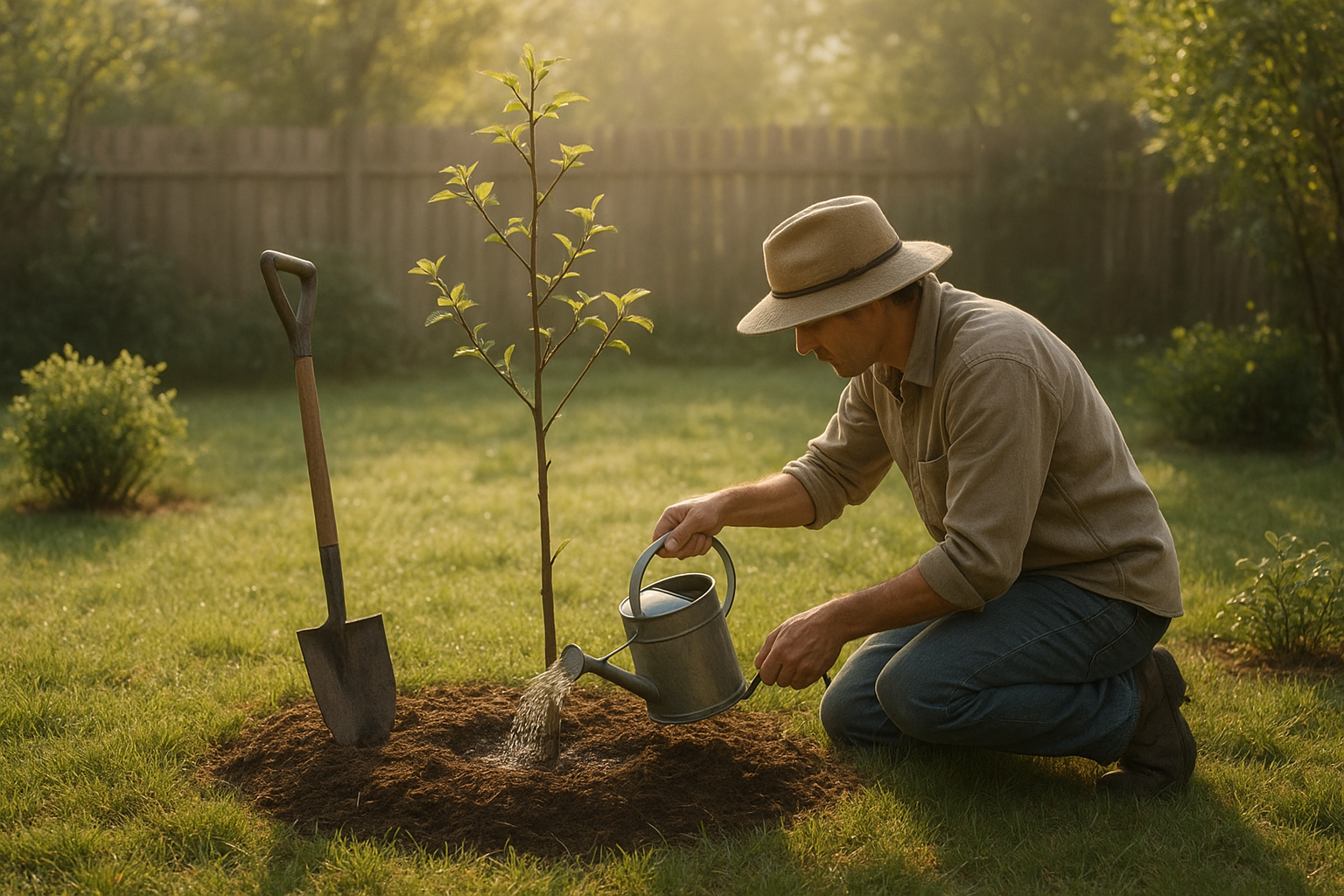
- Water deeply. Soak the root zone slowly so moisture reaches the roots, not just the surface.
- Mulch correctly. Spread a 2- to 3-inch layer in a wide ring, but keep mulch several inches away from the trunk.
That last step is important. Mulch volcanoes piled against the trunk can trap moisture and invite rot, pests, and disease.
Tree care during the first few years
The first season is about establishment. Your tree is building roots, adapting to its new site, and learning how to survive without nursery care. A little attention now makes a big difference later.
Watering schedule
New trees usually need consistent moisture, especially during dry spells. The exact amount depends on weather and soil, but deep, infrequent watering is better than frequent light sprinkling.
- Water right after planting.
- Check the soil regularly during the first year.
- Give extra water during heat waves and drought.
- Keep the root zone evenly moist, not soggy.
Support and protection
Some young trees benefit from temporary staking, but only if they are unstable. If a tree can stand on its own, it often grows stronger without stakes. Protect the trunk from mowers, trimmers, deer, rabbits, and rodents as needed.
In colder climates, a trunk guard or careful winter protection may help prevent sunscald and animal damage.
Choosing a tree with a legacy in mind
If you want a tree to become part of your family’s story, look for one that offers more than a single season of interest. Shade trees, flowering trees, fruit trees, and evergreens each bring something different to the yard.
- Shade trees help cool patios and south-facing windows.
- Flowering trees add spring drama and seasonal color.
- Fruit trees offer harvests and a reason to return to the garden every year.
- Evergreens provide structure and winter privacy.
For many gardeners, the most satisfying choices are trees that support birds, bees, and other wildlife while also fitting the needs of the yard.
Common mistakes to avoid
Tree planting is simple, but a few errors can cause long-term problems. Avoid these if you want your tree to thrive:
- Planting too deeply
- Choosing a tree too large for the space
- Overfertilizing at planting time
- Letting mulch touch the trunk
- Ignoring drainage issues
- Skipping regular watering in the first two years
If your site is challenging, such as heavy clay soil, a windy corner, or a narrow strip near pavement, it may be worth choosing a smaller tree or asking a local nursery for site-specific recommendations.
The best time to start is now
Many people wait because they want the “perfect” moment, but trees are among the few garden additions that improve with time more than with attention. Even a small tree planted this season can become a meaningful part of the landscape sooner than you expect.
If you’ve been thinking about adding one, treat it as a gift to your future self, your home, and the people who will enjoy the yard after you. Plant thoughtfully, water faithfully, and let time do the rest.
One day, the tree you planted today may be the shade someone else pauses under.