How to Create a Mindful Garden Retreat at Home
A mindful garden doesn’t need to be large, tropical, or perfectly styled. What it really needs is a clear purpose: a place that helps you slow down, breathe, and feel a little more grounded the moment you step outside.
The best part is that you can create that feeling in a backyard, patio, balcony, or side yard with a few thoughtful choices. By focusing on comfort, simplicity, and sensory details, you can shape an outdoor space that supports rest instead of demanding constant upkeep.
Start With the Feeling You Want
Before you buy plants or rearrange furniture, think about how you want the space to feel. Do you want quiet and private? Fresh and energizing? Cozy and cocoon-like? This matters more than copying a particular style.
A mindful garden works best when every element supports one emotional goal. If the space is supposed to help you relax, avoid filling it with too many colors, decorative objects, or competing focal points. If it is meant to be a morning coffee spot, focus on comfortable seating and gentle light.
Ask yourself these questions
- Do I want to sit, meditate, read, eat, or simply walk through this space?
- What time of day will I use it most?
- Do I need shade, privacy, or sound buffering?
- How much time do I realistically want to spend maintaining it?
Once you answer those questions, your choices become much easier. You are designing a feeling first and a garden second.
Edit Before You Add Anything New
One of the easiest ways to improve an outdoor space is to remove clutter. Too many planters, mismatched decor pieces, broken tools, and overgrown plants can make even a beautiful garden feel noisy and unsettled.
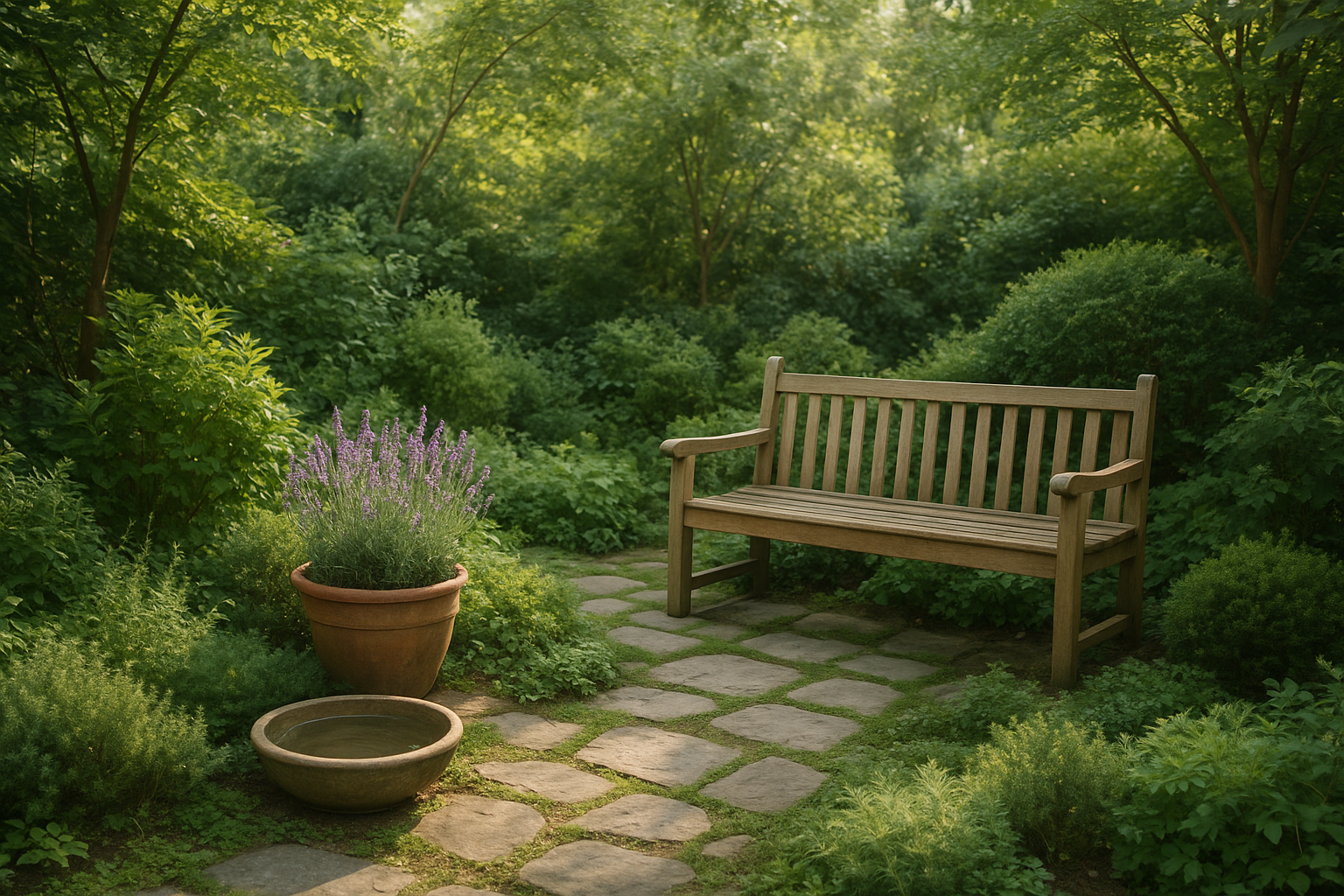
Walk through the area with fresh eyes and take out anything that doesn’t support calm or function. Then group what remains into simple zones. For example, you might have one seating area, one planting border, and one small focal point such as a birdbath, fountain, or specimen plant.
Less visual clutter usually means more peace. Giving the eye a place to rest is one of the most useful design choices you can make.
A simple editing checklist
- Remove broken pots, faded cushions, and unused decor
- Trim back plants that crowd paths or seating areas
- Limit the number of materials and colors you use
- Choose one main feature instead of several competing ones
Use Layers for a Softer, More Enclosed Feel
Mindful gardens often feel welcoming because they have a sense of enclosure. That doesn’t mean fencing yourself in completely. It means using plants and structures to create gentle boundaries that make the space feel protected.
Try layering your garden from low to tall: groundcovers or small herbs in front, medium shrubs in the middle, and taller plants, trellises, or small trees behind. This helps the space feel fuller and more immersive without looking busy.
If you are working with a patio or balcony, you can get the same effect with large containers, vertical planters, tall grasses, or a slim privacy screen covered in climbers.
Plants that help create a calm layered look
- Lavender for scent and soft color
- Rosemary for a fragrant, useful herb
- Ornamental grasses for movement and texture
- Hydrangeas for generous blooms in shadier spots
- Ferns for a cool, restful feel
Stick with a limited palette if you want a soothing effect. Repeating the same plants in groups often looks more restful than mixing too many varieties.
Bring in the Senses, Gently
A truly calming outdoor space appeals to more than just sight. Subtle sound, texture, scent, and even temperature can all shape the experience.
Scent is one of the easiest ways to create an immediate mood. Herbs like mint, thyme, and rosemary release fragrance when brushed past. Flowering plants such as jasmine, sweet alyssum, and lavender can also add a gentle perfume without overwhelming the space.
Sound matters too. The rustle of grasses, a small fountain, or wind moving through leaves can soften background noise from traffic or neighbors. If you add water, keep it simple. A small recirculating fountain or even a shallow bowl refreshed regularly can bring a pleasant, calming presence.
Texture helps the garden feel inviting. Combine smooth stone, weathered wood, soft foliage, and perhaps a woven outdoor rug or cushion. These details make the space more comfortable without requiring much maintenance.
Choose Low-Stress Seating
If a garden is meant to be restful, people need a place to rest in it. Seating does not have to be elaborate. A bench tucked under a tree, a pair of weather-resistant chairs, or a cushion on a raised deck can be enough.
Focus on comfort and placement. Put the seat where it catches the best light, breeze, or view. If you want a meditation corner, choose a quiet spot away from foot traffic. If you plan to entertain, arrange seating so people can talk without feeling exposed.
Tip: Add a small side table or stool nearby for a book, tea, or watering can. Tiny conveniences make outdoor habits easier to maintain.
Make Maintenance Easy Enough to Keep Up
The most peaceful garden is one you can actually enjoy, not one that drains your weekends. Low-maintenance design is not lazy; it is practical. Choose plants suited to your climate, group them by water needs, and use mulch to reduce weeds and hold moisture in the soil.
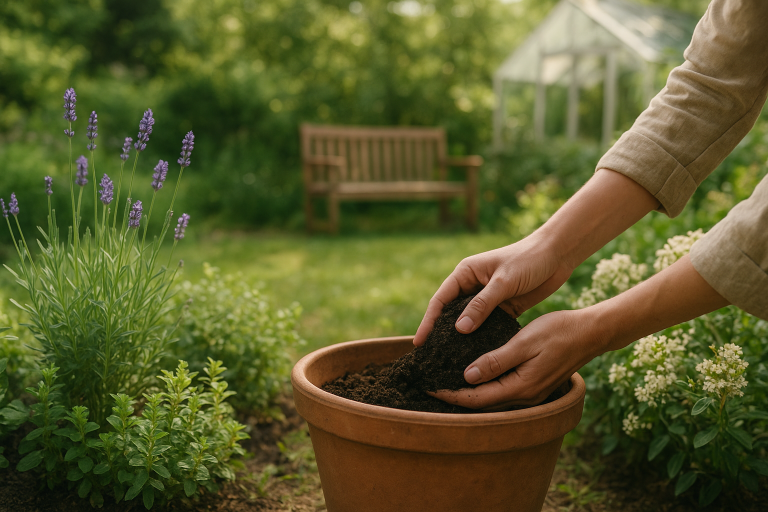
Container gardens can also be very manageable if you keep the plant count reasonable. Fewer pots with healthy plants will almost always feel calmer than a crowded collection that needs constant attention.
Simple ways to reduce upkeep
- Use mulch around shrubs and beds to suppress weeds.
- Install drip irrigation or self-watering containers if possible.
- Choose perennial plants that return each year.
- Group thirsty plants together and drought-tolerant plants together.
- Leave some open soil or gravel areas instead of trying to plant every inch.
A mindful garden should support your life, not become another chore list.
Add One Focal Point, Then Stop
It can be tempting to add more once a space starts to look good, but restraint is what gives a garden its calm. One focal point is usually enough.
That focal point might be a container planted with herbs, a small tree, a bench, a sculpture, or a water feature. The goal is to create a destination for the eye. Once you have that, let the rest of the space breathe.
If you are unsure, test your layout by sitting in the garden for a few minutes. If your eyes keep jumping from object to object, simplify. If the space feels balanced and easy to look at, you are on the right track.
A Quick Mindful Garden Plan for Any Space
If you want to get started this weekend, keep it simple:
- Clear away clutter and broken items
- Choose one main purpose for the space
- Add seating or a quiet resting spot
- Use repeated plants for a calmer look
- Include one sensory element such as scent or water
- Limit decor to one focal feature
When done well, a mindful garden feels less like a display and more like a pause button. It doesn’t have to be large or expensive to be restorative. It just has to be designed with intention.
And if you step outside tomorrow morning, coffee in hand, and feel your shoulders drop a little? That’s the whole point.