Chunky Fall Vegetable Soup with Rosemary and Parsley
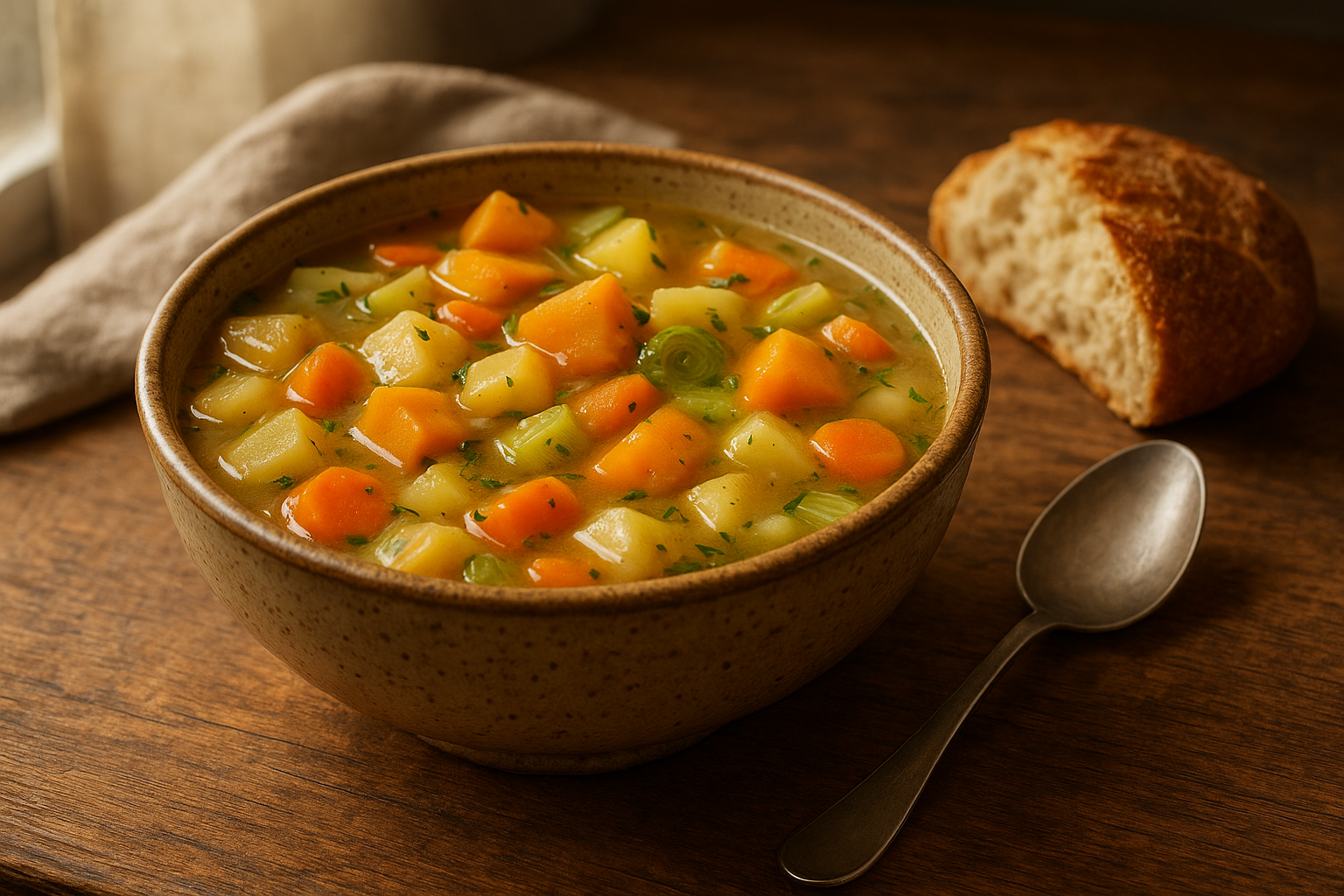
When the weather turns crisp, there’s nothing more satisfying than a pot of soup simmering on the stove. This chunky vegetable soup with rosemary and parsley brings together the best of fall produce in one cozy, nourishing bowl.
It’s the kind of recipe that feels both practical and special: simple enough for a weeknight, but full of deep, layered flavor from aromatic herbs, tender roots, and sweet seasonal squash. If your produce drawer is overflowing, this is an easy way to turn it into dinner.
Why this soup works so well
This soup is built around vegetables that shine in cold-weather cooking. Leeks add a gentle onion flavor, carrots bring sweetness, potatoes make the broth hearty, and squash gives the soup a creamy, velvety body without any dairy.
The herbs matter too. Rosemary adds a woodsy, savory note that pairs beautifully with root vegetables, while parsley brightens everything at the end so the soup tastes fresh instead of heavy.
Best vegetables to use
You can follow the recipe exactly, or treat it as a flexible template. The goal is a mix of tender, starchy, and sweet vegetables that cook at roughly the same pace.
- Leeks: Mild and sweet, they create a softer flavor base than onions.
- Squash: Delicata, butternut, or acorn all work well.
- Carrots: Add color and a little natural sweetness.
- Potatoes: Yukon Gold or red potatoes hold their shape nicely.
- Celery: Optional, but helpful for an extra savory layer.
- Beans or greens: Add white beans, kale, or spinach if you want even more substance.
How to build flavor from the start
Great soup doesn’t need complicated ingredients, but it does benefit from a few careful steps. First, cook the leeks slowly in olive oil or butter until they’re soft and fragrant. This creates a mellow base and prevents the soup from tasting flat.
Next, add garlic and rosemary briefly so they bloom in the oil. That short sauté wakes up the herbs and gives the whole pot a deeper aroma. Once the broth goes in, scrape up any bits from the bottom of the pot—they add a lot of flavor.
If you have a parmesan rind, toss it in while the soup simmers. It’s an easy way to add a subtle savory richness, especially if you’re making a vegetarian soup and want more depth.
Step-by-step cooking method
- Sauté the aromatics: Cook sliced leeks in olive oil with a pinch of salt until softened. Add garlic and chopped rosemary.
- Add the vegetables: Stir in diced squash, carrots, potatoes, and any other hearty vegetables you’re using.
- Pour in broth: Add vegetable broth or chicken broth, then bring the pot to a simmer.
- Cook until tender: Simmer gently until the vegetables are tender but not falling apart.
- Finish with herbs: Stir in chopped parsley just before serving for a fresh, bright finish.
- Season well: Taste and adjust with salt, pepper, and a small splash of lemon juice or vinegar if needed.
Tips for getting the texture just right
The word “chunky” matters here. You want the vegetables to stay intact enough to make each spoonful interesting, not turn into a puree. To help with that, cut the vegetables into even pieces and avoid boiling the soup aggressively.
If you prefer a thicker broth, you can lightly mash a few potato pieces against the side of the pot near the end of cooking. That gives the soup body without losing all the texture. For an even richer finish, stir in a spoonful of cream, coconut milk, or a drizzle of good olive oil right before serving.
Easy swaps and additions
One of the best things about a vegetable soup like this is how adaptable it is. You can use whatever looks good at the market or whatever is already in your kitchen.
- No leeks? Use yellow onion or shallots instead.
- No squash? Try sweet potato or extra potatoes.
- Want more protein? Add cannellini beans, chickpeas, or cooked shredded chicken.
- Need more greens? Stir in chopped kale during the last 5 minutes of cooking.
- Looking for extra heat? Add a pinch of red pepper flakes with the garlic.
For a more filling dinner, serve the soup with toasted sourdough, garlic bread, or a simple grilled cheese sandwich.
How to store and reheat leftovers
This soup is excellent for meal prep because the flavor improves after a day in the fridge. Let it cool completely, then store it in airtight containers for up to 4 days.
When reheating, warm it gently over medium-low heat so the vegetables don’t break down too much. If the soup thickens in the fridge, add a splash of broth or water to loosen it.
You can also freeze it, but keep in mind that potatoes may soften a little after thawing. If you plan to freeze a batch, slightly undercook the vegetables so they hold up better later.
Serving ideas for a cozy fall dinner
This soup is comforting on its own, but a few simple toppings can make it feel extra special. Try one or two of these before serving:
- Chopped parsley
- Freshly ground black pepper
- Grated parmesan
- Croutons
- Toasted pumpkin seeds
- A swirl of olive oil
For a simple fall menu, pair the soup with a green salad, roasted apples, or a loaf of crusty bread. It’s also a great first course for a holiday meal when you want something seasonal but not fussy.
A reliable recipe for the whole season
This is the kind of dish you’ll want to make again and again as temperatures drop. It’s comforting without being heavy, practical without being boring, and flexible enough to handle whatever vegetables you have on hand.
If you’re looking for an easy way to use up fall produce, a pot of chunky vegetable soup with rosemary and parsley is one of the best places to start. It’s a simple recipe with big payoff: warm bowls, happy leftovers, and a kitchen that smells amazing.