Roasted Acorn Squash with Maple and Herbs
Few vegetables feel as comforting as roasted acorn squash. When it comes out of the oven, the flesh is soft and buttery, the edges are lightly caramelized, and the natural sweetness of the squash comes through beautifully. A simple maple-herb finish turns it into a side dish that works just as well on a weeknight as it does on a holiday table.
If you’ve ever wondered how to cook acorn squash so it tastes rich and well-seasoned instead of bland, roasting is the answer. It’s low-effort, flexible, and easy to customize with sweet, savory, or spicy flavors.
Why roasting works so well
Acorn squash has a mild, slightly nutty flavor and a tender texture when cooked properly. Roasting concentrates that flavor and adds golden edges without requiring much hands-on time. A small amount of oil helps the surface brown, while a touch of maple syrup enhances the squash’s natural sweetness.
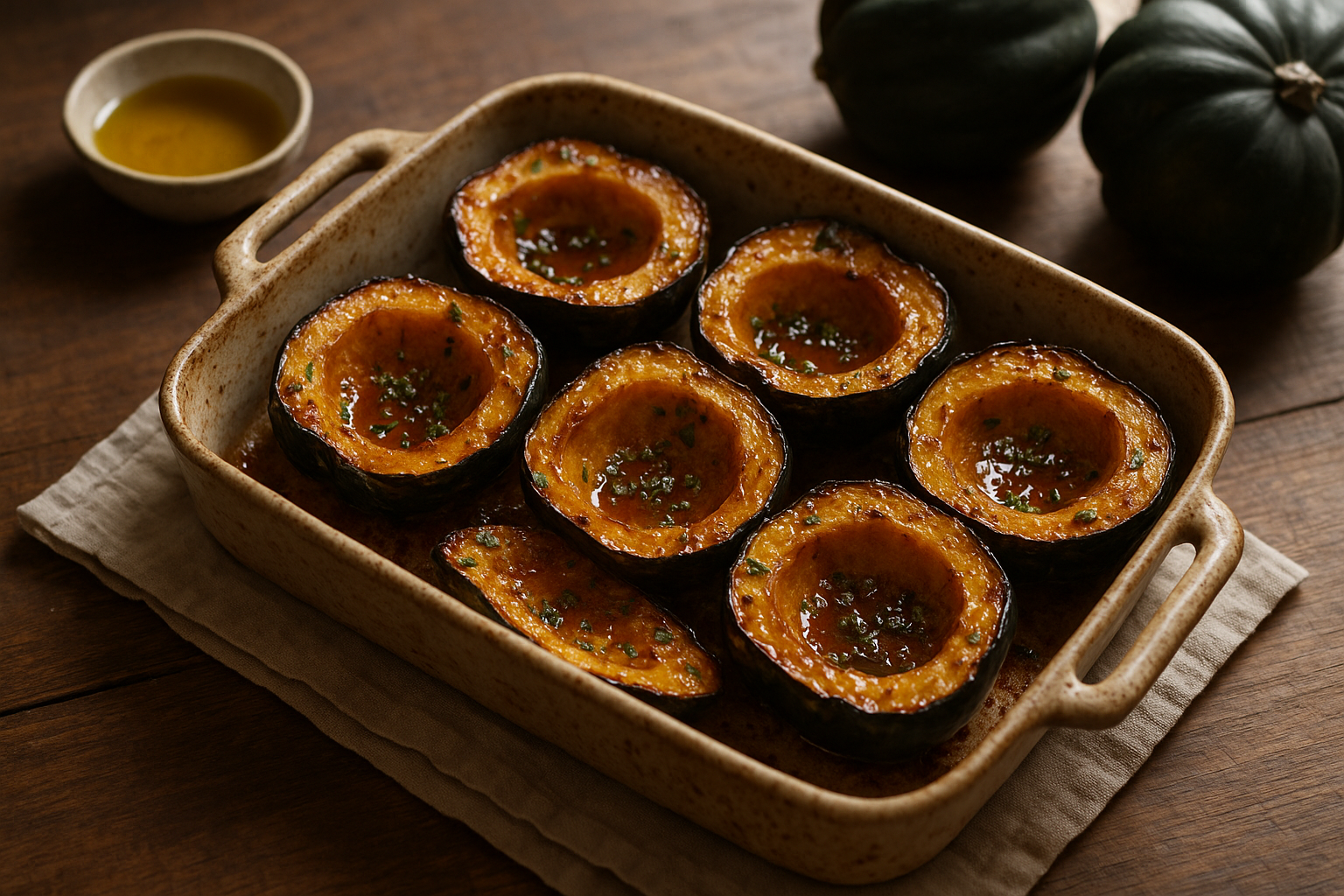
Because acorn squash halves cook in their own little “bowls,” they also make a beautiful presentation. That makes them especially handy for Thanksgiving, Christmas, or any dinner where you want something simple that still feels special.
What you’ll need
- Acorn squash — look for squash that feels heavy for its size and has firm, unblemished skin
- Olive oil — helps with browning and flavor
- Maple syrup — adds gentle sweetness and caramelization
- Salt and black pepper — essential for balancing the sweetness
- Fresh herbs — thyme, rosemary, parsley, or sage all work well
You can keep the ingredient list very short, or build on it with add-ins like butter, garlic, cinnamon, chili flakes, or toasted nuts.
How to choose and prep acorn squash
Pick squash with a deep green shell and a little orange or gold coloring on the skin. Avoid squash with soft spots, cracks, or mold. If the stem is still attached, that’s usually a good sign it was harvested cleanly and stored well.
Cutting acorn squash can be the trickiest part of the recipe. Here are a few ways to make it easier:
- Use a sharp chef’s knife. A dull knife makes the job harder and less safe.
- Stabilize the squash. Trim a thin slice from the bottom if needed so it sits flat.
- Microwave briefly if necessary. If the squash is very hard, microwave it for 1 to 2 minutes to soften the skin slightly before cutting.
- Scoop out the seeds. A sturdy spoon works best for removing the stringy center.
You can roast the squash with the skin on. Once cooked, the flesh scoops away easily from the shell.
Simple roasted acorn squash method
This method gives you tender squash with lightly browned edges and a glossy finish.
- Preheat the oven to 400°F.
- Prepare the squash. Cut it in half from stem to tip and scoop out the seeds.
- Season. Brush the cut sides with olive oil, then drizzle lightly with maple syrup. Sprinkle with salt and pepper.
- Roast cut-side down or cut-side up. For softer, steamier squash, roast cut-side down on a parchment-lined baking sheet. For a more glazed finish, roast cut-side up in a baking dish and spoon any juices over the top during cooking.
- Cook until tender. Roast for 35 to 50 minutes, depending on size, until the flesh is easily pierced with a fork.
- Finish with herbs. Add chopped fresh herbs just before serving.
If you want extra caramelization, turn the oven up for the last few minutes or broil briefly at the end, watching carefully so the maple doesn’t burn.
Helpful timing notes
Acorn squash varies a lot in size, so cooking time can change. Smaller squash may be ready in about 30 to 35 minutes, while larger ones can take closer to 50 minutes or a bit more. The best test is the fork test: the flesh should feel completely tender with no resistance.
If the squash is browning too quickly before it is soft, tent it loosely with foil. If it’s soft but pale, leave it uncovered for a few extra minutes to deepen the color.
Flavor variations to try
Once you know the basic method, you can take roasted acorn squash in several directions.
Sweet and cozy
- Add a pinch of cinnamon or nutmeg
- Top with chopped pecans or walnuts
- Finish with a small pat of butter before serving
Savory and herb-forward
- Skip most of the maple syrup and use more olive oil
- Add minced garlic before roasting
- Top with thyme, rosemary, or sage
Bright and tangy
- Drizzle with balsamic glaze after roasting
- Add crumbled goat cheese or feta
- Scatter with pomegranate seeds for color and freshness
Spicy and bold
- Add chili flakes or smoked paprika
- Finish with a little hot honey
- Serve with a spoonful of yogurt or sour cream to cool the heat
How to serve roasted acorn squash
This dish is versatile enough to pair with many main courses. It goes well with roasted chicken, turkey, pork tenderloin, meatloaf, or a hearty grain bowl. It also fits nicely into a vegetarian meal alongside wild rice, lentils, or a simple salad.
For a more composed presentation, place the squash halves on a platter and spoon the pan juices over the top. Add herbs just before serving and finish with any garnishes you like. If you’re serving a crowd, you can also cut the roasted squash into wedges or scoop out the flesh and serve it in a bowl as a mash-like side.
Make-ahead and storage tips
Roasted acorn squash is a great make-ahead side dish. You can roast it earlier in the day and rewarm it before dinner. To keep it from drying out, cover it loosely with foil when reheating.
- Refrigerate: Store leftovers in an airtight container for up to 4 days.
- Reheat: Warm in a 350°F oven until heated through, or microwave in short bursts.
- Freeze: Cooked squash can be frozen, but the texture will be softer after thawing. It’s best used in soups, purees, or casseroles if frozen.
Common mistakes to avoid
A few small missteps can make roasted squash less satisfying than it should be. Keep these in mind:
- Undersalting: Squash needs enough salt to taste balanced, especially with maple syrup.
- Overcrowding the pan: Give the halves room so they roast instead of steam.
- Skipping oil: A light coating helps the surface brown and keeps the flesh from drying out.
- Overbaking: Squash can go from tender to mushy if left in too long.
Easy roasted acorn squash is worth keeping on repeat
When you want a side dish that feels special but doesn’t ask much of you, roasted acorn squash is hard to beat. It’s inexpensive, seasonal, and endlessly adaptable. With just a few pantry ingredients and a hot oven, you get a dish that’s sweet, savory, and full of cozy fall flavor.
Whether you keep it simple with olive oil, salt, and herbs or dress it up with maple, nuts, and cheese, this is the kind of recipe that earns a permanent place in your rotation.