5 Easy Back-to-School Lunchbox Ideas Kids Will Eat
Back-to-school lunches can feel like one more thing on an already packed morning to-do list. The good news is that a few simple systems can make them faster, cheaper, and much less stressful, especially when you lean on foods your kids already like.
Instead of trying to create something elaborate every day, think in building blocks: a protein, a grain or starch, a fruit or vegetable, and a fun extra. With a little planning, you can mix and match ingredients all week long and still keep lunch from getting boring.
Start with a lunch-packing formula
The easiest school lunches are the ones you can assemble without much thinking. A helpful formula is:
- 1 protein: turkey, chicken, cheese, yogurt, beans, hummus, eggs, or seed butter
- 1 main starch: bread, tortillas, crackers, pasta, rice, or pita
- 1 fruit or vegetable: berries, grapes, apple slices, carrots, cucumbers, snap peas, or cherry tomatoes
- 1 extra: pretzels, popcorn, a cookie, a few chocolate chips, or a favorite dip
This formula works because it is flexible. You can use leftovers from dinner, repeat ingredients through the week, and adjust portions for younger or older kids.
Simple prep tips that save time
A little prep on Sunday or Monday night can make each morning much easier. You do not need a full meal-prep marathon. Even 20 minutes helps.
- Wash and dry produce ahead of time. Store grapes, berries, carrots, and cucumbers in ready-to-grab containers.
- Cook one versatile protein. Roast chicken breasts, hard-boil eggs, or make a pot of beans to use in multiple lunches.
- Pre-portion snacks. Fill small containers with crackers, pretzels, or trail mix so you can grab and go.
- Keep lunch gear together. Put thermoses, ice packs, napkins, utensils, and reusable containers in one cabinet or bin.
- Double-duty leftovers. Plan dinner ingredients that can become lunch the next day, like pasta salad, quesadillas, or rice bowls.
If your child has a short lunch period or tends to get overwhelmed by too much food, use smaller portions and fewer compartments. If they come home hungry, increase the protein or add a sturdier side like yogurt or cheese.
Five easy back-to-school lunchbox ideas
1. Turkey pinwheel lunch
Roll sliced turkey and cheese inside a tortilla, then cut it into pinwheels. Add apple slices, baby carrots, and a handful of pretzels. If your child likes condiments, tuck in a tiny container of mustard or ranch for dipping.
Why it works: It is easy to eat, holds up well in a lunchbox, and uses basic ingredients you may already have.
2. DIY snack box
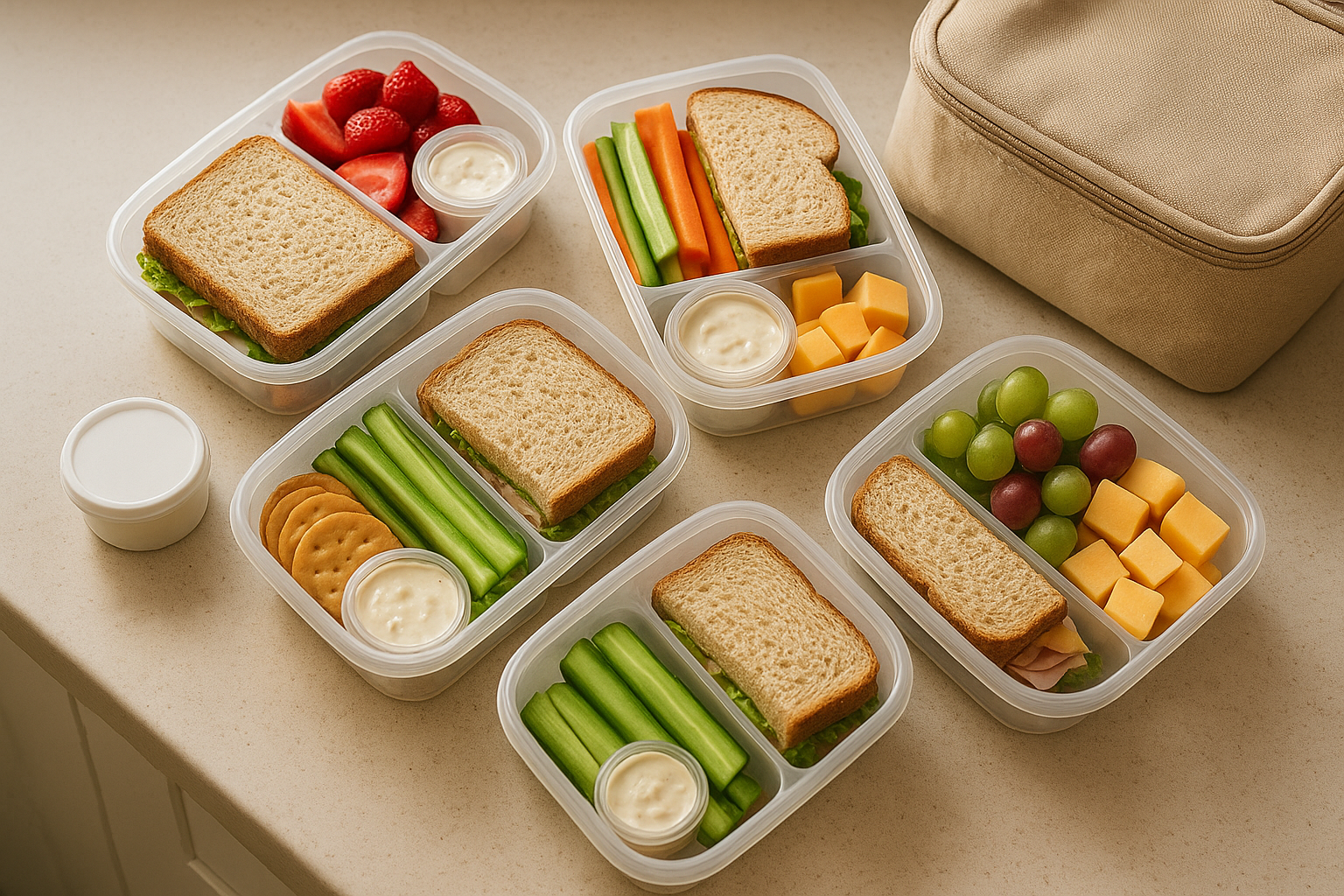
Build a snack-style lunch with cubed cheese, whole-grain crackers, cucumber rounds, grapes, and a hard-boiled egg. Add hummus or ranch for dipping if your school allows it.
Why it works: Many kids like eating lunch in small bites, and this style is great for picky eaters who do better with variety instead of one large main dish.
3. Chicken pasta salad box
Toss cooked pasta with chopped chicken, peas, diced bell pepper, and a light dressing or olive oil. Pack it cold with pineapple chunks or strawberries on the side.
Why it works: Pasta salad is filling, easy to make ahead, and tastes good cold or at room temperature by lunchtime.
4. Hummus and veggie pita
Spread hummus inside a pita pocket or wrap it in a tortilla. Add shredded carrots, sliced cucumbers, and a few strips of roasted red pepper. Pair it with orange wedges and a small container of crackers.
Why it works: This is a nice meat-free option that still feels substantial, especially when paired with fruit and crunchy sides.
5. Breakfast-for-lunch box
Pack a hard-boiled egg, mini pancakes or waffles, berries, and yogurt. If your child likes savory foods, add cheese cubes or a slice of ham. A little syrup in a leakproof container can make it feel special without much effort.
Why it works: Breakfast foods are familiar and often kid-approved, and they make a fun change of pace during the school week.
How to keep lunches budget-friendly
School lunch costs can add up quickly if every item is individually packaged or bought as a single-serving snack. A few small changes can help stretch your grocery budget.
- Buy full-size ingredients. Whole bags of carrots, blocks of cheese, and family-size yogurt are usually cheaper than pre-portioned packs.
- Use leftovers intentionally. Extra pasta, roasted vegetables, taco meat, or chicken can become tomorrow’s lunch.
- Choose multipurpose foods. A rotisserie chicken can be used for sandwiches, wraps, pasta salad, and quesadillas.
- Rotate snack items. Keep a few favorites in the pantry so you are not buying a new lunch item every day.
It also helps to build lunches around what your family already eats at home. If nobody likes cucumbers, do not keep forcing cucumbers into the rotation. Use apples, snap peas, bell peppers, or whatever actually gets eaten.
School lunch safety and packing basics
Before school starts, check any lunch rules your child’s school may have. Some schools restrict nuts, while others are fully nut-free. It is also smart to ask about container guidelines, reheating options, and whether cold foods need an ice pack.
For food safety, keep cold items cold with an ice pack and a well-insulated lunch bag. If you send warm food, preheat a thermos with hot water first, then fill it with piping hot food so it stays warmer longer. For younger kids, choose containers that are easy to open so lunch does not become a frustration at the table.
How to customize lunches for picky eaters
Picky eaters often do best with predictability. A helpful approach is to keep one or two lunch items consistent while changing the other components slowly. For example, if your child always eats strawberries and cheese, keep those in the box and rotate the main item from a turkey wrap to a pasta salad to a hard-boiled egg.
Another useful trick is to serve the same ingredient in different forms. A child who refuses raw carrots might accept them roasted. Someone who dislikes a sandwich may happily eat the same turkey and cheese rolled up in a tortilla.
If your child is still figuring out what they like, involve them in lunch planning. Let them choose between two fruits, two snacks, or two main options. Small choices make them more invested without turning lunch prep into a battle.
A simple weekly lunch rhythm
Here is an easy way to keep things moving through the week:
- Sunday: shop, wash produce, and cook one protein
- Monday: use leftovers for a sandwich or wrap lunch
- Tuesday: pack a snack box
- Wednesday: use a cold pasta or rice salad
- Thursday: try a meat-free option
- Friday: finish with a fun lunch using whatever is left
That kind of rhythm keeps the work manageable and prevents the end-of-week fridge cleanout from feeling wasteful. Best of all, it gives you a repeatable system you can use all school year long.
With a few dependable ingredients and a couple of backup lunch ideas, back-to-school lunches become much easier to handle. Keep it simple, repeat what works, and adjust as your child’s appetite and preferences change.