How to Start Broccoli Seeds Indoors for a Fall Crop
Starting broccoli indoors in midsummer is one of the best ways to get a strong fall crop, especially when outdoor soil is still hot and busy with summer vegetables. Instead of waiting for garden space to open up, you can raise sturdy little transplants in trays, then move them outside when they are big enough to handle real weather.
Broccoli is a cool-season crop, but fall broccoli starts in the heat of summer. That timing can feel backward at first, but it gives the plants enough weeks to grow before short days and cold weather slow everything down.
When to Start Broccoli Seeds for Fall
For most home gardeners, the sweet spot is to start broccoli seeds indoors about 5 to 7 weeks before you plan to transplant them into the garden. Purdue Extension notes that fall broccoli transplants are often planted about 70 days before the average first frost, and Clemson Extension says fall transplants can be grown in about 5 to 6 weeks. ([extension.purdue.edu](https://extension.purdue.edu/foodlink/food.php?food=broccoli&utm_source=openai))
A simple way to count backward is:
- Look up your average first fall frost date.
- Count back about 10 weeks for transplanting.
- Count back another 5 to 6 weeks to start seeds indoors.
In many colder and middle-climate areas, that means sowing broccoli seeds indoors sometime from late June through July. The University of Minnesota Extension recommends starting fall broccoli seeds indoors or outdoors in early to late July, while Cornell lists a fall broccoli indoor seeding window of mid-June to early July for its region. ([extension.umn.edu](https://extension.umn.edu/vegetables/growing-broccoli?utm_source=openai))
In warmer regions with long falls, you may start later. In very hot southern gardens, broccoli may be more of a fall-to-winter crop, so your local Extension planting calendar is worth checking before you sow.
What You’ll Need
- Broccoli seeds: Choose a variety with a maturity date that fits your season. Early varieties are helpful for short falls.
- Seed-starting mix: Use a light, sterile seed-starting mix rather than heavy garden soil.
- Cell tray or small pots: 2-inch cells or small nursery pots work well.
- Tray with drainage: Broccoli dislikes soggy roots, so drainage holes matter.
- Grow light: A bright window is often not enough in summer if seedlings stretch. A simple LED grow light is useful.
- Fan: Gentle air movement helps reduce damping off and builds stronger stems.
- Watering can or spray bottle: Use a gentle stream so seeds do not wash away.
How to Sow Broccoli Seeds Indoors
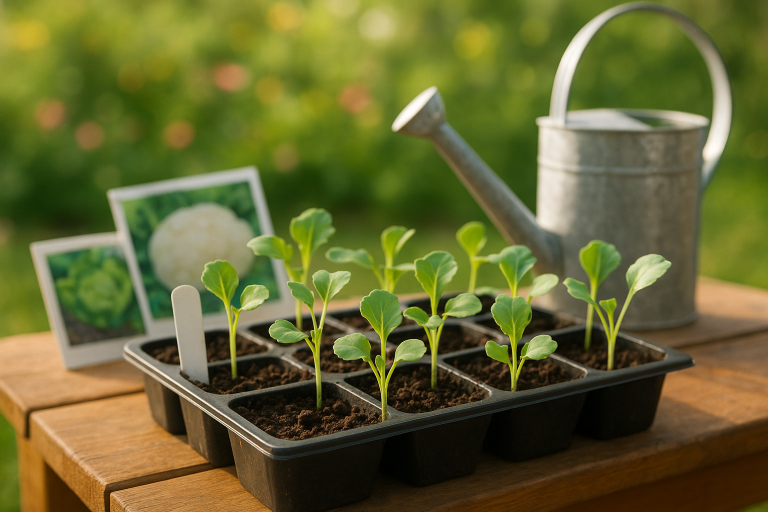
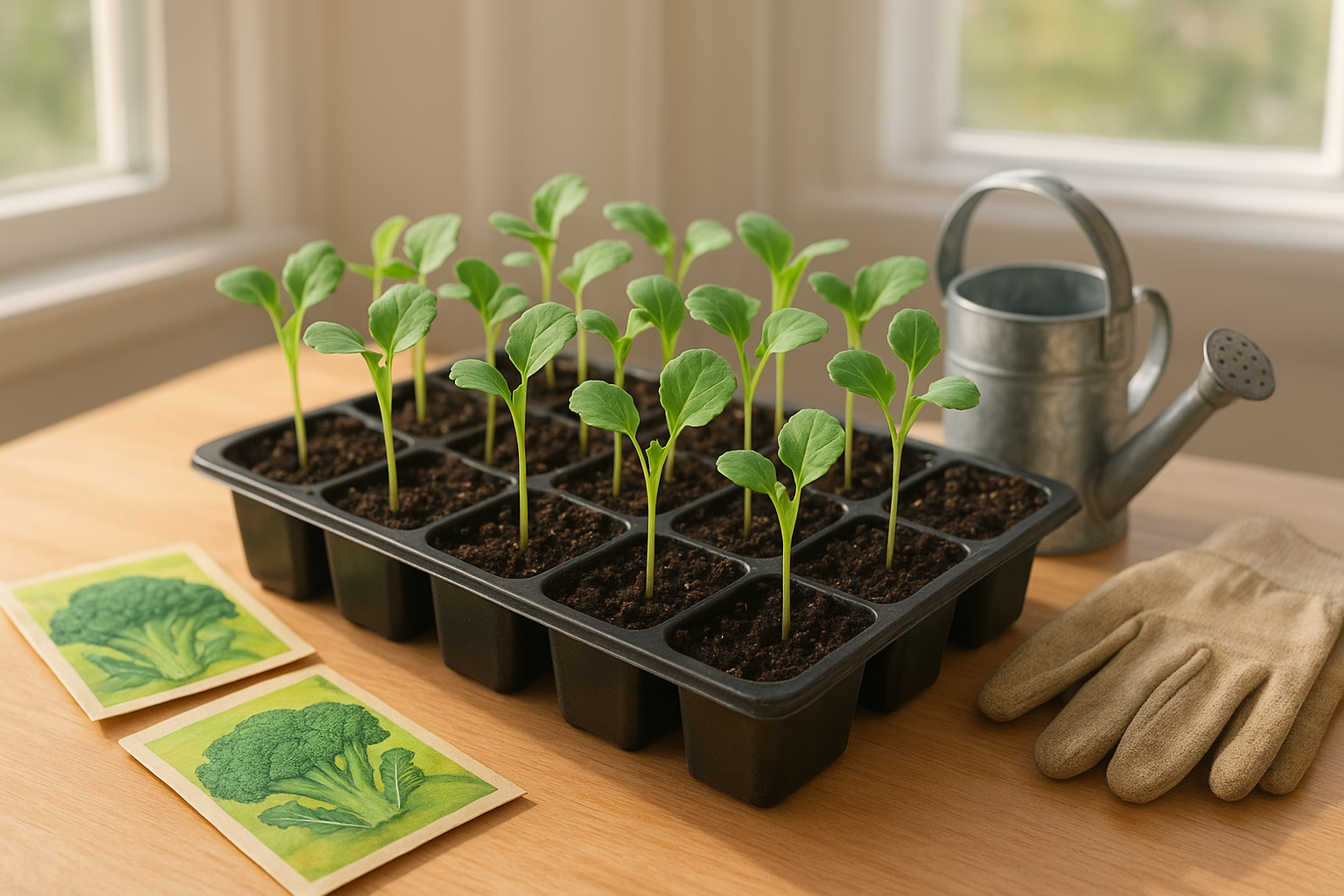
Fill your trays with damp seed-starting mix, then gently firm the surface. Sow seeds about 1/4 to 1/2 inch deep, placing one or two seeds per cell. Cover lightly with mix and water gently.
Keep the tray warm and evenly moist until the seeds germinate. Utah State University Extension lists broccoli germination at about 7 to 10 days, with a broad germination temperature range of 50 to 85°F. ([extension.usu.edu](https://extension.usu.edu/yardandgarden/research/grow-your-own-transplants-at-home?utm_source=openai))
Once seedlings appear, remove any humidity dome if you used one. Move the tray under a grow light for 14 to 16 hours a day, keeping the light a few inches above the tops of the plants. If seedlings look tall, thin, and pale, they need more light.
Keep Seedlings Stocky, Not Leggy
Fall broccoli seedlings often struggle indoors for two reasons: not enough light and too much heat. Warm rooms can make seedlings grow fast but weak. Bright light and moderate temperatures help them stay compact.
After germination, aim for steady growth rather than lush, floppy growth. Let the top of the seed-starting mix begin to dry slightly before watering again, but do not let seedlings wilt. Water from below if possible by setting the cell tray in a shallow tray of water for 10 to 15 minutes, then draining off the extra.
When seedlings have their first true leaves, thin to one plant per cell by snipping the weaker seedling at soil level. Do not pull it out, which can disturb the roots of the keeper.
Feeding Broccoli Seedlings
Seed-starting mix usually contains little or no fertilizer. Once your broccoli seedlings have a couple of true leaves, feed lightly with a diluted balanced liquid fertilizer, about half strength or less. Repeat every 1 to 2 weeks if the seedlings stay in trays for a while.
The goal is healthy green growth, not giant seedlings. Overfed broccoli can become soft and stressed when moved outside. If the plants are sturdy, green, and growing steadily, you are on the right track.
When Broccoli Seedlings Are Ready to Transplant
Broccoli transplants are usually ready when they are about 4 to 6 weeks old, have several true leaves, and hold together when gently slipped from the cell. Clemson Extension notes that fall broccoli transplants can be grown in about 5 to 6 weeks, which is a helpful target for home seed starting. ([hgic.clemson.edu](https://hgic.clemson.edu/factsheet/broccoli/?utm_source=openai))
Do not wait until plants are rootbound, yellowing, or crowded. Stressed broccoli seedlings are more likely to make small heads later. The University of Minnesota Extension warns that plant stress, including low moisture, nutrient deficiency, or poor transplant timing, can lead to small heads. ([extension.umn.edu](https://extension.umn.edu/vegetables/growing-broccoli?utm_source=openai))
Hardening Off: Don’t Skip This Step
Indoor seedlings need time to adjust to sun, wind, and outdoor temperature swings. About a week before transplanting, begin hardening them off.
- Day 1: Set seedlings outside in bright shade for 1 to 2 hours.
- Days 2 to 3: Increase outdoor time, still avoiding hot afternoon sun.
- Days 4 to 5: Give them a little morning sun and more time outside.
- Days 6 to 7: Leave them out most of the day if weather is mild.
Bring seedlings inside or protect them if storms, extreme heat, or strong winds are expected. In summer, hardening off is as much about protecting seedlings from heat as it is about toughening them up.
Preparing the Garden Bed
Broccoli grows best in rich, moisture-retentive soil with full sun. Before transplanting, loosen the bed and mix in finished compost. If your soil is poor, add a balanced vegetable fertilizer according to the label.
Space broccoli plants about 18 to 24 inches apart, with rows about 24 to 36 inches apart if you garden in rows. Tighter spacing can work in raised beds, but crowded broccoli usually makes smaller heads and is harder to water and harvest.
Water the bed deeply before or right after planting. Clemson Extension recommends watering thoroughly at transplanting to start root growth and remove air pockets around the roots. ([hgic.clemson.edu](https://hgic.clemson.edu/factsheet/broccoli/?utm_source=openai))
Transplanting Broccoli in Summer Heat
Transplant on a cloudy day, in the evening, or just before a stretch of mild weather. This gives seedlings a better chance to settle in before facing full sun.
- Dig a hole slightly larger than the root ball.
- Set the seedling at about the same depth it grew in the tray.
- Firm soil gently around the roots.
- Water well.
- Add mulch after the soil is moist, keeping it slightly away from the stem.
If the weather is hot, use shade cloth, an upside-down nursery flat, or a lightweight row cover supported on hoops for a few days. The goal is to reduce stress while roots begin growing into the garden soil.
Common Problems and Easy Fixes
Leggy seedlings
This usually means not enough light. Move the grow light closer and keep it on longer each day. You can also run a small fan nearby for gentle movement.
Seedlings falling over
This can be damping off, a fungal problem encouraged by soggy mix and poor airflow. Use clean trays, avoid overwatering, remove humidity covers after sprouting, and add a fan.
Plants wilt after transplanting
A little wilting on the first hot afternoon is common. Water deeply and provide temporary shade. If they wilt every day for a week, they may need more consistent moisture or protection from heat.
Small broccoli heads
Small heads can come from stress, crowding, low fertility, or poor timing. Keep plants watered, feed as needed, and transplant them before they become rootbound.
Final Tips for a Better Fall Broccoli Crop
- Start more seedlings than you need. Keep the strongest plants and compost the weak ones.
- Mulch after transplanting. Mulch helps hold moisture and cools the soil in late summer.
- Watch for cabbage worms. Check leaf undersides often, especially while plants are young.
- Harvest on time. Cut the main head while buds are tight, before yellow flowers open.
- Leave the plant in place. Many broccoli varieties produce smaller side shoots after the main head is harvested.
Starting broccoli seeds indoors for fall takes a little planning, but it is very doable. Sow at the right time, give seedlings strong light and steady moisture, harden them off carefully, and you will have sturdy transplants ready just as the garden shifts from summer heat into cooler growing weather.